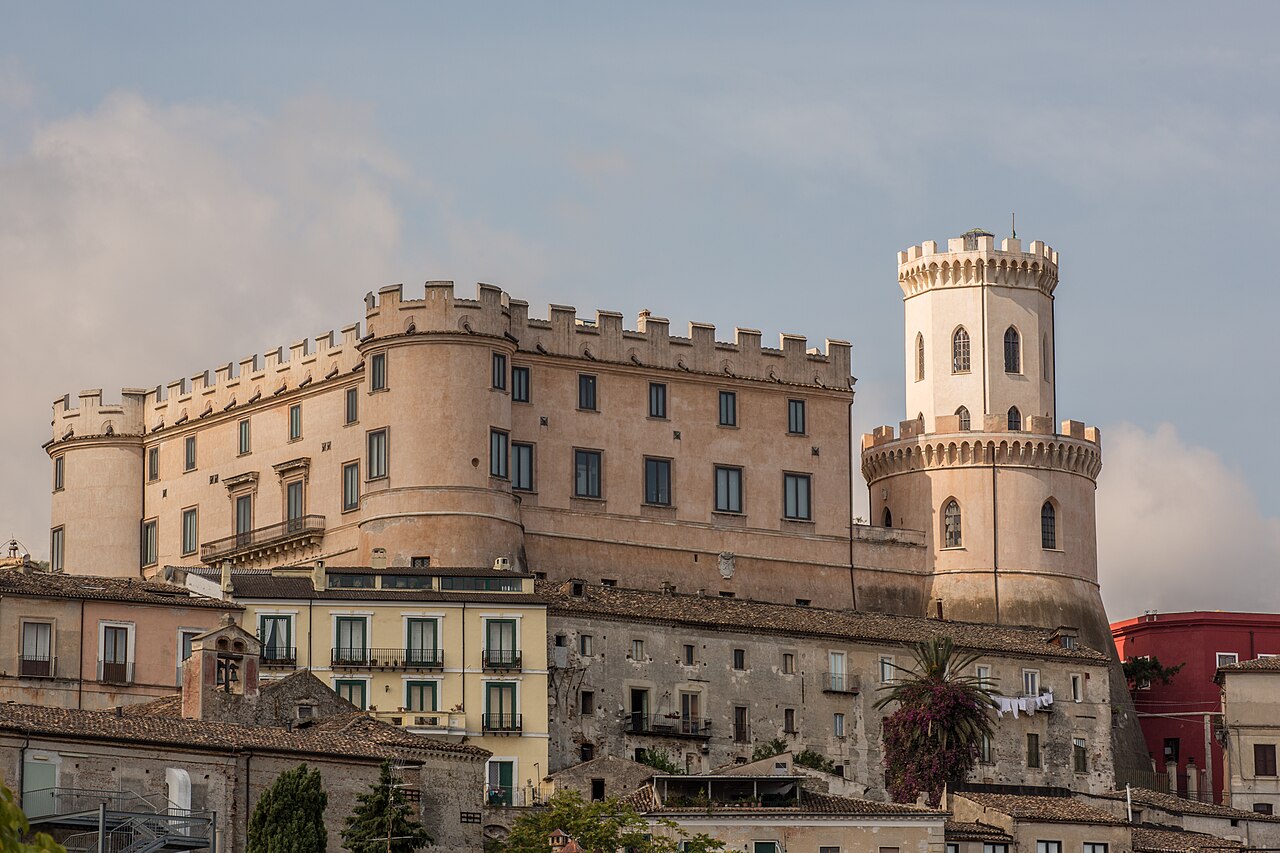
Castello di San Mauro
Castello di San Mauro stands as a significant example of a fortified rural complex in Calabria, Italy, embodying both the architectural and agricultural ambitions of the early 16th century. Established in 1515 by Bernardo Sanseverino, Prince of Bisignano, this estate was designed to oversee and manage extensive agricultural production, reflecting the intertwined nature of noble power and rural economy during the Renaissance period in southern Italy.
The castle's foundation marked the transformation of the site into a fortified residence with a strategic purpose. The initial construction featured two courtyards enclosed within defensive walls, a layout that balanced residential comfort with military preparedness. The estate's position in Cantinella, within the municipality of Corigliano-Rossano, allowed the Sanseverino family to exert territorial control over the surrounding lands, a common practice among noble families seeking to consolidate their influence through both architecture and land management.
Architectural design and layout
The design of Castello di San Mauro is characteristic of a masseria, a fortified farmhouse typical of southern Italy that combines agricultural facilities with defensive features. The complex is organized around two main courtyards, each serving distinct functions. The principal courtyard is flanked by the main residential buildings on its right side, arranged symmetrically along the entrance axis to create a harmonious and functional space.
The main house is a two-story structure notable for its upper-floor entrance accessed via a staircase constructed of stone and brick. This entrance is accentuated by a covered loggia, providing both aesthetic appeal and protection from the elements. Adjacent to the residence lies a large cistern, a crucial feature that ensured water supply self-sufficiency for the estate.
Opposite the main courtyard is the secondary courtyard, surrounded by smaller buildings that housed animal shelters, storage rooms, and dwellings for laborers. Although parts of this area have fallen into partial ruin, surviving elements such as walls and semicircular arches offer valuable insight into the functional aspects of the estate's agricultural operations.
The entire complex is fortified with battlements and includes a watchtower integrated into the perimeter walls. This watchtower controlled access to the main courtyard, underscoring the estate’s dual role as a center for agricultural production and a defensive stronghold.
Historical development and significance
Castello di San Mauro's historical importance is enhanced by its association with the Sanseverino family, a prominent noble dynasty in Calabria during the Renaissance. The estate's role extended beyond agriculture to become a symbol of noble authority and territorial control in the region.
In 1535, the castle gained imperial prominence when Pietro Antonio Sanseverino, son of Bernardo, hosted Emperor Charles V. To accommodate the emperor and his extensive court, a large wooden palace was constructed alongside the existing masonry structures. This addition included multiple apartments, workshops, stables, and cellars, reflecting the logistical demands of imperial visits and the estate’s capacity to support significant events.
Between 1535 and 1544, the complex underwent further modifications to enhance its residential and productive functions. New facilities such as stables, a granary, and an oil mill were added, indicating the diversification of agricultural activities. These enhancements allowed the estate to increase its output and better manage the surrounding lands.
From 1615 to 1650, restoration and expansion efforts transformed parts of the estate, including the conversion of the original large walled garden into warehouses. These changes reflect the evolving economic priorities and the need for additional storage capacity to support agricultural production.
In the 19th century, specifically between 1829 and 1844, the oil mill was repurposed for licorice processing, illustrating the estate’s adaptability to changing agricultural markets. Additionally, mid-18th-century restorations included the addition of a sacristy to the nearby church dedicated to Saint Anterus, linking the estate to local religious practices and community life.
Architectural features and defensive elements
The castle’s defensive features are integral to its design, blending military architecture with agricultural functionality. The battlemented walls provided protection against potential raids, a common threat in rural Calabria during the Renaissance. The watchtower offered surveillance capabilities, controlling access and ensuring the security of the estate.
A distinctive element is the heraldic limestone plaque mounted above an architrave on an external wall. This plaque bears the Sanseverino family coat of arms in low relief, accompanied by a Latin inscription commemorating the foundation of the complex in 1515. The plaque is sheltered by the roof of the nearby loggia, preserving this emblem of noble identity and historical record.
Water management and sustainability
The large cistern adjacent to the main residence highlights the estate’s self-sufficiency in water management. This feature was essential for sustaining the inhabitants and agricultural activities, particularly in the Mediterranean climate of Calabria where water scarcity could be an issue.
Residential and agricultural balance
The layout of the main house and surrounding buildings reflects a careful balance between residential comfort and agricultural productivity. The two-story main residence, with its covered loggia and stone staircase, provided a dignified living space for the Sanseverino family, while the secondary courtyard’s functional buildings supported the labor force and production needs.
Legacy and cultural importance
Today, Castello di San Mauro represents an important cultural and historical site within Calabria. Its architecture offers a window into the rural noble estates of the Renaissance, illustrating how fortified structures could serve both defensive and economic purposes. The estate’s evolution over centuries—from a fortified residence to a productive agricultural hub and later an industrial site for licorice processing—demonstrates the adaptability of such complexes to changing social and economic conditions.
The preservation of key architectural elements, including the defensive walls, watchtower, courtyards, and heraldic symbols, provides valuable insight into the region’s feudal history and the role of noble families like the Sanseverinos in shaping Calabria’s rural landscape.
Frequently asked questions (FAQ)
- How do I get to Castello di San Mauro?
- Castello di San Mauro is located in Corigliano-Rossano, Italy, and is easily accessible by car or public transportation. If you are traveling by train, the nearest station is located in Corigliano Calabro, from where you can take a taxi or a local bus to reach the castle.
- What is the historical significance of Castello di San Mauro?
- Castello di San Mauro dates back to the 11th century and is a prime example of medieval architecture in the region. It has served various purposes over the centuries, including a defensive stronghold and a residence for nobility, reflecting the rich history of the area.
- When was Castello di San Mauro built?
- The construction of Castello di San Mauro began in the late 11th century, during the Norman conquest of Southern Italy. Over the years, it has undergone several renovations and expansions, which have contributed to its unique architectural style.
- Can I visit Castello di San Mauro year-round?
- Yes, Castello di San Mauro is open to visitors throughout the year, although the best time to visit is during the spring and fall when the weather is milder. Do check for any special events or closures that may occur during the winter months.
- Why is the architecture of Castello di San Mauro unique?
- The architecture of Castello di San Mauro combines elements of Norman and medieval styles, showcasing thick walls and strategic towers. Its unique design reflects the historical necessity for defense while integrating the aesthetic beauty of the surrounding landscape.
- Is it possible to take guided tours of the castle?
- Yes, guided tours of Castello di San Mauro are available, providing visitors with in-depth knowledge of its history and architecture. These tours often include access to areas that are not open to the general public, offering a more immersive experience.
- What are the opening hours for Castello di San Mauro?
- Castello di San Mauro typically opens at 9:00 AM and closes at 7:00 PM, but hours may vary seasonally. It's advisable to check the official website or contact local tourism offices for the most current information before your visit.
- What are the ticket prices for visiting Castello di San Mauro?
- The ticket prices for Castello di San Mauro are generally affordable, with discounts available for students and seniors. Children under a certain age can often enter for free, making it a great family-friendly destination.
- Are there any nearby attractions to visit after exploring the castle?
- Yes, after visiting Castello di San Mauro, you can explore the charming town of Corigliano-Rossano, which is known for its beautiful churches and local cuisine. Additionally, the nearby beaches and the Sila National Park offer stunning natural scenery and recreational activities.
Information
Sources & official resources
Verify the information above using these authoritative references.
Loading map...
Visitor reviews
No reviews yet. Been here? Write the first review and help other travelers!
Write the first reviewVisited this castle? Share your experience
Your review helps other travelers and adds first-hand knowledge to our encyclopedia.