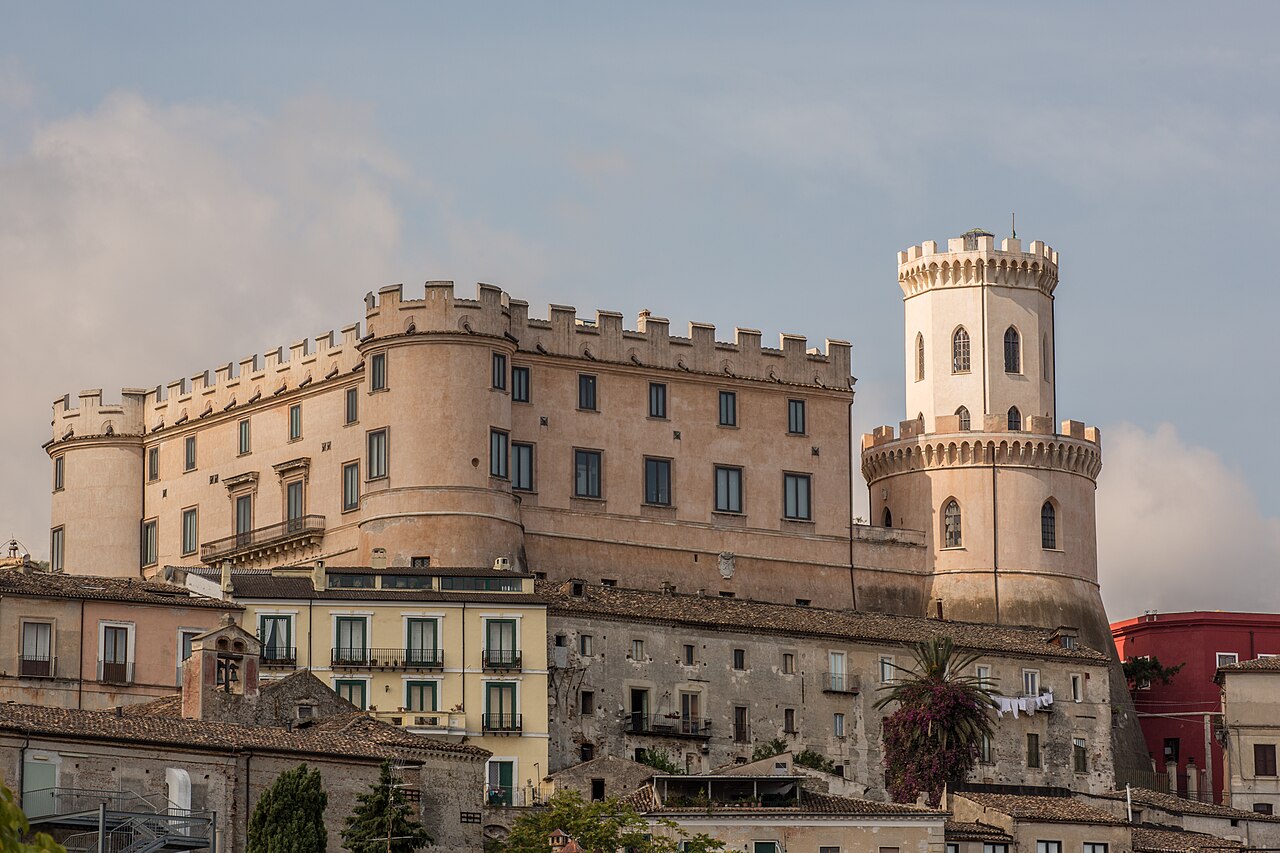
Castello di Acri
The Castello di Acri, also known as Rocca dei Bruzii, stands as a monumental testament to the rich historical tapestry of southern Italy. Perched strategically atop a hill in the town of Acri, this ancient fortress has witnessed millennia of cultural evolution, military significance, and religious transformation. Originally constructed by the Bruttii around the 4th century BCE, the castle was designed to guard the borders of territories influenced by the powerful city of Sibari during the era of Magna Graecia, when Greek culture flourished across southern Italy.
The site’s importance extends far beyond its initial construction. Archaeological excavations reveal continuous human activity from the Eneolithic period (Copper Age) through the late Bronze Age, highlighting its strategic value long before the castle’s walls rose. This enduring significance is underscored by the castle’s commanding vantage point, overseeing key routes and controlling access to the surrounding lands.
Historical significance and ancient origins
The Castello di Acri embodies a confluence of ancient civilizations. After its initial establishment by the Bruttii, the site was integrated into the Roman military network. A notable discovery supporting this phase is a marble inscription dated to Roman times, inscribed with "XII LEGIO", referring to the Twelfth Legion of the Roman army. This confirms the castle’s role as a fortified military outpost during Roman rule.
Further evidence of Roman presence includes fragments of a shrine dedicated to Venus ("Sacellum Dedicatam ad Veneri"), indicating religious activity in the vicinity. The coexistence of Roman and Greek cultural elements is also reflected in mosaic fragments of probable Greek origin found near the castle, illustrating the site's position at a crossroads of Mediterranean cultural exchange.
Medieval transformations and religious heritage
During the medieval period, the fortress was known as Castel Vetere, a name that attests to its ancient origins. Documentation from 1190 mentions the church of Santa Nicola ante ad Castillum, located within or adjacent to the castle’s fortified area. This church, stylistically dated to the 10th or 11th century CE, now lies just outside the former castle walls but remains a significant marker of the site’s religious importance.
Another integral religious structure was the church of Santa Maria Maggiore, which was incorporated within the castle complex until at least 1290. Restoration works revealed the foundations of an early Christian temple beneath its floors, highlighting the castle’s role in the spread and establishment of Christianity in the region.
Architectural features and defensive structures
The castle was constructed with a distinctive trapezoidal layout, enclosing the citadel known as the Pàdia quarter. This design integrated the mother church of Santa Maria Maggiore within its defenses, illustrating the blend of military and ecclesiastical functions.
Originally, the fortress featured three towers positioned at the highest points to maximize surveillance and defense. A fourth tower was located at a lower elevation near the main gate, likely equipped with a drawbridge or portcullis to control access. The curtain walls varied in thickness, with upper walls approximately two meters thick and lower walls reaching about four meters, demonstrating adaptation to the terrain and defensive needs.
Water management and siege preparedness
A remarkable feature of the castle was its water cistern, situated north of the surviving tower. This cistern, approximately six meters tall and twenty meters wide, was designed to store water during sieges, ensuring the castle’s inhabitants could endure prolonged isolation. Visible until the early 20th century, this structure underscores the castle’s preparedness for military engagements.
Archaeological discoveries and cultural legacy
Excavations around the castle have uncovered various artifacts that enrich understanding of its history. The discovery of Greek coins from cities such as Sibari, Thurii, and Crotone embedded within the castle walls in 1999 highlights the site’s deep connections to the economic and cultural networks of Magna Graecia.
Fragments of small mosaics, likely of Greek origin, found near the castle suggest that decorative art played a role in the site’s aesthetic and cultural expression, linking it to the wider Hellenistic world.
Today, the most prominent remnant of the Castello di Acri is a large tower that stands as a symbol of the city’s historical identity. This tower not only reflects the castle’s military past but also serves as a tangible link between the modern town and its ancient origins.
Cultural significance and modern remembrance
In the 19th century, the castle became a cultural emblem for Acri. The poet Vincenzo Julia (1838–1894) celebrated the fortress in his works, emphasizing its medieval heritage and its place within the regional landscape. This literary homage helped cement the castle’s status as a symbol of local pride and historical continuity.
Today, the Castello di Acri remains a site of archaeological and historical interest, drawing visitors intrigued by its layered past and commanding presence. Its preservation as a hill castle and its rich blend of ancient, Roman, medieval, and early Christian elements make it a valuable cultural landmark in southern Italy.
Frequently asked questions (FAQ)
- What is the historical significance of Castello di Acri?
- Castello di Acri was originally built by the Bruttii in the 4th century BCE and later used by Romans, reflecting its strategic importance in southern Italy's history.
- Can visitors see the original towers of the castle?
- Today, only one large tower remains prominently visible, representing the castle's medieval military architecture and historical identity.
- Are there any religious sites within the castle complex?
- The castle complex included churches such as Santa Maria Maggiore and Santa Nicola, with archaeological evidence of an early Christian temple beneath Santa Maria Maggiore.
- What archaeological findings have been discovered at the site?
- Discoveries include Roman inscriptions, Greek mosaic fragments, and coins from Magna Graecia cities, highlighting the site's cultural and historical layers.
- Why was the water cistern important in the castle's design?
- The water cistern stored water to sustain inhabitants during sieges, demonstrating advanced military engineering for prolonged defense.
Information
Loading map...
Visitor reviews
No reviews yet. Been here? Write the first review and help other travelers!
Write the first reviewVisited this castle? Share your experience
Your review helps other travelers and adds first-hand knowledge to our encyclopedia.