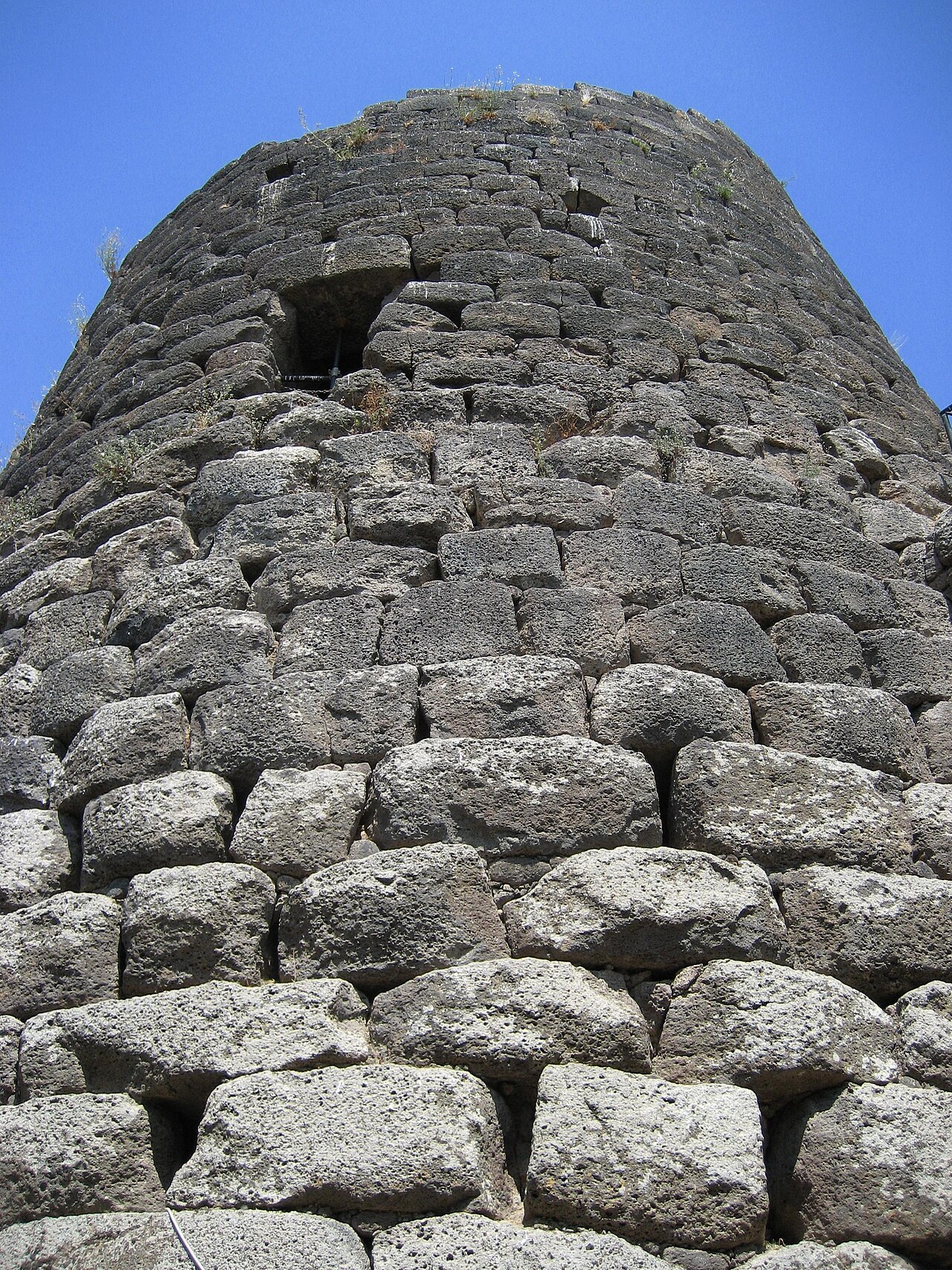
Castello di Medusa
The Castello di Medusa is a medieval fortress located in the municipality of Lotzorai, in the region of Sardinia, Italy. Perched atop a commanding hill, the castle was strategically positioned to oversee the fertile valley adjacent to the Río Girasole river and the nearby coastline. Its location provided a critical vantage point for defense and surveillance during the turbulent medieval period.
The site of the castle holds a history that predates its medieval construction. Archaeological and historical evidence indicates that the area was inhabited since prehistoric times. The region is historically connected to the ancient city of Sulci, mentioned in the Roman Antonine Itinerary, underscoring its long-standing significance. Local tradition, notably documented by the 19th-century scholar Vittorio Angius, claims that the castle was built atop the ruins of a temple dedicated to Punic and Roman deities. This tradition also attributes the foundation of the fortress to a legendary figure known as Queen Medusa, imbuing the site with a layer of mythic importance alongside its historical role.
Medieval origins and strategic importance
The earliest known written record of the castle dates back to 1305, when it was referred to as "castrum de Ollastro" in property documents belonging to Judicessa Giovanna Visconti. Giovanna was the heir of Nino Visconti, a significant ruler in Sardinia, highlighting the castle's role as a valuable territorial asset during the medieval era. Throughout the 12th and 13th centuries, the castle marked a frontier between the Judicates of Gallura and Calari, two prominent Sardinian realms. This border position gave the fortress considerable military and administrative importance amid the shifting political and military struggles on the island.
In 1258, control over the Ogliastra region, including the castle, passed to Giovanni Visconti, the judge of Gallura allied with the maritime republic of Pisa. Around 1308, Pisa reportedly damaged several castles in the area, including Castello di Medusa, to impede the invading Aragonese forces. Despite possible partial destruction, the fortress was either quickly restored or remained functional, continuing to serve as an administrative center during this turbulent period. Until 1323, the castle was governed locally by a castellan and a "de facto judge," with the last recorded official being Piero Fini de Perlascio.
Architectural features and current condition
The Castello di Medusa is classified as a hill castle, constructed with defensive walls arranged in a circuit to protect against attacks from both land and sea. Today, the site primarily consists of ruins, with remnants of the defensive walls still visible. The eastern façade remains discernible despite the effects of time and vegetation overgrowth.
Among the surviving interior elements is a notable room featuring an arched ceiling covered with white plaster, suggesting a vaulted chamber that may have served a specific functional or representational purpose within the fortress. The use of plaster indicates a degree of care in construction or maintenance, reflecting the castle's importance.
The walls exhibit medieval construction techniques typical of the period, though detailed architectural plans or descriptions of the castle's layout are lacking due to limited archaeological study. The overall condition of the ruins is fragmentary, with some sections partially collapsed or overgrown, yet the site remains accessible for study and visitation.
Historical and legendary significance
Throughout its history, the castle functioned not only as a military stronghold but also as an administrative center overseeing the surrounding lands. Its role in the border conflicts between Sardinian judicates and later struggles involving Pisa and Aragon underscore its strategic importance.
Local oral traditions enrich the narrative of the site. One legend speaks of a secret underground passage connecting the castle to the Río Girasole river, purportedly designed as an emergency escape route during sieges. Another tale recounts the residence of a Spanish princess from Navarre within the fortress, blending historical fact with regional folklore and enhancing the castle's cultural resonance.
No formal archaeological excavations have been conducted at the site, leaving much of its full historical and architectural extent to future research. Nonetheless, the surviving ruins offer valuable insights into the medieval fortified settlement's role as a strategic and administrative hub in Sardinia.
Location and landscape context
The castle's hilltop position provides commanding views over the valley between the towns of Baunei and Tortolì. This vantage point was deliberately chosen to maximize defensive capabilities and control over the surrounding fertile lands and coastal approaches.
Its proximity to the Río Girasole river enhanced its strategic value, offering a natural resource and potential escape route as suggested by local legends. The surrounding landscape remains largely rural and retains elements of its historical setting, contributing to the site's evocative atmosphere.
Preservation and access
Today, the Castello di Medusa is in a state of ruins, with partial walls and structural elements surviving amidst natural overgrowth. The site is accessible for visitors interested in medieval history and archaeology, though facilities and interpretive resources may be limited due to the lack of extensive excavation or restoration.
Preservation efforts have been minimal, and the castle remains a subject for potential future archaeological study that could shed further light on its construction, function, and historical context within Sardinia's medieval landscape.
Frequently asked questions (FAQ)
- When was Castello di Medusa built?
- Castello di Medusa was constructed during the 12th and 13th centuries, serving as a medieval fortress in Sardinia.
- What is the historical significance of Castello di Medusa?
- The castle marked a frontier between the Judicates of Gallura and Calari and played a key role in regional conflicts involving Pisa and Aragon.
- Can visitors access the ruins of Castello di Medusa?
- Yes, the ruins are accessible to visitors, although the site has limited facilities and no extensive restoration.
- Are there any legends associated with Castello di Medusa?
- Local legends speak of a secret underground passage to the Río Girasole river and a Spanish princess from Navarre residing in the castle.
- What remains can be seen at Castello di Medusa today?
- Visitors can see the remains of defensive walls, an eastern façade, and an interior vaulted room with a plastered arched ceiling.
Information
Website
Visit websiteSources & official resources
Verify the information above using these authoritative references.
Loading map...
Visitor reviews
No reviews yet. Been here? Write the first review and help other travelers!
Write the first reviewVisited this castle? Share your experience
Your review helps other travelers and adds first-hand knowledge to our encyclopedia.