Castello di Gagliano Aterno — Italy castle

Castello di Gagliano Aterno

Castello di Gagliano Aterno: medieval hill castle in Abruzzo
Late Medieval (14th–15th c.)

Castello di Gagliano Aterno is a medieval hill castle located in the small town of Gagliano Aterno in the Province of L'Aquila, within the Abruzzo region of Italy. This 14th-century fortress stands as a significant example of late medieval military architecture in central Italy, reflecting the strategic importance of hillside fortifications during this period.

Historical context and location

The castle was constructed in the late medieval period, specifically in the 14th century, a time when the Abruzzo region was marked by frequent conflicts and territorial disputes. Positioned on a hilltop, the castle's location provided a commanding view of the surrounding valleys and routes, allowing for effective surveillance and defense. The elevated site was typical for hill castles, which were built to exploit natural topography for military advantage.

Gagliano Aterno itself is a small historic town with roots dating back to the Middle Ages, and the castle played a central role in its defense and administration. The castle's presence symbolized feudal authority and control over the surrounding lands.

Architectural features and design

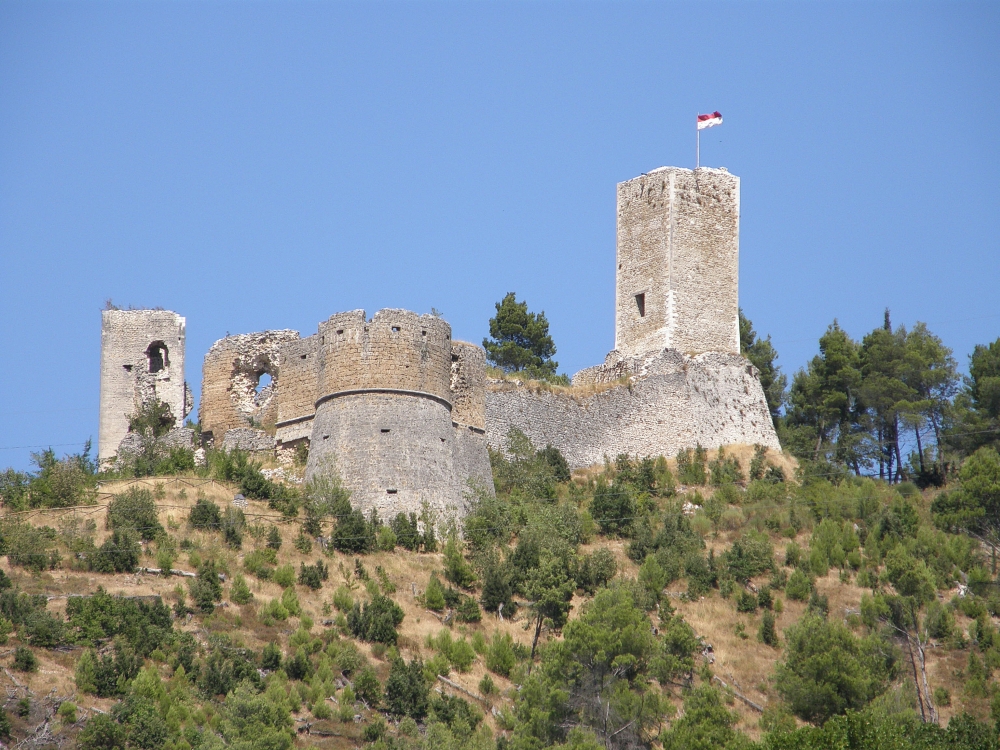
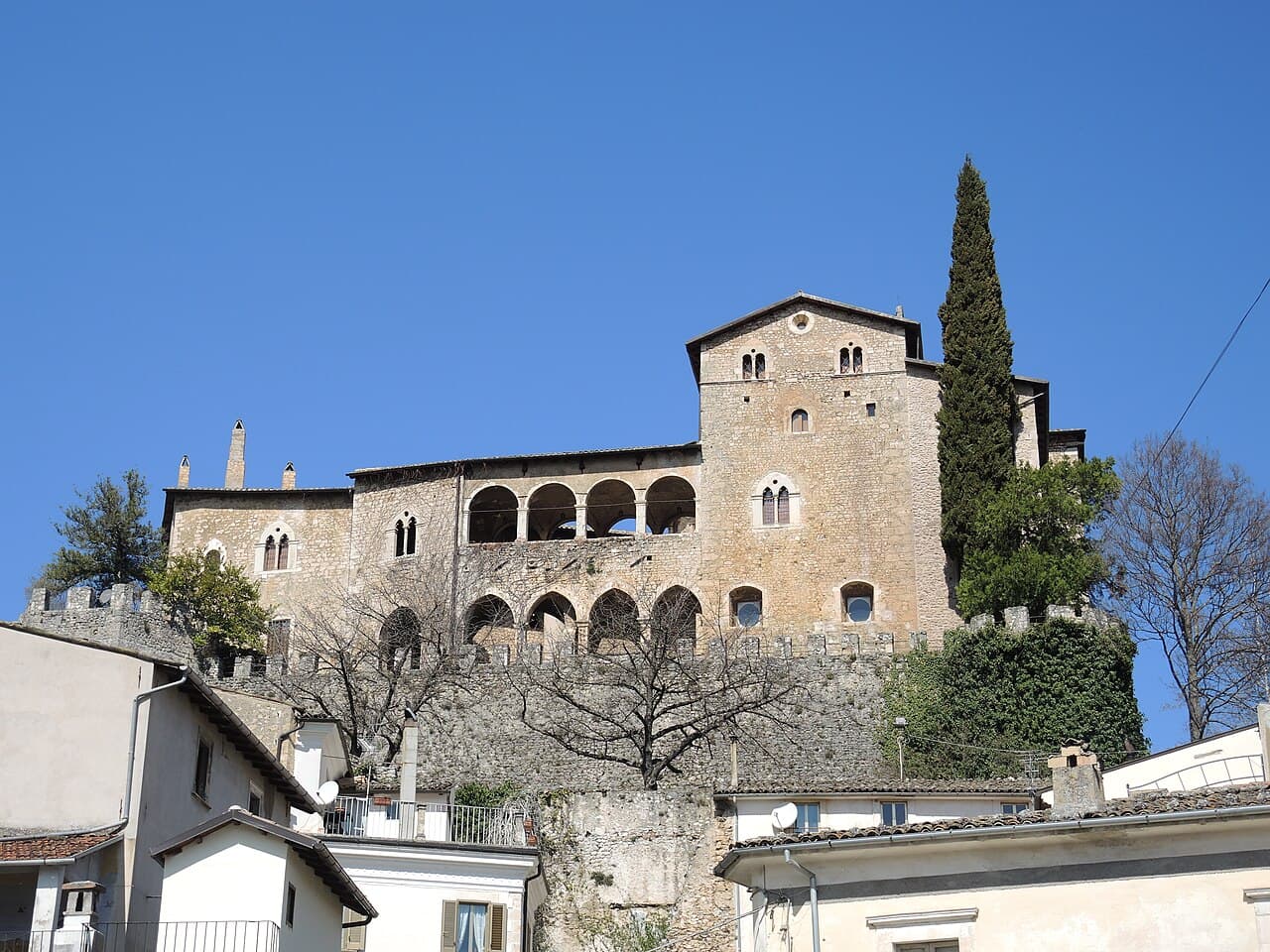
The Castello di Gagliano Aterno exhibits typical characteristics of late medieval hill castles in Italy. Its design includes robust stone walls adapted to the uneven terrain, with defensive structures such as towers and battlements that enhanced its military capabilities.

The castle's layout is irregular, conforming to the contours of the hill, which was a common approach to maximize defensive strength. The curtain walls are thick and punctuated by narrow arrow slits for archers. The main entrance was likely fortified with a gatehouse and possibly a drawbridge or portcullis to control access.

Inside, the castle would have contained essential facilities such as a great hall for gatherings, living quarters for the lord and retainers, and storage rooms for provisions and armaments. Though much of the interior has not survived intact, archaeological studies suggest the presence of these typical medieval castle components.

Defensive elements

The castle's defensive features include towers positioned to cover all approaches, enabling defenders to repel attackers effectively. The battlements provided protection for soldiers on the walls while allowing them to fire upon enemies. The steep slopes around the castle further enhanced its defensibility by making direct assaults difficult.

Historical significance and ownership

Throughout its history, Castello di Gagliano Aterno served as a military stronghold and a residence for local nobility. It played a role in regional conflicts during the turbulent late medieval period, including skirmishes between feudal lords and external invaders.

The castle's ownership likely changed hands several times, reflecting the shifting political landscape of Abruzzo during the Middle Ages. While specific historical records about its lords are limited, the castle's enduring presence attests to its importance in local governance and defense.

Current condition and preservation

Today, Castello di Gagliano Aterno is classified as a partially preserved hill castle. Some sections of the stone walls and towers remain visible, though the structure has suffered from centuries of wear and occasional seismic activity common in the region.

Conservation efforts have focused on stabilizing the ruins and preventing further decay, allowing visitors to appreciate the castle's historical and architectural value. The site is accessible to the public, offering panoramic views of the surrounding Abruzzo landscape.

Visiting information and cultural relevance

Visitors to Castello di Gagliano Aterno can explore the remains of this 14th-century fortress and experience a tangible connection to Italy's medieval past. The castle's hilltop position provides excellent opportunities for photography and learning about medieval military architecture.

The castle also contributes to the cultural heritage of the Abruzzo region, which is known for its numerous historic castles and fortifications that illustrate the area's strategic importance throughout history.

Frequently asked questions (FAQ)

How do I get to Castello di Gagliano Aterno?
Castello di Gagliano Aterno is accessible by car, with parking available nearby. The castle is located in the province of L'Aquila, and visitors can easily reach it from major cities in Italy by following the scenic routes through the Abruzzo region.
What is the historical significance of Castello di Gagliano Aterno?
Castello di Gagliano Aterno dates back to the Middle Ages and served as a strategic fortress during various conflicts. Its well-preserved architecture and historical artifacts provide insight into the region's past, making it an important site for both history enthusiasts and tourists.
When was Castello di Gagliano Aterno built?
The construction of Castello di Gagliano Aterno began in the 10th century, with subsequent modifications made over the centuries. The castle reflects various architectural styles that evolved during its long history, showcasing the region's rich cultural heritage.
Can I take guided tours of the castle?
Yes, guided tours are available at Castello di Gagliano Aterno. These tours provide in-depth information about the castle's history, architecture, and significance, enhancing the visitor experience.
Why is Castello di Gagliano Aterno a popular tourist destination?
Castello di Gagliano Aterno attracts visitors due to its stunning architecture, historical significance, and breathtaking views of the surrounding landscape. The castle offers a unique glimpse into Italy's medieval past, making it a must-visit for history lovers and tourists alike.
Is it possible to visit the castle year-round?
Yes, Castello di Gagliano Aterno is open to visitors year-round, although opening hours may vary by season. It is advisable to check the official website or contact local tourism offices for the most current information before planning your visit.
What are the ticket prices for entry to the castle?
Ticket prices for Castello di Gagliano Aterno are generally affordable, with discounts available for students and seniors. It is recommended to purchase tickets in advance during peak tourist seasons to ensure availability.
What is the best time to visit Castello di Gagliano Aterno?
The best time to visit Castello di Gagliano Aterno is during the spring and fall when the weather is mild and the surrounding scenery is particularly beautiful. These seasons also offer fewer crowds, allowing for a more enjoyable experience.
Are there any nearby attractions to visit?
Yes, there are several nearby attractions, including the stunning natural parks of Abruzzo and other historical sites in the region. Visitors can also explore charming local villages and enjoy the rich culinary offerings of the area, making for a well-rounded trip.

Photo gallery

Castello di Gagliano Aterno
Click to view

Photo by Pietro•CC BY-SA 4.0

1 photo • Click any image to view in full screen

Information

Hill Castle

Loading map...

Visitor reviews

No reviews yet. Been here? Write the first review and help other travelers!

Write the first review

Visited this castle? Share your experience

Your review helps other travelers and adds first-hand knowledge to our encyclopedia.
Write a review

(5/5)

0/2000 characters

Your review will be visible after admin approval

Nearby castles

2.5 km
Castelvecchio Subequo — Italy castle

Castelvecchio Subequo

Castelvecchio Subequo, Italy

Castelvecchio Subequo, also known historically as Subrequo and Subrego, and originally called Superaequum or Superequum in Latin, is a notable hill castle located in the province of L'Aquila within the Abruzzo region of central Italy. Positioned at the base of Mount Sirente, this castle occupies a strategic location that has been significant since ancient times. Historical background and significance The origins of Castelvecchio Subequo trace back to the Roman era when the settlement of Superaequum was an important municipium. The castle itself, however, dates primarily to the medieval period, reflecting the region's turbulent history during the Middle Ages. The castle served as a defensive stronghold overseeing the surrounding valley and controlling access routes through the mountainous terrain. Throughout the centuries, Castelvecchio Subequo witnessed various phases of occupation and reconstruction, adapting to the changing military and political needs of the area. Its location at the foothills of Mount Sirente made it a critical point for regional defense and administration. Architectural features and layout As a hill castle, Castelvecchio Subequo is characterized by its elevated position, which provides natural defensive advantages. The castle's construction incorporates local stone materials, typical of Abruzzo's medieval fortifications. While much of the original structure has been altered or lost over time, remnants of fortified walls, towers, and defensive battlements remain visible, illustrating the castle's military function. The castle complex likely included a central courtyard, residential quarters, and storage areas, arranged to maximize defense and utility. The steep terrain around the castle enhanced its defensibility, allowing defenders to observe and repel potential attackers effectively. Castelvecchio Subequo in the context of Abruzzo's medieval fortifications The castle is part of a network of medieval fortifications scattered throughout Abruzzo, a region known for its rugged landscape and strategic importance during the Middle Ages. These castles often served dual roles as military bastions and administrative centers for local lords. Castelvecchio Subequo's design reflects typical medieval military architecture found in central Italy, with adaptations to the local topography and available materials. Its preservation, although partial, offers valuable insights into the defensive strategies employed in Abruzzo during the high and late medieval periods. Current condition and cultural heritage Today, Castelvecchio Subequo stands as a partially preserved hill castle, with visible ruins that attract visitors interested in medieval history and architecture. Efforts to maintain and study the site contribute to the understanding of Abruzzo's historical landscape and its role in Italy's broader medieval heritage. The castle and its surroundings are part of the cultural identity of the local community, offering educational opportunities and serving as a point of interest for tourism in the province of L'Aquila.

High Medieval (11th–13th c.)
Details
7.5 km

Castle of Beffi

Acciano, Italy

The Castle of Beffi stands as a remarkable example of a medieval hill castle strategically positioned in the municipality of Acciano within the Abruzzo region of Italy. Constructed in the 12th century, this fortress served as a pivotal defensive stronghold overseeing the middle Aterno valley, a vital corridor linking to the adjacent Subequana valley. Its placement on a rocky outcrop exemplifies the characteristics of a slope castle, utilizing natural topography to enhance its defensive capabilities. Historical significance and origins The earliest recorded mention of the Castle of Beffi dates back to 1185, situating its origins firmly within the high medieval period. Initially, the castle functioned as a fortified residence for local feudal lords who governed the surrounding territories. Its strategic importance was heightened by its role in controlling access through the Aterno valley, which was essential for regional defense and surveillance. The castle's significance is further underscored by its inclusion in the 11th-century Chronicon Farfense, a medieval chronicle that situates Beffi within broader historical narratives of central Italy. During the 13th and 14th centuries, the castle and its adjoining fortified village expanded considerably, likely influenced by the Norman rulers who held sway in southern Italy during this era. This expansion reflected the castle’s growing military importance, reinforcing the defensive network of towers safeguarding the valley. In the 13th century, the Castle of Beffi played a role in the foundation of the nearby city of L’Aquila, indicating its integration into the political and territorial dynamics of the region. Over time, the castle’s defensive function became intertwined with the development of the surrounding community, which thrived within the protection of its walls. Architectural features and layout Fortified enclosure and tower The castle is enclosed within a trapezoidal fortified area that adapts ingeniously to the rugged terrain of the rocky outcrop on which it stands. This design maximizes defensive coverage while conforming to the natural landscape. The centerpiece of the castle is its imposing medieval stone tower, which rises over 20 meters and occupies the highest point within the enclosure. The tower’s irregular polygonal shape is constructed from carefully fitted small, uneven stone blocks, showcasing medieval masonry techniques. It comprises four floors capped by a terrace that originally featured battlements for defense. The entrance is uniquely positioned on the first floor, accessible originally by a retractable staircase, a common defensive feature designed to hinder attackers. Defensive walls and gate Surrounding the tower are remnants of defensive walls equipped with battlements and arrow slits, narrow vertical openings that allowed archers to defend the castle while remaining protected. The main entrance gate remains notably well-preserved, characterized by a pointed arch typical of medieval architecture. Above the gate, the ancient coat of arms of Beffi is displayed, depicting Saint Michael standing over a tower. This emblem symbolizes protection and strength, reflecting the castle’s role as a guardian of the region. Residential and communal structures Within the fortified enclosure, several residential buildings dating from after the 13th century illustrate the organic growth of the village that developed under the castle’s protection. These structures vary in layout, indicating adaptations to the terrain and the evolving needs of the inhabitants. The site also incorporates natural caves and terraces integrated into the rocky landscape, enhancing both the defensive and residential utility of the fortress. This blending of natural and human-made features exemplifies medieval builders’ strategic use of geography to fortify their strongholds. Decline and restoration efforts From the 18th century onward, the fortified village surrounding the Castle of Beffi experienced gradual abandonment, influenced by changing social and economic conditions. The decline culminated in the early 20th century after a damaging earthquake led to the village’s total desertion. Recognizing the historical and cultural value of the site, restoration efforts commenced in the late 1990s, focusing primarily on preserving the central tower and key defensive elements. These works have allowed better understanding and appreciation of the castle’s medieval fabric and strategic importance. Cultural heritage and visitor experience Today, the Castle of Beffi stands as a partially restored medieval hill castle that offers visitors a glimpse into the defensive architecture and feudal history of central Italy. Its strategic location overlooking the Aterno valley provides scenic views and a tangible connection to the region’s medieval past. The combination of natural features and human construction at Beffi highlights the adaptive strategies employed by medieval builders to secure important territorial vantage points. The castle remains a significant cultural landmark within Abruzzo, contributing to the understanding of medieval fortification systems in Italy.

High Medieval (11th–13th c.)
Details
12.6 km
Castello di Popoli — Italy castle

Castello di Popoli

Popoli, Italy

Castello di Popoli, also known as Castello ducale Cantelmo, is a prominent hill castle located in the town of Popoli within the Province of Pescara in the Abruzzo region of Italy. This medieval fortress dates back to the 10th century and is a significant example of early medieval military architecture in the area. Historical background and significance The castle was originally constructed in the early medieval period as a defensive stronghold to control the strategic valley connecting the Adriatic coast to the interior Apennine mountains. It played an important role in the territorial disputes and power struggles typical of medieval Italy. The fortress became closely associated with the Cantelmo family, a noble lineage that rose to prominence in the region during the late Middle Ages. The Cantelmos used the castle as a ducal residence, which is why it is often referred to as the Castello ducale Cantelmo. Throughout its history, the castle witnessed several sieges and modifications reflecting the evolving military technologies and political changes. It was part of the defensive network protecting the Abruzzo region from invasions and local conflicts. Architectural features and layout The Castello di Popoli is characteristic of hill castles built during the early medieval period, featuring robust stone walls adapted to the natural terrain. The castle's location on a rocky outcrop provided a commanding view of the surrounding landscape, crucial for surveillance and defense. The fortress includes towers and battlements typical of the period, designed to resist attacks and provide vantage points for archers. The main entrance was fortified with a gatehouse and defensive mechanisms such as a portcullis and arrow slits. Inside, the castle contained living quarters, storage rooms, and a courtyard that served as the heart of the complex. Over the centuries, the castle underwent renovations that introduced elements from later architectural styles, but its core layout remains a testament to its early medieval origins. The Cantelmo family's influence The Cantelmo family were influential feudal lords in Abruzzo from the 14th to the 16th centuries. Their stewardship of the castle marked a period of relative stability and development for the fortress. The family expanded the castle's residential areas and enhanced its defensive capabilities to adapt to the changing political landscape of Renaissance Italy. The ducal title associated with the Cantelmos elevated the castle's status from a purely military installation to a noble residence, blending fortification with elements of comfort and prestige. Current condition and cultural importance Today, Castello di Popoli stands as a partially preserved medieval castle, retaining significant portions of its original walls and towers. Although some areas have suffered from neglect and natural decay, restoration efforts have been undertaken to preserve its historical and architectural heritage. The castle is an important cultural landmark in Abruzzo, attracting visitors interested in medieval history and architecture. It offers insights into the military strategies and noble lifestyles of early medieval Italy, as well as the region's feudal history. Visiting information The castle is accessible to the public, with guided tours available that explore its history, architecture, and the Cantelmo family's legacy. Visitors can enjoy panoramic views of the surrounding landscape from the castle's elevated position. The site often hosts cultural events that celebrate the medieval heritage of Popoli and the Abruzzo region.

Early Medieval (5th–10th c.)
Details