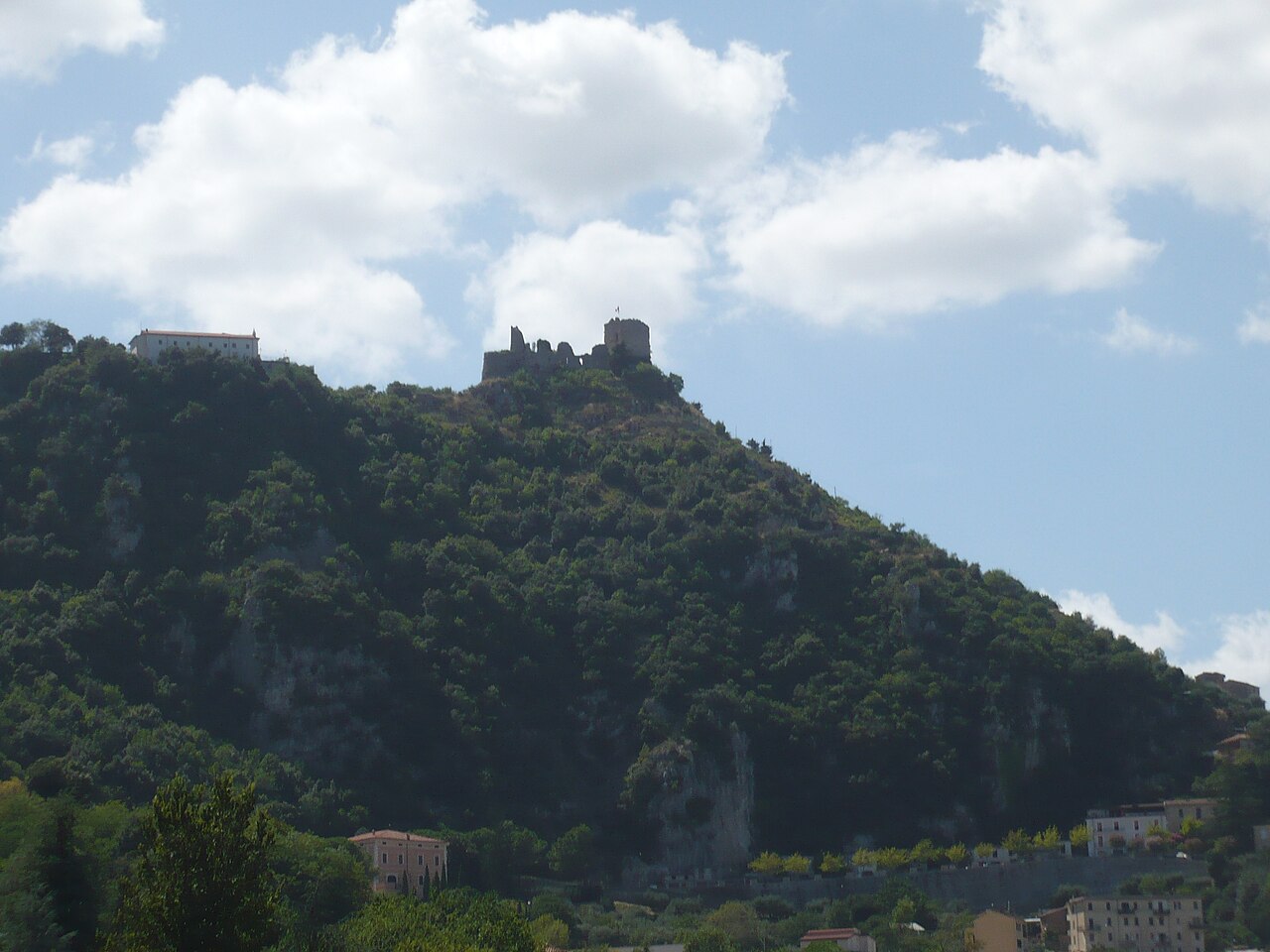
Castello di Gaeta
The Castello di Gaeta stands as a monumental testament to centuries of military architecture and history in the town of Gaeta, Italy. This hill castle occupies a strategic position overlooking the Tyrrhenian Sea, which has made it a key defensive site from the early medieval period through the Renaissance and into modern times. Its extensive fortifications and layered construction reflect the evolving military technologies and political powers that have shaped southern Italy over the last millennium.
Originally founded in the early medieval period, the castle's earliest foundations likely date back to the 6th century during the turbulent times of the Gothic War or the 7th century amid the Lombard expansion along Italy’s western coast. Early references to the site as a "Kastrum" highlight its role as a fortified stronghold designed to control access to the region and protect against invasions.
Medieval origins and early fortifications
The documented history of Castello di Gaeta becomes clearer in the 13th century under the reign of Frederick II of Swabia, Holy Roman Emperor. In 1223, Frederick II initiated significant enhancements to the castle's defenses, recognizing Gaeta's strategic importance in the ongoing conflicts between the Empire and the papacy. These improvements laid the groundwork for the castle’s emergence as a key military bastion in the region.
During the Angevin period beginning in the late 13th century, the castle underwent major expansions. The Angevin dynasty, which ruled the Kingdom of Naples, constructed the lower section of the fortress. This portion exhibits the robust masonry and defensive design typical of late medieval fortifications, with thick walls and battlements designed to withstand siege warfare. The Angevin wing was later adapted for use as a military prison, a function it retained until the late 20th century.
The aragonese enhancements and renaissance military architecture
Following the Angevin era, the Aragonese dynasty took control of Gaeta and expanded the fortress further. The upper section of the castle, built under Aragonese rule, reflects the evolving military architectural style of the Renaissance period. This part of the castle was designed not only for defense but also to serve as a military educational facility, evidenced by its later use as the Carabinieri corps cadet school.
One of the castle’s most striking features from this period is the Torre di Gaeta, a tall tower crowned with a dome that houses the Royal Chapel. Commissioned in 1849 by King Ferdinand II of Bourbon, the chapel adds a religious and ceremonial dimension to the fortress, blending military and spiritual functions within the same complex.
16th-century fortifications under charles v
The castle’s fortifications were further strengthened during the 16th century under Emperor Charles V of the Habsburg dynasty. Recognizing Gaeta’s importance as a military stronghold in the Mediterranean, Charles V ordered extensive upgrades to the walls, bastions, and defensive structures. These enhancements transformed the castle into one of the most heavily fortified sites in Europe, showcasing advanced Renaissance military engineering designed to resist artillery and prolonged sieges.
Modern uses and historical significance
In more recent history, the Castello di Gaeta transitioned from a purely military fortress to various institutional roles. The lower Angevin wing functioned as a military prison until 1980, housing notable detainees including Nazi war criminals such as Herbert Kappler and Walter Reder, as well as Italian Jehovah’s Witnesses imprisoned for conscientious objection. After the prison's closure, this section was transferred to the University of Cassino for academic use, particularly related to maritime studies.
The upper Aragonese section served as a military educational facility, hosting the Carabinieri corps cadet school until the end of World War II. Today, it is home to the Guardia di Finanza's nautical school, including a specialized unit focused on maritime finance, continuing the castle’s longstanding association with naval and coastal defense.
Architectural features and layout
The castle complex covers approximately 14,100 square meters and consists of two interconnected structures from different historical eras. The lower Angevin wing is characterized by its massive stone walls and defensive battlements, originally designed to repel medieval sieges. This section retains much of its original military character despite adaptations for prison use.
The upper Aragonese building reflects Renaissance military architecture with its more refined design, including bastions and artillery platforms. The Torre di Gaeta stands as the highest point of the fortress, distinguished by its dome and the Royal Chapel within. This juxtaposition of medieval and Renaissance architectural elements illustrates the castle’s layered history and the continuous evolution of military technology.
Location and cultural heritage
Situated in the historic center of Gaeta, the castle overlooks the Tyrrhenian Sea and commands views of the surrounding coastline. Its position underscores its historical role in maritime defense and control of key naval routes. Today, the castle remains a significant cultural landmark, reflecting the complex history of southern Italy’s military and political landscape.
While specific interior decorative elements such as mosaics or inscriptions are not widely documented, the castle’s imposing walls, towers, and chapel continue to attract visitors interested in military history, architecture, and the heritage of the Italian peninsula.
Frequently asked questions (FAQ)
- How do I visit Castello di Gaeta?
- Castello di Gaeta is located in the historic center of Gaeta, Italy. Visitors can explore the exterior fortifications and some interior areas, though access may be limited due to its current use by military educational institutions. It is advisable to check local tourist information for guided tours and opening hours.
- What is the historical significance of Castello di Gaeta?
- Castello di Gaeta has been a crucial military stronghold since the early medieval period, playing key roles during the Gothic War, Angevin and Aragonese rule, and the Habsburg fortification efforts. Its layered architecture reflects centuries of evolving military strategies and political power struggles in southern Italy.
- When was the Royal Chapel in Castello di Gaeta built?
- The Royal Chapel was commissioned in 1849 by King Ferdinand II of Bourbon and is located beneath the dome of the Torre di Gaeta in the Aragonese section of the castle. It adds a religious and ceremonial aspect to the fortress complex.
- Is Castello di Gaeta accessible for visitors with mobility issues?
- Due to the castle's historic and military nature, some areas may be challenging for visitors with mobility issues. The uneven terrain and fortified structures can limit accessibility, so it is recommended to inquire in advance about specific accommodations or accessible routes.
- Can I visit the Guardia di Finanza nautical school at Castello di Gaeta?
- The Guardia di Finanza nautical school currently occupies the Aragonese section of the castle and is an active military institution. Public access to these areas is generally restricted, but special events or guided tours may occasionally be available through official channels.
Information
Website
Visit websiteSources & official resources
Verify the information above using these authoritative references.
Loading map...
Visitor reviews
No reviews yet. Been here? Write the first review and help other travelers!
Write the first reviewVisited this castle? Share your experience
Your review helps other travelers and adds first-hand knowledge to our encyclopedia.