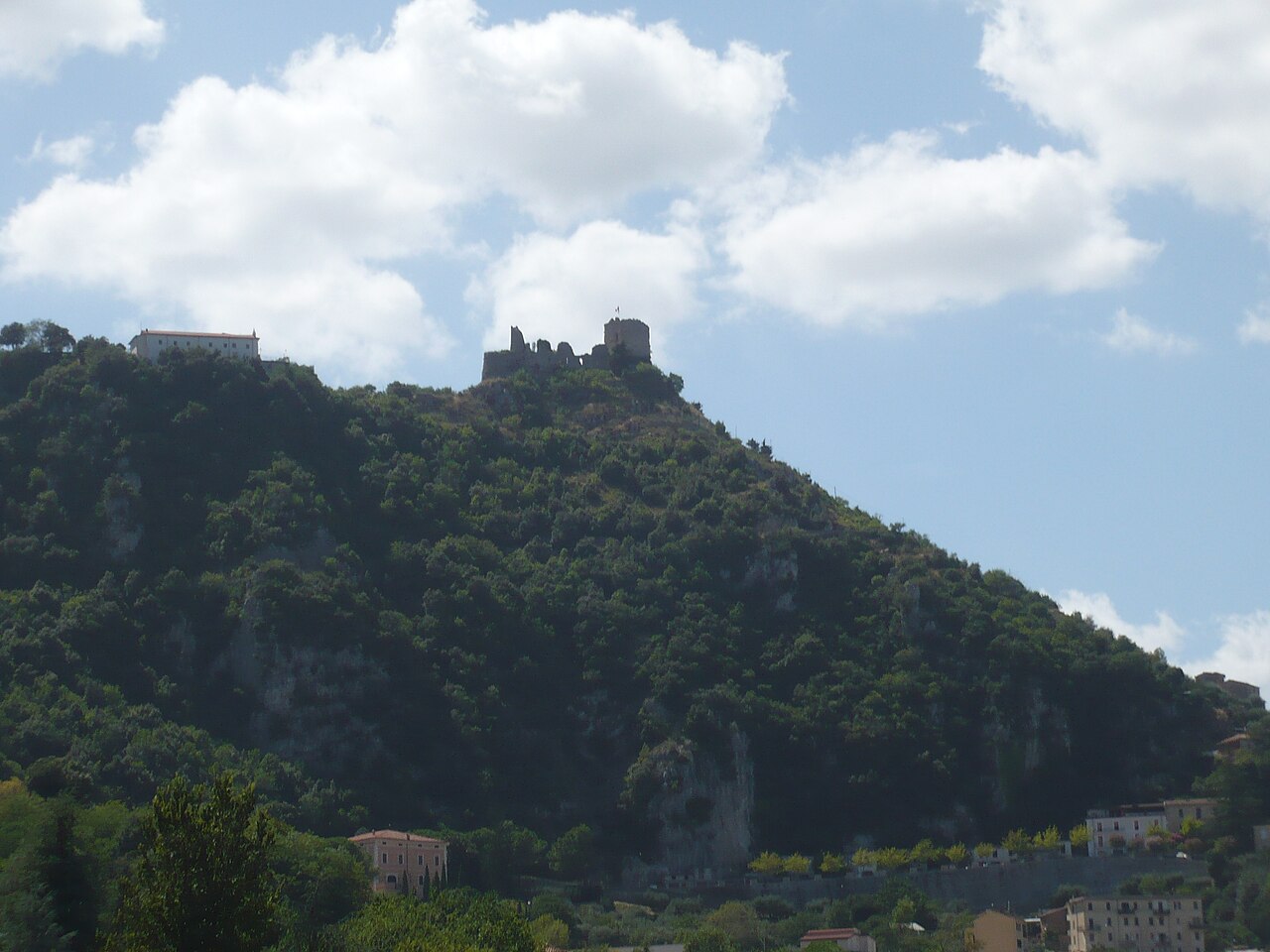
Ducal Castle
Ducal Castle of Sessa Aurunca stands as a monumental testament to the layered history of southern Italy, tracing its origins back to the 9th century when it was first constructed by the Lombards atop the ancient acropolis of the town. This imposing hill castle embodies centuries of architectural evolution, shifting from a strategic military fortress to a noble residence and now serving as a vibrant cultural center. Its location in Sessa Aurunca, a town with deep historical roots in the Campania region, further enhances its significance as a landmark of medieval and post-medieval heritage.
Early medieval origins and lombard foundation
The castle's initial foundation is credited to Landone, the Lombard gastald of Sessa Aurunca, who established the fortress following the loss of control over nearby Capua. Built around the end of the 9th century, the castle was strategically positioned to dominate the surrounding area and utilize the natural defensive advantages of the ancient acropolis. The completion of the castle by 963 AD is documented through the Placito Sessano, a legal document drafted within its walls, underscoring the castle's early administrative and judicial functions.
Norman reconstruction and swabian expansion
During the Norman period, the castle underwent significant reconstruction and enlargement, reflecting its dual role as a military fortress (castrum) and a lordly residence (palatinum). The Normans enhanced its defensive capabilities to secure regional control amidst the turbulent political landscape of southern Italy. The castle's strategic importance was further elevated under Emperor Frederick II of the Swabian dynasty in the 13th century, who commissioned expansions including the addition of new towers and fortifications. These enhancements reinforced the castle's military strength within the Kingdom of Naples and showcased the architectural advancements of the period.
Transition to a residential palace and noble ownership
From the 15th century onward, the castle's function shifted towards comfort and governance, adapting to the needs of courtly life. It became a residence for various rulers, governors, and noble families, including the Marzano dukes until 1466 and later the Carafa family of Stigliano from 1522 to 1664. The castle hosted notable figures such as Emperor Frederick III and Emperor Charles V, events commemorated by a painting in the city hall's "Salone dei quadri." This period saw architectural modifications that balanced defensive features with residential amenities, reflecting broader Renaissance influences.
Damage, restoration, and later uses
The castle sustained serious damage during the 1688 earthquake, necessitating extensive repairs overseen by Don Andrea Guerriero D. Torres. His restoration efforts are immortalized in a fresco inside the castle, providing a rare visual record of post-disaster recovery in the early modern period. Subsequently, the castle passed into the hands of the Dukes of Paternò before becoming municipal property in 1806. Its uses diversified, serving as a prison and later a school, which led to various structural alterations that obscured some of its medieval character.
Modern restoration and cultural revitalization
Between 2007 and 2014, the castle underwent a comprehensive restoration aimed at removing 20th-century alterations and restoring its monumental character. It was adapted to house the Civic Museum and the "Caio Lucilio" Municipal Library, transforming it into a hub for cultural activities. Since 2024, the castle has served as the National Archaeological Museum of Sessa Aurunca, a role established through collaboration with the Regional Directorate of National Museums of Campania and supported by the National Recovery and Resilience Plan (PNRR). The museum showcases archaeological finds from the nearby Roman theater and the submerged ancient city of Sinuessa, including the remarkable statue of Vivia Matidia (Matidia Minor), highlighting the region's rich Roman heritage.
Architectural features and layout
The castle is built on an irregular quadrangular plan that follows the contours of the ancient acropolis, integrating both military and residential elements. Among its most distinctive features are the bifora windows dating from the 13th century, characterized by two arched openings divided by a slender column. While some of these windows have been replaced with regular ones over time, they remain emblematic of the castle's medieval architectural style.
The structure includes robust walls, towers, and residential quarters that illustrate the castle's evolution from a fortress to a noble residence. Despite numerous renovations, recent restoration efforts have aimed to recover the castle's monumental and historical character by removing modern additions and preserving original elements where possible.
Interior and cultural spaces
Inside, the castle now hosts a variety of cultural facilities including a well-equipped library, event halls, and museum galleries. The museum's collection prominently features archaeological artifacts from local excavations, offering visitors insights into the area's ancient past and the castle's own historical context.
Historical fresco and commemorations
A notable internal fresco documents the post-earthquake restoration led by Don Andrea Guerriero D. Torres, serving as a unique historical record of the castle's resilience and ongoing preservation efforts. Additionally, artworks commemorating visits by emperors and noble families enrich the castle's cultural narrative.
The castle’s role in regional history
Throughout its history, Ducal Castle has been a focal point of military, administrative, and residential power in the Campania region. Its strategic location and robust construction made it a key asset during the Lombard, Norman, and Swabian periods. Later, as a noble residence, it reflected the shifting political and social dynamics of southern Italy, hosting prominent historical figures and serving as a symbol of regional authority.
Today, the castle’s transformation into a museum and cultural center ensures that its rich history remains accessible and relevant, connecting contemporary audiences with the diverse heritage of Sessa Aurunca and its surroundings.
Frequently asked questions (FAQ)
- What is the historical significance of Ducal Castle?
- Ducal Castle is a remarkable example of medieval architecture and has played a crucial role in the history of Sessa Aurunca. It was originally built in the 9th century and served as a stronghold for local nobility, reflecting the power dynamics of the time.
- When was Ducal Castle built?
- Ducal Castle was constructed in the 9th century, during a period of significant political and military activity in southern Italy. Over the centuries, it has undergone various modifications and restorations, showcasing layers of history through its architecture.
- What are the opening hours of Ducal Castle?
- Ducal Castle is typically open to visitors from 9:00 AM to 7:00 PM, Tuesday through Sunday. It is advisable to check the official website or contact local tourism offices for any seasonal changes or special closures.
- Can I visit Ducal Castle with my family?
- Yes, Ducal Castle is family-friendly and welcomes visitors of all ages. There are various guided tours available that cater to children and adults, making it an educational experience for the whole family.
- Is it possible to access Ducal Castle by public transport?
- Yes, Ducal Castle can be accessed via public transport, with local buses connecting Sessa Aurunca to nearby cities. Additionally, the castle is situated within walking distance from the town center, making it easily reachable for visitors.
- What is the best time to visit Ducal Castle?
- The best time to visit Ducal Castle is during the spring and fall months when the weather is mild and pleasant. This allows for a comfortable exploration of the castle's grounds and nearby scenic views.
- Are there any nearby attractions to Ducal Castle?
- Yes, several attractions are located near Ducal Castle, including the historic town of Sessa Aurunca and the beautiful beaches of the Tyrrhenian Sea. Visitors can enjoy a full day of exploration with cultural and natural sites nearby.
- How much are the ticket prices for Ducal Castle?
- Ticket prices for Ducal Castle are generally affordable, with discounts available for children, students, and seniors. It's recommended to check the official website for the latest pricing and any special offers or group rates.
Information
Current owner
Municipality of Sessa Aurunca
Loading map...
Visitor reviews
No reviews yet. Been here? Write the first review and help other travelers!
Write the first reviewVisited this castle? Share your experience
Your review helps other travelers and adds first-hand knowledge to our encyclopedia.