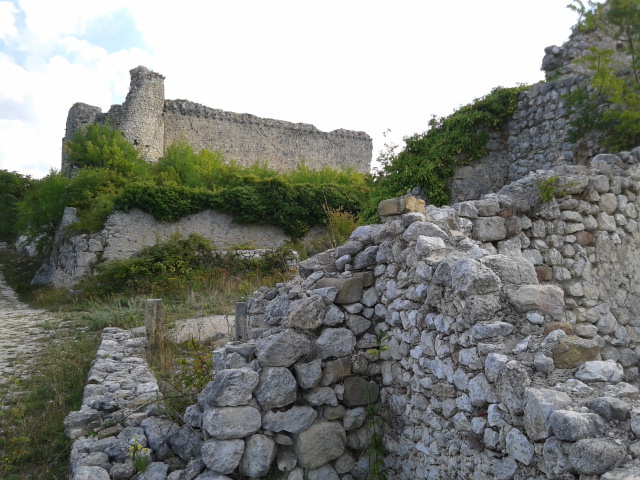
Castello di Alviano
The Castello di Alviano stands as a remarkable example of a medieval fortress that evolved into a Renaissance noble residence, located in the town of Alviano, Italy. Its origins date back to the early medieval period, with the initial construction commissioned by the ruling Alviano family from the 10th century, beginning with the nobleman Offredo, appointed by Emperor Otto III. This fortress was strategically positioned on a hill to oversee and control the surrounding territory, reflecting the typical hill castle defensive design of its era.
Historical evolution and ownership
The castle's most significant transformation occurred in 1470 under the direction of Bartolomeo d’Alviano, a renowned military leader and engineer known as a condottiero. Bartolomeo undertook extensive renovations, elevating the fortress beyond its purely military function into an elegant noble residence while maintaining its defensive capabilities. His architectural vision was inspired by the nearby Orsini castle of Bracciano, blending Renaissance aesthetics with robust military architecture. This period marked the castle’s transition from a medieval stronghold to a residence reflecting the cultural and artistic trends of the Renaissance.
Bartolomeo’s son, Bernardino d’Alviano, further enriched the castle’s history by establishing an important cannon foundry within the castle grounds, underscoring the site's continued strategic and military significance during the Renaissance era. The Alviano family retained control of the castle until 1543, when Isabella Cesi exchanged the county for the territory of Acquasparta, leading to a shift in the castle’s role and ownership.
Following this transfer, the fortress ceased to serve a primary military function and came under the jurisdiction of the Papal States. During this period, it was leased to prominent local families such as the Clementini and Raimondy, who used it more for administrative and residential purposes rather than defense.
In 1654, the castle was acquired at auction by Princess Olimpia Maidalchini Pamphili, sister-in-law to Pope Innocent X. She resided there briefly until her death in 1657. The castle remained in the possession of the Doria Pamphili family, descendants through this acquisition, until the 19th century, after which ownership passed to the municipal authorities of Alviano. Today, the castle serves community functions, preserving its rich historical layers from medieval fortress to Renaissance noble home and beyond.
Architectural features and layout
The Castello di Alviano exhibits a distinctive trapezoidal layout anchored by four circular towers at each corner. These towers are fortified as bastions, a hallmark of Renaissance military architecture designed to withstand artillery attacks. The castle’s massive structure integrates harmoniously with the surrounding village and the rugged terrain, which was strategically employed to enhance its defensive capabilities.
The foundations and several towers incorporate elements from the original medieval fortress, demonstrating a continuity of construction techniques and defensive strategies across centuries. This blend of medieval and Renaissance features provides a unique architectural narrative visible throughout the castle.
A notable architectural highlight is the main entrance portal, guarded by intricately carved stone sculptures of a lion and a Medusa head. These artistic elements mark the threshold into the castle’s central courtyard, which is enclosed by a building rising three floors high with an attic above.
The courtyard features elegant Renaissance-style porticoes that provide access to the inner chambers. Within these chambers, visitors can find surviving fragments of frescoes depicting mythological scenes and heraldic symbols, which may be attributed to the painter known as Pordenone, famous in the region for his religious and secular compositions.
Private chapel and frescoes
Within the courtyard stands a private chapel that opens directly onto the open-air space. The chapel’s interior is adorned with frescoes illustrating episodes from the life of Saint Francis, attributed to the artist Giuseppe Bastiani. One notable fresco includes a portrait of Princess Olimpia Maidalchini Pamphili, linking the artwork to the castle’s 17th-century ownership and highlighting the chapel’s role as a place of personal devotion.
Preservation and current use
The castle retains numerous original elements from both its medieval origins and Renaissance renovations. These include structural components, decorative fresco fragments, and sculptural features that have been carefully conserved. This preservation allows visitors to appreciate the castle’s layered history and rich artistic heritage in situ.
Today, the Castello di Alviano remains a vital cultural landmark within the region, serving community functions and attracting visitors interested in its architectural grandeur and historical significance. Its well-preserved state offers a tangible connection to the past, showcasing the evolution of fortification styles and noble residences from the early medieval period through the Renaissance and into the modern era.
Frequently asked questions (FAQ)
- What is the historical significance of Castello di Alviano?
- Castello di Alviano, located in the picturesque region of Umbria, dates back to the 11th century and showcases the rich history of medieval Italy. It played a crucial role in regional defense and served as a residence for noble families, reflecting the architectural evolution of the time.
- When was Castello di Alviano built?
- The construction of Castello di Alviano began in the early 11th century, with modifications and expansions occurring over the centuries. Its strategic position and robust design highlight the importance of military architecture in medieval Italy.
- Can I visit Castello di Alviano?
- Yes, visitors are welcome to explore Castello di Alviano. The castle offers guided tours that provide insights into its history and architecture, making it an enriching experience for history enthusiasts and casual visitors alike.
- What are the opening hours of Castello di Alviano?
- Castello di Alviano is typically open from Tuesday to Sunday, with hours varying seasonally. It is recommended to check the official website or contact the castle directly for the most accurate and up-to-date information regarding opening times.
- Is it possible to access Castello di Alviano for people with disabilities?
- Yes, efforts have been made to improve accessibility at Castello di Alviano. However, due to its historical architecture, some areas may still pose challenges, so it's advisable to check with the staff regarding specific needs before your visit.
- What is the best time to visit Castello di Alviano?
- The best time to visit Castello di Alviano is during the spring and early fall when the weather is mild and pleasant for exploring the grounds. Additionally, these seasons often feature fewer tourists, allowing for a more intimate experience.
- Are there any nearby attractions to visit while at Castello di Alviano?
- Yes, the area surrounding Castello di Alviano is rich in cultural and natural attractions. Nearby, you can explore the charming town of Alviano, beautiful nature reserves, and stunning landscapes that are perfect for hiking and photography.
- How much are the ticket prices for Castello di Alviano?
- Ticket prices for Castello di Alviano vary depending on the season and any special events. Generally, admission is affordable, and discounts may be available for students and seniors, so be sure to check the latest prices online before your visit.
Information
Website
Visit websiteSources & official resources
Verify the information above using these authoritative references.
Loading map...
Visitor reviews
No reviews yet. Been here? Write the first review and help other travelers!
Write the first reviewVisited this castle? Share your experience
Your review helps other travelers and adds first-hand knowledge to our encyclopedia.