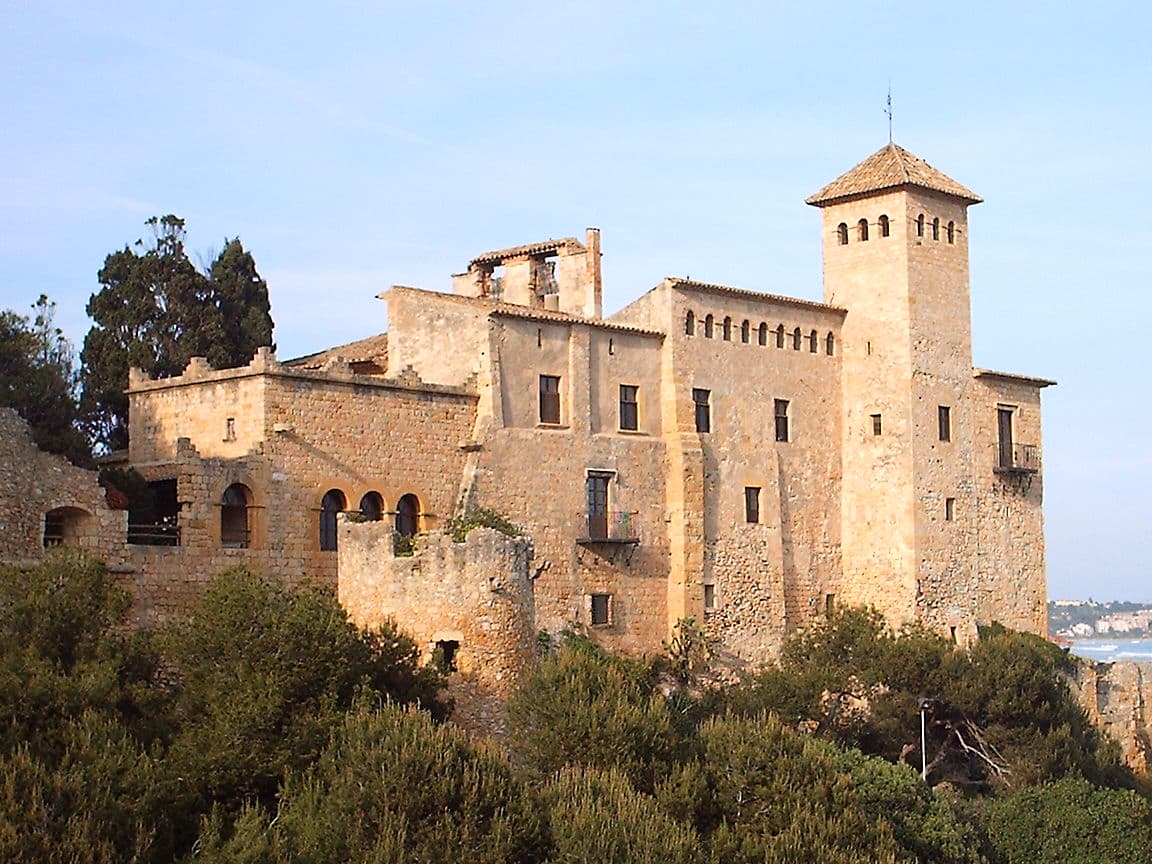
Castell de Tamarit
The Castell de Tamarit is a remarkable medieval hill castle located in the municipality of Tamarit, near the Mediterranean coast close to Tarragona, Spain. Perched on a rocky promontory overlooking the sea, this fortress has a rich history spanning from the 11th century through the modern era, reflecting the region's turbulent past and architectural evolution. Originally constructed by the medieval County of Barcelona as a defensive stronghold, the castle played a vital role in protecting the Catalan coastline from frequent pirate raids by Berber and Ottoman forces during the era of the Reconquista.
Its strategic position enabled it to serve not only military but also economic functions, as the adjacent port was one of the ten principal ports in Catalonia during medieval times, holding toll rights that underscored its commercial importance. Over centuries, the castle and its fortified village, or vila closa, witnessed numerous ownership changes, architectural modifications, and historical events that have left a layered legacy visible in its preserved structures.
Historical background and ownership lineage
The documented history of Castell de Tamarit begins in 1049 when the lordship was held by Bernat Sendred de Gurb. Shortly thereafter, ownership transferred to Ramon Berenguer I, Count of Barcelona, who granted it as a fief to Bernat Amat de Claramunt in 1060. Bernat Amat became the first viscount of Tarragona and the lord of Tamarit, establishing the Claramunt family's long-standing control over the fortress through the 13th century. The castle's inheritance was marked by disputes resolved by 1251, illustrating the complex feudal relationships of the period.
By the late 13th century, the castle's ownership intertwined with the royal family through the marriage of Guillema de Claramunt to the infant Pere. During the 14th century, the Archbishopric of Tarragona assumed administration of the castle, maintaining possession until the 19th century. From 1681, the Montserrat family shared jurisdiction, and the monarch Charles II bestowed the title of Marquis of Tamarit upon Francisco de Montserrat. This period saw the castle and its port flourish as significant economic centers in Catalonia.
However, the castle's fortunes waned after the 15th and 16th centuries due to repeated attacks and shifting political landscapes. The surrounding village was eventually abandoned in the 19th century following a malaria outbreak. In the early 20th century, the castle changed hands when the Archbishop of Tarragona sold it in 1916 to Charles Deering, an American industrialist and art patron. Deering undertook a sensitive restoration inspired by romantic aesthetics, guided by artists Ramon Casas and Joan Ruiz, preserving the castle's Romanesque, Gothic, and Renaissance architectural elements.
During the Spanish Civil War in the 1930s, anarchist forces contemplated destroying the castle's church and its Baroque altarpiece but refrained after learning of Deering's ownership and cultural patronage. Since 1992, the castle has been owned by the Catalan real estate firm Betren, which uses the site primarily for private events. The castle complex, including its medieval village walls and surviving gates, was declared a protected cultural heritage site (Bien de Interés Cultural) in 1988.
Architectural features and fortifications
The fortified village and defensive walls
The Castell de Tamarit complex encompasses not only the castle itself but also a fortified medieval village, known locally as a vila closa. This village is enclosed by well-preserved defensive walls, particularly robust on the western side, which once featured four gates controlling access. Today, two of these gates remain intact: the Porta de la Mora and the Porta de la Creu. These gates exemplify medieval defensive architecture, serving as fortified entry points designed to protect inhabitants from external threats.
The castle tower and masonry
At the heart of the complex stands the castle's Romanesque tower, a square structure built adjacent to the church. The northern face measures approximately 4.65 meters in length and is constructed from large, finely cut ashlar stone blocks, each about 30 by 50 centimeters. The southern section of the tower shows evidence of later reconstruction, featuring a different masonry style and a battered base—a sloping outward wall base designed to strengthen the foundation and resist siege engines.
Church of santa maria de tamarit
The church of Santa Maria de Tamarit, first recorded in 1154, occupies a central position within the castle grounds. This Romanesque building features a simple rectangular nave topped by a pointed barrel vault, an elongated semicylindrical ceiling supported by two transverse arches. The square-shaped apse at the eastern end is notable for its ribbed vault, a hallmark of Gothic architecture, reflecting the church's architectural evolution. The church was later expanded with side chapels to accommodate changing liturgical needs.
Architectural details include double-splayed windows, which widen both inward and outward to maximize light while enhancing defense. Some windows have been closed off over time, but one blocked lateral window retains a semicircular arch made from nine wedge-shaped stones called voussoirs. Surviving sculptural fragments include two column shafts, four decorated capitals, and a string course encircling the building. Among the capitals, one features a geometric pattern carved in porous limestone containing fossils, while two others depict pairs of lions and gryphons sculpted in sandstone. The remaining capitals are plain, highlighting the varied artistic influences over centuries.
Interior furnishings and tombs
Inside the church, the right chapel is dedicated to Saint James and contains a white marble tomb slab commemorating Arnau de Tamarit, a knight and founder of the chapel who died in 1282. The tomb is adorned with two coats of arms representing the Tamarit and Montoliu families, linking the church's history to local nobility. The castle's interior also houses a notable collection of antique furnishings and a Baroque altarpiece, illustrating the layered artistic heritage accumulated over centuries.
Cultural significance and preservation
The Castell de Tamarit stands as a testament to the rich cultural and architectural heritage of Catalonia. Its combination of Romanesque, Gothic, and Renaissance elements offers valuable insights into the region's medieval fortifications and religious architecture. The castle's role in coastal defense, its connection to prominent noble families, and its economic importance through the adjacent port underscore its historical significance.
Declared a Bien de Interés Cultural in 1988, the castle and its medieval village walls are protected as cultural heritage sites, ensuring their preservation for future generations. The restoration efforts initiated by Charles Deering in the early 20th century helped safeguard the castle's architectural integrity while respecting its historical layers. Today, while primarily used for private events, the site remains an important symbol of Catalonia's medieval past and architectural legacy.
Visiting information and accessibility
Although Castell de Tamarit is privately owned and not regularly open to the public, its exterior fortifications and village walls can be viewed from surrounding areas, offering visitors a glimpse into its impressive medieval architecture. The castle's scenic location overlooking the Mediterranean Sea adds to its allure, making it a notable landmark near Tarragona. Visitors interested in medieval Catalan castles and coastal fortifications will find the site historically and architecturally significant, even if interior access is limited.
Frequently asked questions (FAQ)
- How do I get to Castell de Tamarit?
- Castell de Tamarit is located just south of Tarragona, Spain. You can reach it by car via the AP-7 motorway or take a train to Tarragona and then a local bus or taxi to the castle.
- What is the historical significance of Castell de Tamarit?
- Castell de Tamarit dates back to the 11th century and served as a defensive fortress during the Reconquista. Its rich history reflects the medieval architecture and the strategic importance of the region in protecting the coastline from invaders.
- When was Castell de Tamarit built?
- Construction of Castell de Tamarit began in the late 11th century and continued over several centuries. The castle has undergone various renovations, preserving its historical elements while adapting to modern times.
- Can I access the castle grounds for free?
- While the castle itself has an entrance fee, the surrounding grounds can be accessed for free. Visitors are encouraged to explore the beautiful gardens and enjoy stunning views of the coastline.
- Why is Castell de Tamarit popular among tourists?
- Castell de Tamarit is popular for its breathtaking views, historical significance, and picturesque architecture. It is also a favored spot for weddings and photography, making it a beautiful destination for both history buffs and casual visitors.
- Is it possible to visit Castell de Tamarit with children?
- Yes, Castell de Tamarit is family-friendly and offers plenty of space for children to explore safely. The scenic surroundings and historical context provide an engaging experience for visitors of all ages.
- What are the opening hours for Castell de Tamarit?
- The opening hours for Castell de Tamarit vary seasonally, typically from 10 AM to 6 PM. It’s advisable to check the official website before your visit for the most current information on hours and any special events.
- What are the ticket prices for visiting Castell de Tamarit?
- Ticket prices for Castell de Tamarit are generally affordable, with discounts available for students and seniors. Children under a certain age may enter for free, but it's best to verify pricing details on the official website before your visit.
- When is the best time to visit Castell de Tamarit?
- The best time to visit Castell de Tamarit is during the spring or early autumn when the weather is mild and the tourist crowds are smaller. This allows for a more enjoyable experience while exploring the castle and its beautiful surroundings.
- Are there any nearby attractions to Castell de Tamarit?
- Yes, there are several nearby attractions, including the beautiful beaches of Tamarit and the ancient Roman ruins in Tarragona. Visitors can also explore the picturesque village of Tamarit, which offers charming cafes and local shops.
Photo gallery

Information
Website
Visit websiteSources & official resources
Verify the information above using these authoritative references.
Loading map...
Visitor reviews
No reviews yet. Been here? Write the first review and help other travelers!
Write the first reviewVisited this castle? Share your experience
Your review helps other travelers and adds first-hand knowledge to our encyclopedia.


