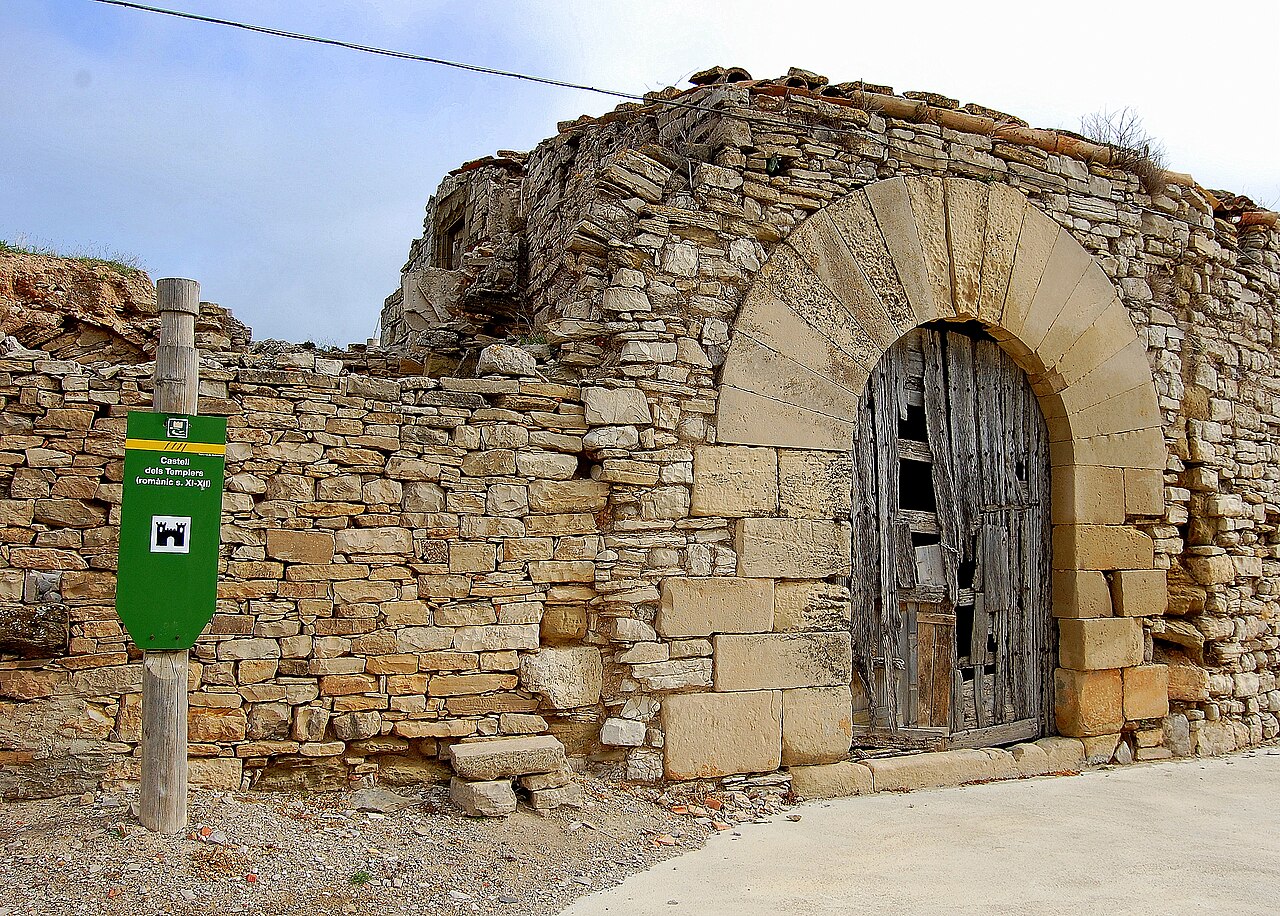
The Castell de Tàrrega stands as a significant hill castle in the town of Tàrrega, located in the Catalonia region of Spain. Its origins trace back to the early medieval period, likely constructed by Arab occupants who established the initial fortress that became the nucleus around which the town developed. Positioned strategically on a modest hill southwest of the modern town center, the castle controlled a vital crossroads connecting Barcelona, Tarragona, and Balaguer. This location made it a crucial frontier post during the period when Saracen forces held territories such as Noguera and Segrià.
Early history and strategic importance
The earliest documented history of the castle begins in 1056, when Count Ramon Berenguer I of Barcelona seized it from Arab control. He granted the fortress in perpetuity to his wife, Almodis, bringing it under the direct authority of the countship of Barcelona. Shortly thereafter, in 1058, Ricard Altemir was appointed to reconstruct and defend the castle, assuming the role of castellan. By 1069, the castellanship was shared by Miró Ricolf de Pinós and Pere Udalard, who maintained a small garrison of about twenty soldiers to secure the site.
Throughout the 12th to 14th centuries, the castle was integrated into the defensive network of the County of Osona. Control of the castle passed through various noble families, including the Pinós, Peramola, Santafé, Torroja, and Granyena lineages. During this period, the fortress was often more a source of income than a permanent residence for its lords. In 1217, the castle came under the influence of Ramon Folc IV de Cardona through marriage, further embedding it within the feudal structures of Catalonia.
Medieval fortifications and royal authority
Despite changing hands among castellans, the castle remained under the sovereignty of the Crown of Aragon. In 1242, King James I issued statutes regulating the management and jurisdiction of the town, fortress, and surrounding lands, emphasizing the castle’s administrative importance. The mid-14th century saw restoration efforts under King Peter III, who ordered repairs to the castle’s walls and defensive structures following regional conflicts that unsettled the Principality of Catalonia.
Architectural features and construction phases
The castle’s surviving structures reveal multiple phases of construction and adaptation. The oldest extant elements date from the 11th and 12th centuries and are primarily located in the southeast section. These include several rooms that provide insight into the medieval fortress’s original layout.
A notable architectural feature is the large cistern situated on the castle’s lower platform. This cistern, measuring approximately 4.5 meters deep, 8 meters wide, and 12 meters long, dates to around the 13th century. Its substantial size and robust construction underscore the critical need for a secure water supply during sieges.
The most prominent surviving defensive structure is the southern enclosure wall, built in the 15th century. This wall, about 3.5 meters thick, is constructed from finely cut stone blocks bonded with mortar. The upper sections, including embrasures for defenders to fire through, were added in the 19th century, reflecting modifications related to the Carlist Wars and other later military uses.
Within the castle’s interior lies a large courtyard, known as the patio d’armes, surrounded by various ancillary rooms that likely served support functions. Archaeological excavations have uncovered structural remains from several periods, indicating a significant building campaign after the 15th century. Additional walls constructed in the 18th and 19th centuries demonstrate the castle’s ongoing adaptation beyond its medieval origins.
Later history and preservation
By the 17th century, the military importance of Castell de Tàrrega had declined, and it ceased to serve as a defensive stronghold. However, the castle experienced a brief resurgence during the 19th-century Carlist Wars, when its fortifications were reactivated for military use. The local government acquired the castle ruins in 1984, initiating archaeological investigations that revealed the castle’s complex construction history and multiple phases of fortification.
Today, the castle stands as a partially preserved ruin, bearing the marks of centuries of abandonment, looting, and military activity. Despite this, the site offers valuable insights into the evolution of medieval fortifications in Catalonia and the historical role of frontier castles in the region.
Frequently asked questions (FAQ)
- What is the historical significance of Castell de Tàrrega?
- Castell de Tàrrega dates back to the 9th century and played a crucial role in the defense of the region during the Middle Ages. It has witnessed numerous battles and changes in power, reflecting the tumultuous history of Catalonia. Today, it stands as a testament to the architectural and cultural heritage of the area.
- When is the best time to visit Castell de Tàrrega?
- The best time to visit Castell de Tàrrega is during the spring and early fall when the weather is mild and pleasant for exploring. These seasons also feature fewer tourists, allowing for a more intimate experience of the castle and its surroundings. Additionally, various local festivals take place during these times, enriching your visit.
- Can I access Castell de Tàrrega with a wheelchair?
- Yes, Castell de Tàrrega is equipped with facilities to assist visitors with mobility challenges. There are designated paths and ramps that provide access to key areas of the castle, ensuring that everyone can enjoy its historical beauty. It’s advisable to check in advance for any specific accessibility arrangements.
- What are the opening hours for Castell de Tàrrega?
- Castell de Tàrrega is typically open from 10 AM to 6 PM, but hours may vary depending on the season and special events. It’s best to check the official website or contact the visitor center for the most accurate and current information. Planning your visit around these hours will allow ample time to explore the castle's many features.
- How much do tickets cost for Castell de Tàrrega?
- Ticket prices for Castell de Tàrrega are generally reasonable, with discounts available for students, seniors, and children. A typical adult ticket costs around 5 euros, while children under 12 can enter for free. Special family packages and group rates may also be available, providing affordable options for larger parties.
- What nearby attractions can I visit along with Castell de Tàrrega?
- Nearby attractions include the charming town of Tàrrega, known for its local markets and historical sites, as well as the beautiful nature trails in the surrounding countryside. The region is also home to several other historic castles and cultural landmarks that are worth exploring. Combining these visits can enhance your experience of the rich history of Catalonia.
- Is it possible to take guided tours of Castell de Tàrrega?
- Yes, guided tours of Castell de Tàrrega are available and highly recommended for a deeper understanding of its history and architecture. Knowledgeable guides share fascinating stories and insights that bring the castle to life. Be sure to check the schedule in advance, as tours may be offered at specific times throughout the day.
- How do I get to Castell de Tàrrega?
- Castell de Tàrrega is easily accessible by public transportation, with regular bus services connecting it to major cities in Catalonia, including Barcelona. If driving, the castle is located just off the A-2 motorway, with available parking nearby. Detailed directions can be found on the castle's official website to help plan your visit.
Information
Website
Visit websiteSources & official resources
Verify the information above using these authoritative references.
Loading map...
Visitor reviews
No reviews yet. Been here? Write the first review and help other travelers!
Write the first reviewVisited this castle? Share your experience
Your review helps other travelers and adds first-hand knowledge to our encyclopedia.