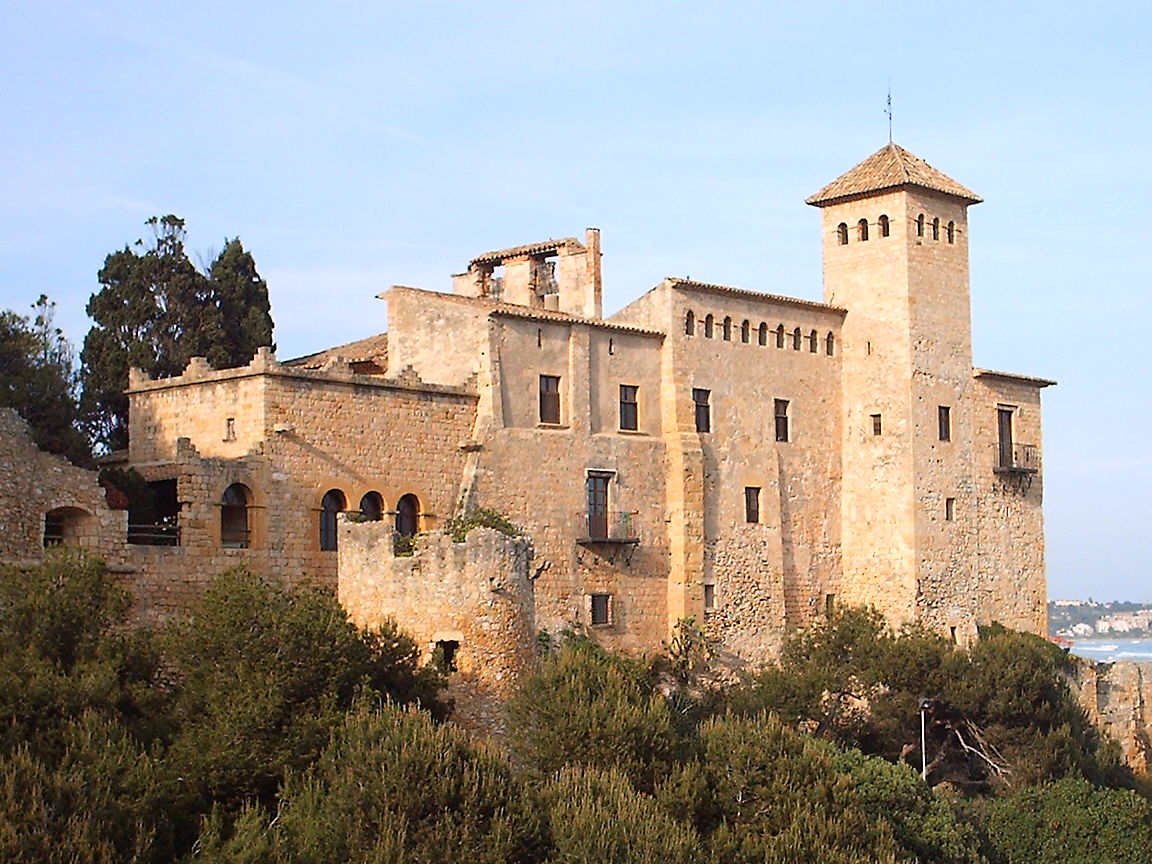
Castell de Montoliu
The Castell de Montoliu is a significant medieval fortress located in the municipality of La Riera de Gaià in Catalonia, Spain. This hill castle occupies a commanding strategic position that historically controlled the territory between the Gaià and Francolí rivers, overseeing lands from Alcover and Valls to Tamarit and Tarragona. Its origins trace back to the 11th century, reflecting the turbulent political and military developments of the Catalan counties during the High Middle Ages.
The castle first appears in documentary sources in 1118 under the name "Monteolivo" in a donation by Count Ramon Berenguer III of Barcelona to Bishop Oleguer of Barcelona. This record marks the castle as the eastern boundary of the Tarragona territory alongside the castle of Tamarit, emphasizing its role in regional defense and territorial delimitation. Some historians associate the site with an earlier fortress mentioned in 1060 as Ullastrell, granted to Bernat Amat de Claramunt with the obligation to construct a fortification. This suggests that Castell de Montoliu may have been established in the mid-11th century, during the period of consolidation of Catalan feudal domains.
Medieval origins and feudal control
Throughout the 12th and 13th centuries, the castle was under the control of the Claramunt family, a notable noble lineage in the region. Legal documents and feudal agreements mention family members such as Deodat and Guillem de Claramunt, with Guillem recognized as lord of Montoliu and nearby castles by 1229. The castle served as a center of power and administration for the family's extensive holdings.
The castle's ownership was occasionally contested, reflecting the complex feudal and ecclesiastical relationships of the time. In 1244, Archbishop Pere d’Albalat acquired parts of the surrounding lands, leading to disputes involving Guillema de Claramunt and Ponç de Cervera that required mediation by the respected friar Ramon de Penyafort in 1251. These conflicts illustrate the intertwined secular and religious influences shaping territorial control in medieval Catalonia.
Military significance and notable figures
The castle is linked to prominent military figures from Catalonia. Berenguer de Montoliu commanded a Catalan fleet during the late 13th century under Alfonso the Liberal and James II, contributing to the reconquest of Tarifa in 1292. This highlights the martial role of the Montoliu family beyond their local domain. Later, in 1453, Bernat de Montoliu is recorded as guarding the port of Constantinople, indicating the family's continued involvement in Mediterranean military affairs.
In the early modern period, the castle's feudal and ecclesiastical ties persisted. In 1611, the Archbishop of Tarragona ceded the tithes of the Monte Olivo territory to Guillem de Claramunt, showing ongoing interactions between church authorities and noble families.
Architectural features and remains
The central tower and enclosure
The core of Castell de Montoliu is a circular tower dating to the 11th century. This tower features an interior diameter of approximately 3.5 meters and ground-level walls about 1.7 meters thick, constructed from finely cut ashlar blocks measuring roughly 15 by 30 centimeters. Although the tower now stands at 3.9 meters tall, it likely originally exceeded 10 meters in height. A notable defensive measure is its entrance, positioned about 5 meters above ground level, typical of early medieval military architecture designed to restrict access.
The tower is enclosed within a rectangular courtyard measuring approximately 30 meters from south to north and 15 meters wide. The western wall includes a vaulted chamber 5.6 meters long and 1.6 meters wide, surmounted by a larger vaulted hall of 6.75 by 4.3 meters with walls between 85 and 100 centimeters thick. These vaulted spaces likely served as storage or residential quarters, their construction providing both structural stability and fire resistance.
Defensive walls and towers
The southern boundary of the enclosure remains well preserved, featuring a nearly square tower at the southeast corner that reinforced this section's defenses. Extending from the eastern wall is a projecting segment approximately 4 meters deep and 10 meters long, possibly serving as an additional defensive or service area. The enclosure walls are about 1 meter thick, suggesting they were originally taller than their current remains.
The castle's construction exhibits a combination of building techniques. The central tower's precise ashlar masonry contrasts with other sections built from roughly shaped stones, reflecting different phases of construction and repair. Most walls and halls date from the 12th or 13th centuries, displaying early Gothic architectural characteristics, including vaulted ceilings and robust defensive features.
Strategic location and territorial control
Strategically positioned on a hill, Castell de Montoliu oversaw a vast domain that extended from the Gaià River to the Francolí River. This territory included numerous feudal holdings and related castles, making Montoliu a key point in the medieval territorial organization of Catalonia. The castle's location allowed control over important communication and trade routes, as well as defense against external threats.
Cultural and historical significance
The castle stands as a testament to the feudal power structures and military architecture of medieval Catalonia. Its association with the Claramunt family and prominent historical figures highlights its role in regional politics and warfare. The surviving architectural elements provide valuable insight into the construction techniques and defensive strategies of the period.
Today, the remains of Castell de Montoliu offer a glimpse into the medieval past of Catalonia. The site is an important cultural heritage landmark, reflecting centuries of history from the early medieval period through the late Middle Ages and into the early modern era. Its preservation allows for ongoing study and appreciation of Catalan medieval fortifications.
Frequently asked questions (FAQ)
- What is the historical significance of Castell de Montoliu?
- Castell de Montoliu is a remarkable example of medieval architecture in the Tarragona region of Spain. It dates back to the 10th century and has played a crucial role in the local history, serving as a defensive stronghold during various conflicts throughout the centuries.
- How do I get to Castell de Montoliu?
- You can reach Castell de Montoliu by taking public transportation to La Riera de Gaià and then walking to the castle, which is well-signposted. If you are driving, there is parking available nearby, making it convenient for visitors.
- When was Castell de Montoliu built?
- Construction of Castell de Montoliu began in the 10th century, reflecting the architectural styles and defensive needs of that era. Over the centuries, it has undergone various renovations, preserving its historical integrity while adapting to modern times.
- Can I visit Castell de Montoliu year-round?
- Yes, Castell de Montoliu is open to visitors year-round, although specific opening hours may vary by season. It is advisable to check the castle's official website or contact local tourism offices for the most current information before planning your visit.
- Is it possible to access the castle with a wheelchair?
- Access to Castell de Montoliu may be challenging for those with mobility impairments due to its historical architecture and terrain. Visitors are encouraged to check for accessibility options and plan accordingly to ensure a comfortable visit.
- What are the opening hours for Castell de Montoliu?
- Castell de Montoliu typically opens to visitors from 10 AM to 6 PM, with extended hours during the summer months. It is recommended to check for any holiday schedules or special events that may affect these hours.
- What are the ticket prices for visiting Castell de Montoliu?
- Admission to Castell de Montoliu is generally affordable, with ticket prices ranging from €5 for adults to reduced rates for children and seniors. Group discounts may also be available, so consider visiting with friends or family for a more economical experience.
- What is the best time to visit Castell de Montoliu?
- The best time to visit Castell de Montoliu is during the spring and fall when the weather is mild and comfortable for exploring the castle grounds. Additionally, visiting during these seasons allows you to enjoy fewer crowds and a more intimate experience with the castle's history.
- Are there any nearby attractions to explore after visiting Castell de Montoliu?
- Yes, after visiting Castell de Montoliu, you can explore the beautiful surrounding landscape, including hiking trails and local vineyards. The nearby town of La Riera de Gaià also offers charming cafes and shops, making it a lovely stop to enhance your visit.
Information
Loading map...
Visitor reviews
No reviews yet. Been here? Write the first review and help other travelers!
Write the first reviewVisited this castle? Share your experience
Your review helps other travelers and adds first-hand knowledge to our encyclopedia.