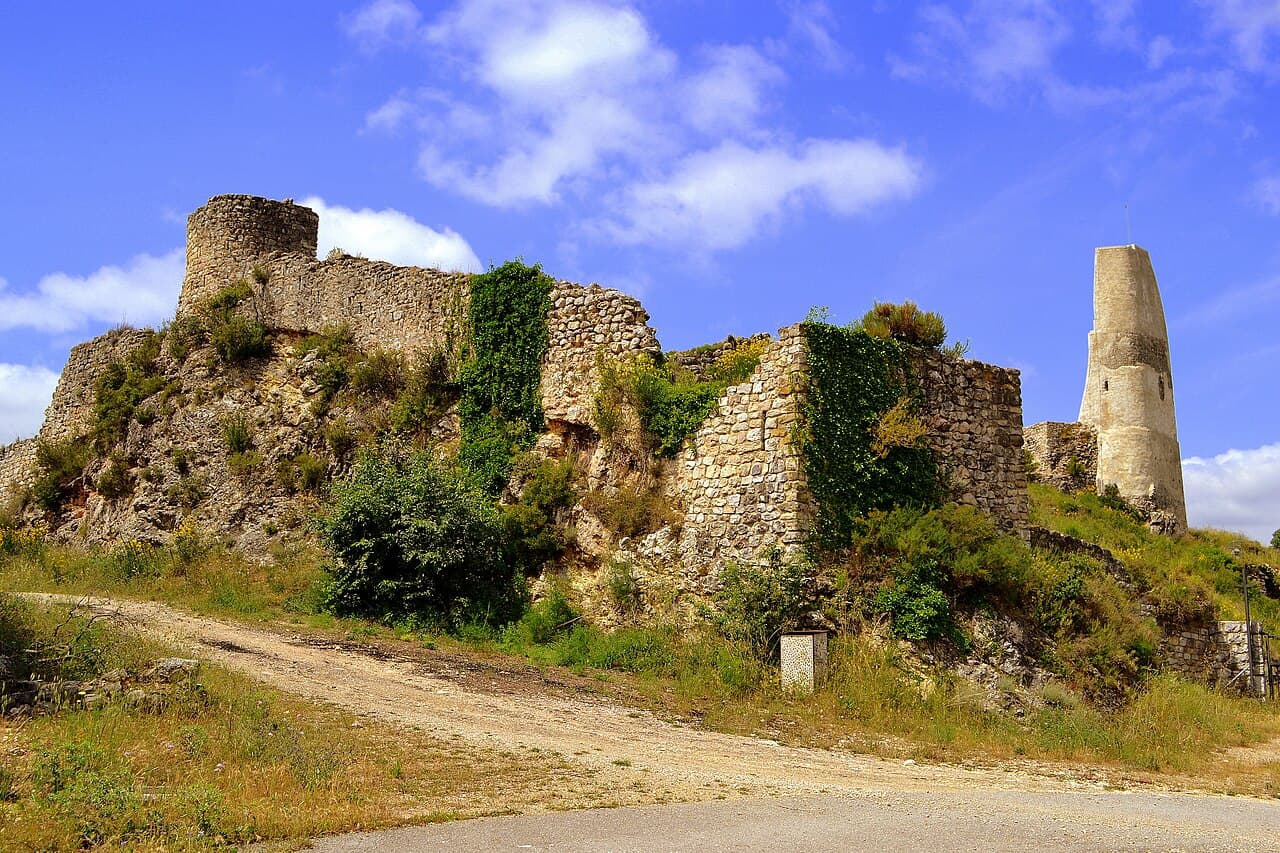
Castell de Subirats
Castell de Subirats is a significant early medieval hill castle located within the municipality of Subirats in Catalonia, Spain. Perched strategically atop an elongated limestone ridge overlooking the fertile Penedès plain, the castle played a crucial role in the Christian defensive frontier established during the early medieval period against Muslim territories on the Iberian Peninsula. Its commanding position allowed for effective surveillance and control of the surrounding lands, marking it as a key fortification in the border defense system of the region.
The castle’s origins are documented as early as the 10th century, with a 917 charter granting the fortress to the monastery of Sant Cugat del Vallès, demonstrating its integration into religious and political structures. This connection to ecclesiastical authorities underlined the castle’s importance not only as a military stronghold but also as a center of regional governance. Further evidence of its historical prominence is found in a 1060 testament referencing a gift to Saint Peter "of the castle Subiradz," confirming the castle’s continued possession and influence during the 11th century. This period likely saw the construction of the castle’s central keep, or torre de l’homenatge, which remains the most prominent surviving element today.
Architectural features and construction
The keep of Castell de Subirats, dating from the 11th century, exemplifies medieval military architecture adapted to the local environment. Built from locally quarried limestone, its thick stone walls were designed to withstand sieges and provide a defensible refuge for the castle’s occupants. The masonry techniques reflect the medieval builders’ skill in fitting irregular limestone blocks into a sturdy, cohesive structure that has endured for centuries.
Surrounding the keep are the remains of the castle’s defensive walls and a bastion, which projected outward to enhance protection against attackers. These fortifications formed an enclosed complex that utilized the natural topography of the limestone spur to maximize defensive advantage. The eastern curtain wall, partially preserved, once enclosed the internal spaces of the fortress, creating a secure courtyard and living quarters within.
Relationship with religious architecture
Adjacent to the castle ruins lies the church of Sant Pere del Castell, also known as the sanctuary of the Mare de Déu de la Fontsanta. This proximity illustrates the medieval co-existence of military and spiritual functions, where fortresses often included or neighbored religious sites to serve the needs of their inhabitants and local communities. The church’s presence reinforces the castle’s role as a center of both secular and ecclesiastical authority in the region.
Historical context and ownership
Throughout its history, Castell de Subirats was a focal point in the shifting political landscape of Catalonia. In 1368, it was granted by King Peter IV of Aragon to the future King Martin I under conditions that ensured its return to royal control, reflecting its strategic importance. By 1377, ownership passed to the nobleman Ramon Alamany de Cervelló, indicating the castle’s integration into the estates of the regional nobility.
Royal privileges reaffirmed in the mid-16th century by Philip II of Spain underlined the castle’s continuing jurisdictional significance. In 1568, the Countess of Aitona transferred certain monetary rights associated with the castle to local communal institutions, though ultimate sovereignty remained with the crown. This complex relationship between nobility, monarchy, and local bodies highlights the castle’s role beyond mere military defense, encompassing administrative and economic functions.
The castle during conflict
The fortress’s military value persisted into the turbulent 17th century, particularly during the Catalan Revolt (1640–1652), known as the Guerra dels Segadors. Around 1641, the castle was captured by Pedro Fajardo, Marquis of Vélez, an event that likely led to its partial destruction. This episode underscores the castle’s continued strategic relevance centuries after its initial construction and its involvement in regional conflicts that shaped Catalonia’s history.
Following these events, the crown maintained control over ecclesiastical revenues and reaffirmed its authority in the area with a royal decree in 1699. This decree emphasized the enduring connection between secular power and religious institutions linked to the castle’s domain.
Preservation and current condition
Today, Castell de Subirats stands as a partially preserved ruin that offers valuable insights into medieval military architecture and regional history. Conservation efforts in 2004 focused on stabilizing the remaining structures, particularly the central keep and surrounding enclosures. These measures have helped safeguard the castle’s historical presence within the natural limestone landscape.
The surviving fragments include sections of the eastern defensive wall, the bastion, and the core area around the main tower. The castle’s location on a limestone spur remains a defining characteristic, providing visitors with panoramic views of the Penedès plain and a tangible connection to the site’s strategic importance.
Castell de Subirats is part of a broader network of fortifications in the region, including nearby Gelida castle to the northeast and Torre Ramona farther north. This network exemplifies the coordinated defense system that protected the frontier zone during the medieval period.
Frequently asked questions (FAQ)
- When was Castell de Subirats originally built?
- Castell de Subirats was built during the early medieval period, with documentary evidence dating back to the 10th and 11th centuries.
- What architectural features remain at Castell de Subirats today?
- Today, visitors can see the partially preserved keep, sections of defensive walls, a bastion, and the eastern curtain wall, all constructed from local limestone.
- What role did Castell de Subirats play in regional history?
- The castle served as a strategic defensive fortress on the Christian-Muslim frontier, later becoming part of noble estates and playing a role in the Catalan Revolt.
- Is there a church near Castell de Subirats?
- Yes, the church of Sant Pere del Castell, also called the sanctuary of the Mare de Déu de la Fontsanta, lies adjacent to the castle ruins, reflecting the site's religious significance.
- Can visitors access Castell de Subirats year-round?
- Visiting hours are not widely published, so it is recommended to check locally before planning a visit. The site is outdoors and accessible, but facilities may be limited.
Photo gallery

Information
Website
Visit websiteSources & official resources
Verify the information above using these authoritative references.
Loading map...
Visitor reviews
No reviews yet. Been here? Write the first review and help other travelers!
Write the first reviewVisited this castle? Share your experience
Your review helps other travelers and adds first-hand knowledge to our encyclopedia.



