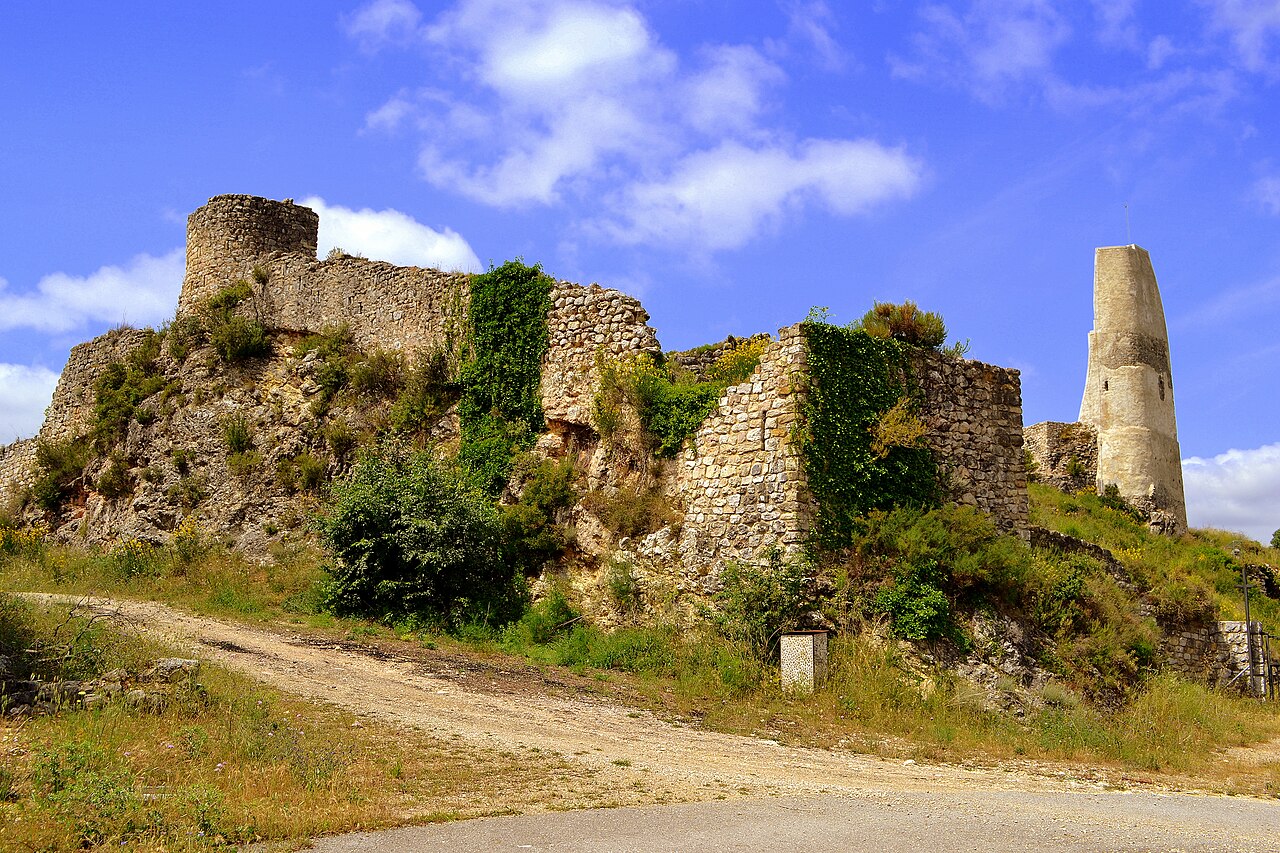
Castell de Gelida
Castell de Gelida is a remarkable medieval hill castle located in the town of Gelida, in the Catalonia region of Spain. Perched on a rocky promontory overlooking the Anoia River valley, this fortress has played a significant role in the region's history since its earliest mentions in the mid-10th century. It served both defensive and administrative functions for the Christian counts of Barcelona during the early Middle Ages, reflecting the strategic importance of this site in controlling the surrounding landscape.
The castle is first documented in the year 945, when Riquilda, Countess of Barcelona and wife of Count Sunyer I, donated the castle’s lands to the monastery of Santa Cecília de Montserrat. This early record highlights the castle’s connection to ecclesiastical power and its integration into the religious and political fabric of the time. Over subsequent centuries, the fortress became a center of lordship under the noble Cervelló family, who held it for several generations. Notably, Ènnyec Bonfill acquired the castle through an exchange, and in 1267, Guerau de Cervelló granted privileges to the local population, emphasizing the castle’s role in regional governance.
Medieval ownership and political significance
Ownership of Castell de Gelida changed hands multiple times during the late 13th and 14th centuries. In 1297, Guerau VII sold the castle to King James II of Aragon, who subsequently transferred it to the Counts of Pallars. The property later passed to the Arborea family and then to the Bertran family in 1367. These transitions reflect the castle’s importance as a valuable asset within the complex feudal networks of medieval Catalonia.
The castle’s strategic position was tested during the early 12th century when it faced threats from advancing Almoravid forces. Although the fortress likely resisted incursions, this episode underscores its military significance during the Reconquista period. In the 15th century, the lord of Gelida sided with opponents of King Joan II during the Catalan civil war. The royal figure Pere the Constable stayed at the castle in 1465, leading to the temporary loss of control by the Bertran family, who later regained their status by reaffirming loyalty to the crown.
Architectural features and castle layout
The castle complex is ingeniously adapted to its natural setting, with three successive enclosures arranged along the slope of the hill, rising between 250 and 290 meters above sea level. Constructed mainly during the 11th and 12th centuries, the fortress showcases evolving defensive architecture suited to the rugged terrain.
Upper enclosure and defensive structures
The highest enclosure, located at the southwest end, occupies a commanding position with tall walls reinforced by a distinctive semi-elliptical tower. Behind this tower lies the Plaça del Pedró, an open courtyard that would have served as a secure area for defenders during sieges. This bastion effectively protected the castle from attacks originating from the elevated mountain side.
Middle enclosure and main tower
Below the upper enclosure, the middle section features a substantial rectangular tower dating from the 11th century. This tower played a crucial role in strengthening the castle’s defenses and controlling access to the inner areas of the fortress. Its robust construction exemplifies the military architectural techniques of the period.
Lower enclosure and the church of Sant Pere
The lowest enclosure houses the castle’s church, dedicated to Sant Pere. This building is the only structure within the ruins that remains intact. Its origins trace back to the pre-Romanesque period, with documentation confirming its existence since the mid-10th century. The church features a single nave covered by a barrel vault supported by horseshoe arches, characteristic of early medieval Christian architecture in the region.
The eastern end of the church has a polygonal apse constructed around 1664, incorporating ribbed vaulting added during later modifications. Between the 16th and 17th centuries, the church was expanded with side chapels and a new portal on the western façade. A bell tower was added at the end of the 18th century, built using stones repurposed from the castle ruins, symbolizing the fortress’s gradual decline in military importance.
Archaeological discoveries and preservation efforts
Archaeological excavations conducted in 1971 revealed a necropolis adjacent to the castle, containing rock-cut graves oriented westward in accordance with medieval Christian burial customs. The discovery of gray pottery fragments alongside skeletal remains provides valuable insight into the burial practices and material culture of the castle’s historical community.
During restoration work in 1979, three pre-Romanesque windows were uncovered in the church walls, further emphasizing the building’s early medieval heritage. These findings contribute to understanding the castle’s evolution from a fortified lordship center to a religious site and ultimately to a historical monument.
In the modern era, the Association of Friends of the Castell de Gelida, founded in 1965, played a pivotal role in preserving the fortress. The municipality acquired the castle in 1968 and undertook restoration efforts to stabilize the ruins and improve visitor facilities. Recognizing its cultural and historical value, the castle was declared a cultural monument in 1980, ensuring its protection and promotion as a heritage site.
Historical context and cultural significance
Castell de Gelida stands as a testament to the turbulent history of medieval Catalonia, reflecting shifts in political power, military strategy, and religious influence over several centuries. Its architectural features illustrate the adaptation of fortifications to natural landscapes and evolving defensive needs. The castle’s connection to notable noble families and monarchs highlights its importance within the feudal system and regional conflicts such as the Reconquista and Catalan civil wars.
Today, the castle remains a prominent landmark overlooking the town of Gelida and the Anoia River valley. Its ruins, combined with the preserved church of Sant Pere and archaeological findings, offer visitors a rich narrative of medieval life, warfare, and devotion. The castle’s preservation and ongoing archaeological research continue to enhance understanding of Catalonia’s cultural heritage.
Frequently asked questions (FAQ)
- How do I get to Castell de Gelida?
- Castell de Gelida is located in the town of Gelida, Catalonia, Spain. It is accessible by car and public transportation from nearby cities such as Barcelona. Visitors can reach the castle by a short hike up the hill from the town center.
- What is the historical significance of Castell de Gelida?
- The castle dates back to the mid-10th century and played a key role in regional defense and governance. It was associated with noble families like the Cervelló and Bertran, and witnessed events during the Reconquista and Catalan civil wars.
- Can I visit the church of Sant Pere inside the castle?
- Yes, the church of Sant Pere is the only intact building within the castle ruins and is open to visitors. It features pre-Romanesque architectural elements and later modifications from the 16th and 17th centuries.
- When is the best time to visit Castell de Gelida?
- The best time to visit is during spring and autumn when the weather is mild and the landscape around the castle is particularly scenic. Summer visits can be warmer but still enjoyable, while winter may be less accessible due to weather conditions.
- Are there guided tours available at Castell de Gelida?
- Guided tours may be available through local tourist offices or the Association of Friends of the Castell de Gelida. These tours provide detailed historical and architectural insights into the fortress and its surroundings.
- Is the castle suitable for visitors with limited mobility?
- Due to the castle's hilltop location and uneven terrain, access may be challenging for visitors with limited mobility. Some areas involve steep paths and stairs, so caution is advised.
Information
Sources & official resources
Verify the information above using these authoritative references.
Loading map...
Visitor reviews
No reviews yet. Been here? Write the first review and help other travelers!
Write the first reviewVisited this castle? Share your experience
Your review helps other travelers and adds first-hand knowledge to our encyclopedia.