Castell de Santa Anna d’Oliva
The Castell de Santa Anna d’Oliva is a significant 16th-century fortress located in the town of Oliva, Spain. Built atop the strategic Santa Anna hill, this castle was constructed in response to the growing threat of Berber pirate raids during the turbulent period of Spanish coastal defense. Its establishment forms part of a broader initiative initiated in the early 16th century to protect Mediterranean towns from frequent incursions, particularly those supported by local Morisco populations discontented with Spanish rule.
The origins of the castle trace back to 1528, when the Cortes of Barcelona issued directives to strengthen coastal fortifications. These efforts culminated in the commissioning of the fortress in the 1580s under the supervision of Vespasià Gonzaga i Colonna, the then Viceroy of Valencia. Gonzaga's assessment in 1575 highlighted the inadequacies of existing defenses, including the lack of reliable water sources, prompting the construction of a modernized fortification at the site of a former hermitage dedicated to Saint Anne.
Architectural design and defensive features
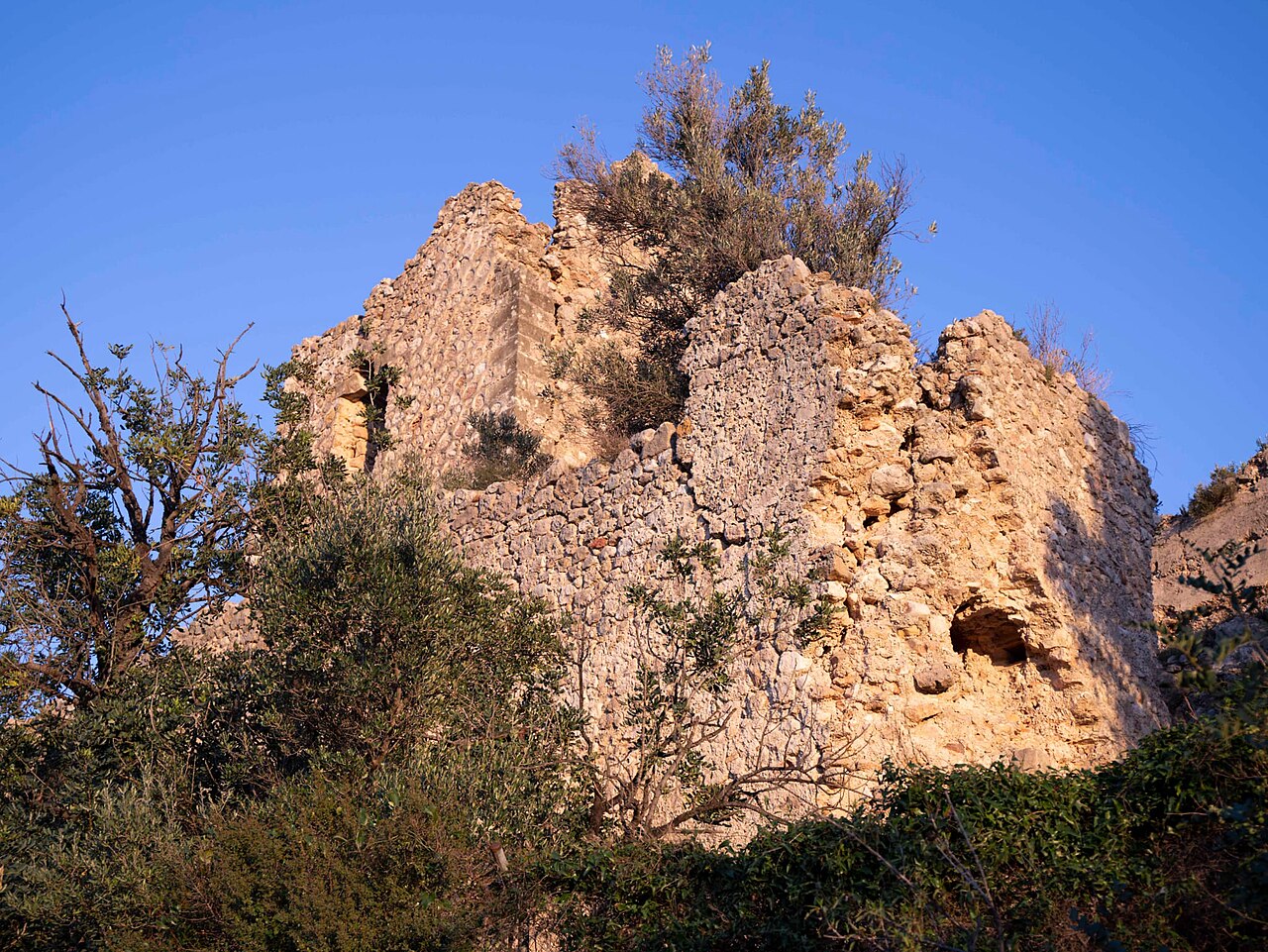
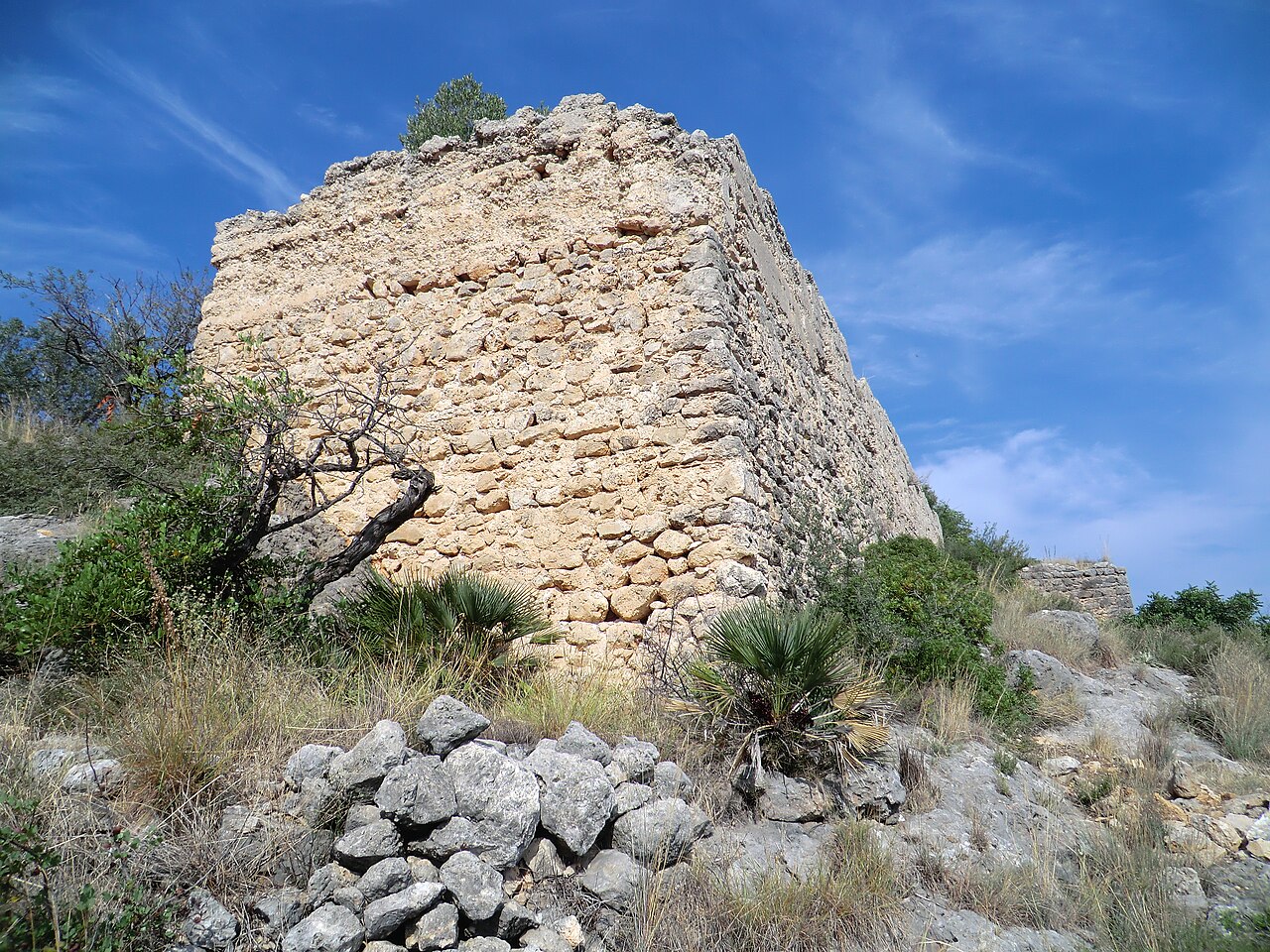
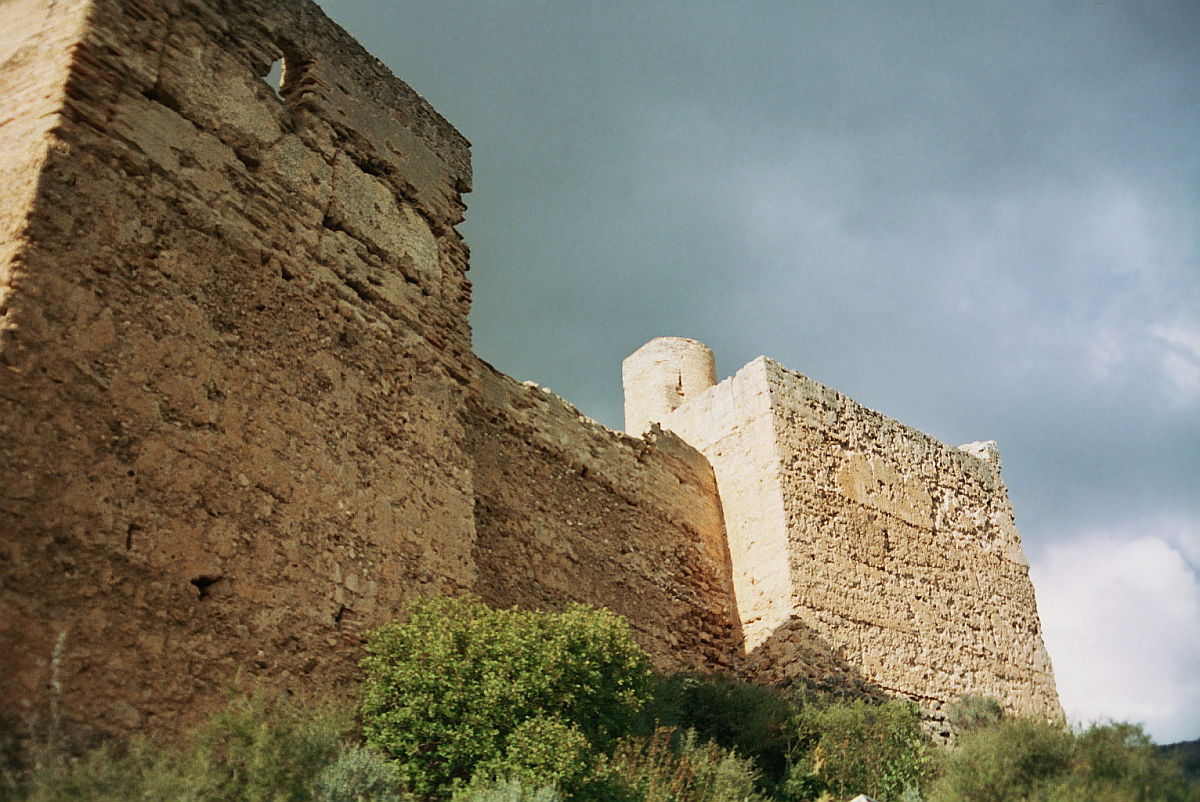
The castle's rectangular layout measures approximately 43.5 by 34.7 meters and exemplifies Renaissance military architecture designed to withstand artillery and infantry assaults. Its construction utilized locally quarried stone, emphasizing durability and resilience. Two prominent circular towers dominate the northwest and southeast corners, featuring thick, battered walls that slope outward to deflect cannon fire effectively.
Each tower is equipped with embrasures for artillery deployment and smaller loopholes for defensive shooting, allowing comprehensive coverage of the surrounding terrain. The fortress walls incorporate oblique loopholes strategically angled to provide overlapping fields of fire, minimizing blind spots and enhancing defensive capabilities.
The main entrance is secured by an angled ramp on the eastern side, facilitating controlled access and enabling defenders to repel assaults efficiently. A vital feature of the castle is its cistern (aljibe), which stored water essential for sustaining the garrison during sieges. This cistern underwent modifications in the 18th century, including roof replacement, ensuring its longevity.
Historical context and military role
Constructed during the late 16th century, the Castell de Santa Anna d’Oliva served as a crucial military installation amid ongoing conflicts with pirate forces operating in the Mediterranean. Its armament in 1585 included seven artillery pieces, such as a medium-sized culebrina bronze cannon, sacrés, half-sacrés, and mortars, supplemented by hundreds of iron cannonballs and mortar stones. These weapons underscored the fortress's role in coastal defense and maritime security.
Throughout the 17th century, the castle's function evolved to emphasize surveillance and control over the nearby Morisco community, reflecting the political tensions and unrest of the period. The fortress maintained a continuous military presence, contributing to regional stability and the enforcement of Spanish authority.
Preservation and current status
Today, the Castell de Santa Anna d’Oliva remains a partially preserved historical monument, recognized officially as a cultural heritage site since 2002. While some sections have been adapted for modern uses, including housing a radio repeater, the core defensive structures, including the towers, walls, and cistern, have endured.
Surviving remnants of auxiliary buildings, such as garrison quarters and storage rooms for gunpowder and supplies, offer valuable insights into the operational aspects of the fortress. The castle continues to be a focal point for local cultural activities, particularly those linked to the town's patron saint, maintaining its historical and communal significance.
Architectural significance and military innovation
The castle exemplifies the adaptation of Renaissance military engineering principles to coastal defense, integrating angled walls and overlapping fields of fire to counter the era's evolving artillery threats. The use of battered walls and robust circular towers reflects contemporary innovations aimed at enhancing durability against cannon bombardment.
Its strategic hilltop location allowed for extensive surveillance of the Mediterranean coastline, enabling early warning and defense coordination against pirate incursions. The design's emphasis on water storage through the cistern highlights the practical considerations necessary for sustaining prolonged military operations under siege conditions.
Comparison with other Spanish coastal fortifications
The Castell de Santa Anna d’Oliva forms part of a network of coastal fortresses built during the 16th century to protect Spain's Mediterranean shores. Unlike larger bastioned fortresses constructed later, this castle reflects an earlier phase of military architecture focused on compact, robust designs suitable for rapid construction and effective defense.
Its combination of artillery embrasures and infantry loopholes illustrates a balanced approach to defense, accommodating both heavy firepower and close-range combat. This contrasts with some contemporaneous fortifications that prioritized one form of defense over the other.
Visiting information and cultural events
While primarily a historical site, the castle and its surroundings host occasional cultural events, particularly those celebrating the town's patron saint, Saint Anne. Visitors can explore the remains of the fortress, gaining insight into its architectural features and historical role.
The site's elevated position offers panoramic views of the surrounding landscape and coastline, enhancing its appeal for tourists interested in military history and Mediterranean heritage. Accessibility may vary, and visitors are encouraged to check local resources for opening hours and guided tours.
Frequently asked questions (FAQ)
- When was the Castell de Santa Anna d’Oliva constructed?
- The castle was constructed in the 1580s as part of a coastal defense initiative against pirate raids during the late 16th century.
- What are the main architectural features of the castle?
- The fortress features a rectangular layout with two large circular towers, thick battered walls, embrasures for artillery, and a cistern for water storage.
- Why was the castle built on Santa Anna hill?
- The hilltop location provided a strategic vantage point for surveillance and defense against pirate incursions along the Mediterranean coast.
- Is the Castell de Santa Anna d’Oliva open to visitors?
- The castle is a cultural heritage site and can be visited, although accessibility and opening hours may vary. Visitors should check local information before planning a visit.
- What is the historical significance of the castle?
- It played a key role in 16th and 17th-century coastal defense and surveillance, particularly in controlling the nearby Morisco population during periods of political unrest.
Information
Loading map...
Visitor reviews
No reviews yet. Been here? Write the first review and help other travelers!
Write the first reviewVisited this castle? Share your experience
Your review helps other travelers and adds first-hand knowledge to our encyclopedia.