Castell de Sant Marçal
Castell de Sant Marçal is a notable medieval hill castle located within the municipality of Sardañola del Vallés, near Barcelona in Spain. Its strategic position at 136 meters above sea level, between flatlands and hills, reflects typical medieval military planning aimed at controlling the surrounding territory. The castle’s origins date back to the early medieval period, with the earliest documentary evidence emerging in 1042, when a church dedicated to Saint Martial was recorded within the parish of San Martín de Sardañola. This highlights the site's early religious and communal significance in the region.
Historical background and ownership transitions
The castle's lordship was initially connected to the Benedictine monastery of San Cugat during the early Middle Ages, reflecting the strong ecclesiastical influence in Catalonia at the time. In the early 12th century, this monastery sold the lordship to the Count of Barcelona, who shortly thereafter granted control to the Montcada family in 1135. The Montcada family was a prominent noble lineage in Catalonia, playing a significant role in regional politics and military affairs.
In 1225, the castle changed hands when Raimundo de Plegamans acquired it from Guillem de Montcada. This sale sparked a prolonged dispute over ownership between the Plegamans family and the Archbishopric of Tarragona, lasting over three centuries. The conflict was finally resolved in 1542 when the courts recognized the Marimón family, descendants of the Plegamans, as the legitimate owners. Despite their wealth and influence, the family had not yet been ennobled at this time.
The family's noble status was formally established in 1690 when Félix de Marimón y de Tord was granted the title Marqués de Serdañola by the Crown. This elevation reflected their service to the monarchy and marked their transition from affluent patricians to recognized nobility. Throughout the 19th and 20th centuries, the castle underwent various changes in ownership, mirroring broader social and economic shifts in Spain.
Today, the castle remains in the possession of the Trénor family and has been officially declared a Bien Cultural de Interés Nacional, underscoring its cultural and historical significance within Spain's national heritage.
Architectural features and layout
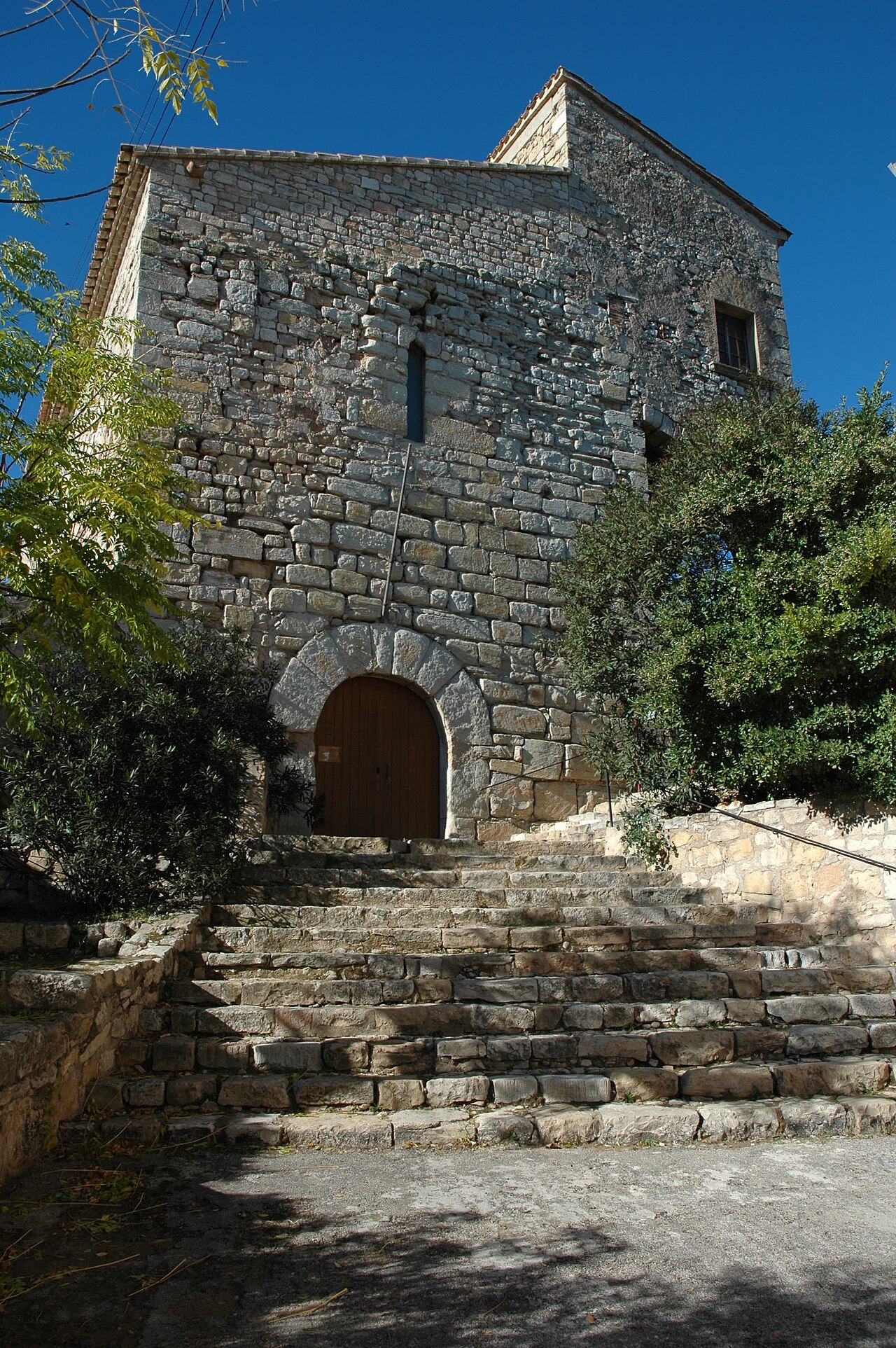
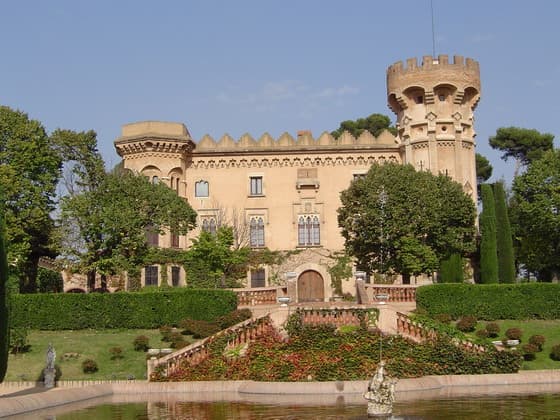
Castell de Sant Marçal is characterized by a square layout enclosing a central courtyard, a common design in medieval fortifications that balanced defensive needs with residential functions. The castle's elevated position provided commanding views of the surrounding landscape, enhancing its defensive capabilities.
Among the most prominent surviving features is a that likely served as both a lookout post and a last line of defense. The presence of a Gothic-style chapel within the castle complex emphasizes the integration of religious life into the castle’s daily activities and reflects the Gothic architectural influences prevalent in Catalonia during the later medieval period.
Historically, the castle was surrounded by a moat, an important defensive element designed to deter and delay attackers. Although the moat is no longer intact, its former existence indicates the strategic importance placed on fortification and security.
19th-century restorations and modifications
In 1895, the castle underwent significant adaptations when the Arròspiede family commissioned architect Cayetano Buigas to transform the site into a secondary residence. Buigas respected the original medieval structure but introduced ornamental elements inspired by Romanesque and Gothic architectural styles. These enhancements added a romanticized aesthetic that blended historic motifs with the tastes of the late 19th century, enriching the castle’s visual and cultural appeal.
Natural setting and preservation
The castle is nestled within a dense environment of coniferous woodland, which extends across the surrounding landscape. This natural setting not only enhances the castle’s scenic beauty but also reflects the historical relationship between medieval fortifications and their environments, where forests often provided resources and additional defense.
Today, the remains of Castell de Sant Marçal preserve both the medieval foundations and the decorative adaptations from the 19th century. The site offers a layered historical narrative visible through its architecture and setting, demonstrating centuries of continuous evolution, reconstruction, and preservation efforts.
Cultural and historical significance
The castle’s long history, marked by ecclesiastical ties, noble ownership disputes, and eventual noble recognition, illustrates the complex social and political dynamics of Catalonia from the medieval period through the early modern era. Its designation as a Bien Cultural de Interés Nacional highlights its importance as a cultural monument that embodies the region’s heritage.
Visitors to Castell de Sant Marçal can appreciate not only its architectural features but also its role in the broader historical context of Catalonia. The castle stands as a testament to medieval fortification strategies, noble lineage, and the integration of religious and residential functions within a single fortified complex.
Visiting information and accessibility
While specific visiting hours and ticket prices are not widely published, the castle’s status as a protected cultural site suggests that access is managed to preserve its condition. Visitors interested in medieval architecture and Catalan history will find Castell de Sant Marçal a rewarding destination, especially given its proximity to Barcelona.
The surrounding natural environment offers opportunities for hiking and exploration, allowing visitors to experience the castle in its historical landscape context.
Frequently asked questions (FAQ)
- When was Castell de Sant Marçal originally built?
- Castell de Sant Marçal dates back to the early medieval period, with documented references from 1042, indicating its origins in the 11th century.
- What architectural styles are visible at Castell de Sant Marçal?
- The castle features Gothic architectural elements, particularly in its chapel, alongside 19th-century Romanesque and Gothic revival ornamental additions by architect Cayetano Buigas.
- Who were the historical owners of Castell de Sant Marçal?
- Ownership transitioned from the Benedictine monastery of San Cugat to the Count of Barcelona, then to the Montcada family, followed by the Plegamans and Marimón families, with the Trénor family holding it today.
- Is Castell de Sant Marçal open to the public?
- While specific visiting hours are not widely published, the castle is recognized as a cultural heritage site, and visitors can explore the exterior and surrounding natural areas.
- What is the significance of the castle's location?
- Situated 136 meters above sea level near Barcelona, the castle's hilltop position provided strategic defense and control over the surrounding landscape during medieval times.
Photo gallery

Photo by Starkenbergg•Public domain
Information
Sources & official resources
Verify the information above using these authoritative references.
Loading map...
Visitor reviews
No reviews yet. Been here? Write the first review and help other travelers!
Write the first reviewVisited this castle? Share your experience
Your review helps other travelers and adds first-hand knowledge to our encyclopedia.