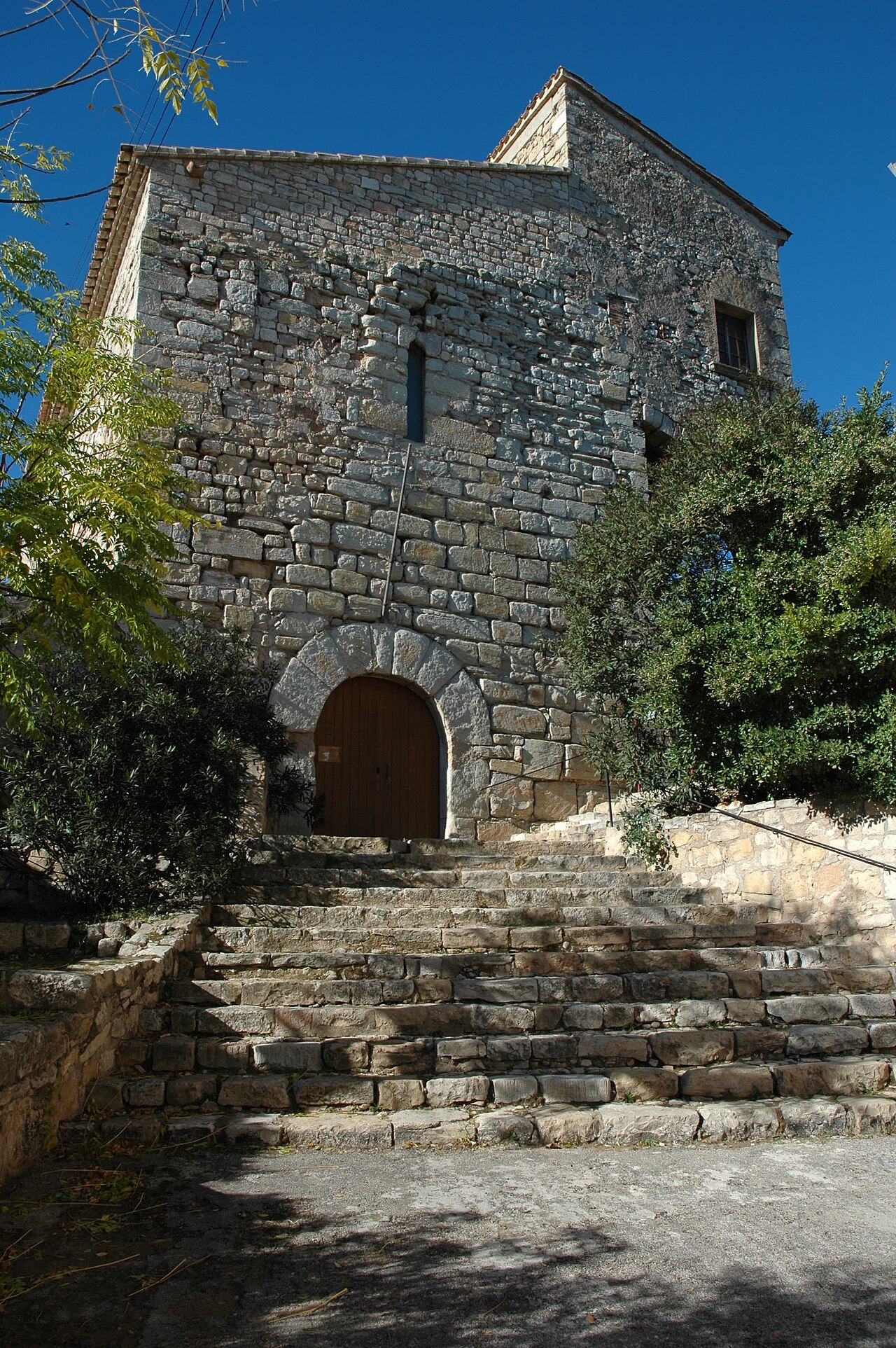
Castell de Plegamans
The Castell de Plegamans is a striking example of a medieval hill castle located near Palau-solità i Plegamans in Catalonia, Spain. This fortress stands on the strategic summit of the hill known as "la Serra," commanding views over the surrounding landscape. Its origins date back to the early medieval period, with the earliest known structure being a rectangular tower constructed between the late 10th and early 11th centuries by local Christian communities. This tower formed the nucleus of the castle and reflects the defensive needs during the turbulent times of the Reconquista and regional conflicts.
The castle's location is first documented in 965 through a donation record to the Monastery of Sant Cugat del Vallès, indicating the area's long-standing settlement with agricultural activity and dwellings. Over the centuries, the fortress evolved both architecturally and politically, serving as a fortified seat for various noble families who played significant roles in Catalonia's medieval history.
Historical significance and ownership lineage
By the early 12th century, the castle was under the lordship of Guadall Gilabert de Plegamans, whose family maintained influence in the region for generations. Notably, Ramon de Plegamans served as a military lieutenant to King Jaume I during the 13th century and participated in the conquest of Mallorca. This connection highlights the castle’s role not only as a defensive stronghold but also as a seat of local power intertwined with broader Crown military campaigns.
Throughout the 15th century, ownership passed through prominent noble houses including the Vilatorta, Gualba, Clariana, and finally the Sentmenat family. In 1427, the castle's territory was incorporated into the Crown, marking a shift in feudal authority. The nearby Monastery of Sant Cugat del Vallès also played a significant role in overseeing land tenure and relations with peasants, reflecting the intertwined ecclesiastical and secular powers of the era.
King Alfonso V granted the castle the status of "Castell Termenat" in 1441, formalizing its fortified jurisdiction. At this time, Antoni de Vilatorta, a Barcelona councilor, was authorized to undertake extensive rebuilding efforts that shaped much of the castle’s late medieval form. Despite its importance, the castle eventually fell into disuse and suffered damage over the centuries, though a restoration in 1995 preserved its structure and adapted it for cultural purposes.
Architectural evolution and features
Early medieval origins
The castle’s core is a rectangular tower dating from the late 10th or early 11th centuries. Constructed using river stones bound with lime mortar, this tower exemplifies early medieval military architecture in Catalonia. It originally served as a lookout and defensive refuge for the local population during the volatile Reconquista period.
Medieval expansions and gothic renovations
In the 12th century, the castle expanded with the addition of a large hall featuring two semicircular arches on the southern side of the enclosure. This hall was accompanied by various supporting rooms, creating a quadrangular layout around a central courtyard. This design facilitated both residential comfort and defensive functionality.
Between the 14th and 15th centuries, the castle underwent significant Gothic-style renovations that define much of its current appearance. The southern façade is notable for its lobulated coronelle windows, some decorated with rosette-shaped moldings along horizontal impost lines. Inside, the ceilings are adorned with enteixinat wooden paneling, a typical Catalan craftsmanship technique of the period.
Defensive elements
The main entrance on the northern side is a semicircular arched doorway constructed with voussoirs, wedge-shaped stones that form the arch. This portal is flanked by three narrow vertical loopholes on each side, allowing defenders to observe and shoot while remaining protected. Above the entrance, a machicolation projects outward, featuring openings between corbels for dropping projectiles on attackers.
The eastern façade boasts thirteen loopholes arranged alternately on two levels, enhancing the castle’s defensive capabilities. These architectural features reflect the fortress’s role in surveillance and protection during periods of conflict.
Roofing and interior features
The roofing has been reconstructed using a double-pitched tile roof supported by exposed wooden beams on most sides, except the western wing, which has a single-pitched roof covering the first floor. The roof tiles exhibit Arabic influences, common in medieval Catalonia, illustrating the cultural exchanges in the region.
At the base of the ancient tower, an old bread oven remains in situ, providing insight into the daily life and practical functions within the castle walls. Additionally, a tunnel reputed to connect the castle with the nearby Can Cortès farmhouse is preserved, reflecting local traditions about secret passages used for communication or escape during sieges.
Cultural heritage and modern restoration
After centuries of decline and partial ruin, the 1995 restoration of Castell de Plegamans was a significant effort to preserve the castle’s historical fabric and adapt it for contemporary cultural use. The restoration respected the original materials and architectural styles, ensuring the fortress remains a valuable heritage site.
Today, the castle stands as a testament to the complex history of medieval Catalonia, embodying layers of architectural evolution from the early medieval through the late medieval Gothic periods. Its combination of defensive structures, noble residences, and cultural symbolism continues to attract interest from historians, architects, and visitors alike.
Local legends about secret tunnels and the castle’s strategic role during turbulent times add to its mystique, making Castell de Plegamans a fascinating subject for study and tourism.
Frequently asked questions (FAQ)
- How do I get to Castell de Plegamans?
- Castell de Plegamans is easily accessible by car or public transport. If you're traveling by car, you can take the C-58 highway, which connects to Palau-solità i Plegamans. The nearest train station is in the town, and buses also run frequently from nearby cities.
- What is the historical significance of Castell de Plegamans?
- Castell de Plegamans dates back to the 11th century and has played a crucial role in the region's history. It served as a defensive fortress and has been a witness to various historical events throughout the centuries. Today, it stands as a symbol of the local heritage and offers insights into medieval life.
- When was Castell de Plegamans built?
- The construction of Castell de Plegamans began in the late 11th century, making it one of the older fortifications in Catalonia. The castle has undergone several renovations and restorations over the years, reflecting different architectural styles. Its rich history is evident in its structure and the stories it holds.
- Can I visit Castell de Plegamans?
- Yes, Castell de Plegamans is open to the public, allowing visitors to explore its grounds and learn about its history. Guided tours are available for those who wish to delve deeper into the castle's past. Be sure to check the schedule for any special events or exhibitions.
- Why is Castell de Plegamans architecturally significant?
- The architecture of Castell de Plegamans combines elements of Romanesque and Gothic styles, showcasing the evolution of castle design over the centuries. Its sturdy walls and impressive towers reflect its original purpose as a fortress. The layout of the castle also provides insight into medieval defensive strategies.
- Is it possible to hold events at Castell de Plegamans?
- Yes, Castell de Plegamans is available for private events such as weddings, corporate gatherings, and cultural activities. The picturesque setting and historical ambiance make it a unique location for special occasions. It is advisable to contact the management for specific arrangements and availability.
- What are the opening hours of Castell de Plegamans?
- Castell de Plegamans is typically open to visitors from Tuesday to Sunday, with varying hours depending on the season. It’s important to check the official website or contact the castle for the most current opening times before planning your visit. Special hours may apply during holidays or events.
- What are the ticket prices for visiting Castell de Plegamans?
- Ticket prices for Castell de Plegamans are generally affordable, with discounts available for students, seniors, and children. Group rates may also apply, making it a great option for school outings or family visits. Ensure to check the official website for the latest pricing information and any special promotions.
- What is the best time to visit Castell de Plegamans?
- The best time to visit Castell de Plegamans is during the spring and fall when the weather is mild and pleasant. These seasons also offer fewer crowds, allowing for a more enjoyable experience. Summer months can be busy, so planning your visit during off-peak times is recommended for a more relaxed exploration.
- Are there any nearby attractions to visit after Castell de Plegamans?
- Yes, there are several nearby attractions worth visiting, including the charming town center of Palau-solità i Plegamans and the beautiful natural parks in the area. You may also explore other historical sites and local eateries that offer a taste of Catalan culture. Plan your itinerary to make the most of your visit to this picturesque region.
Information
Website
Visit websiteSources & official resources
Verify the information above using these authoritative references.
Loading map...
Visitor reviews
No reviews yet. Been here? Write the first review and help other travelers!
Write the first reviewVisited this castle? Share your experience
Your review helps other travelers and adds first-hand knowledge to our encyclopedia.