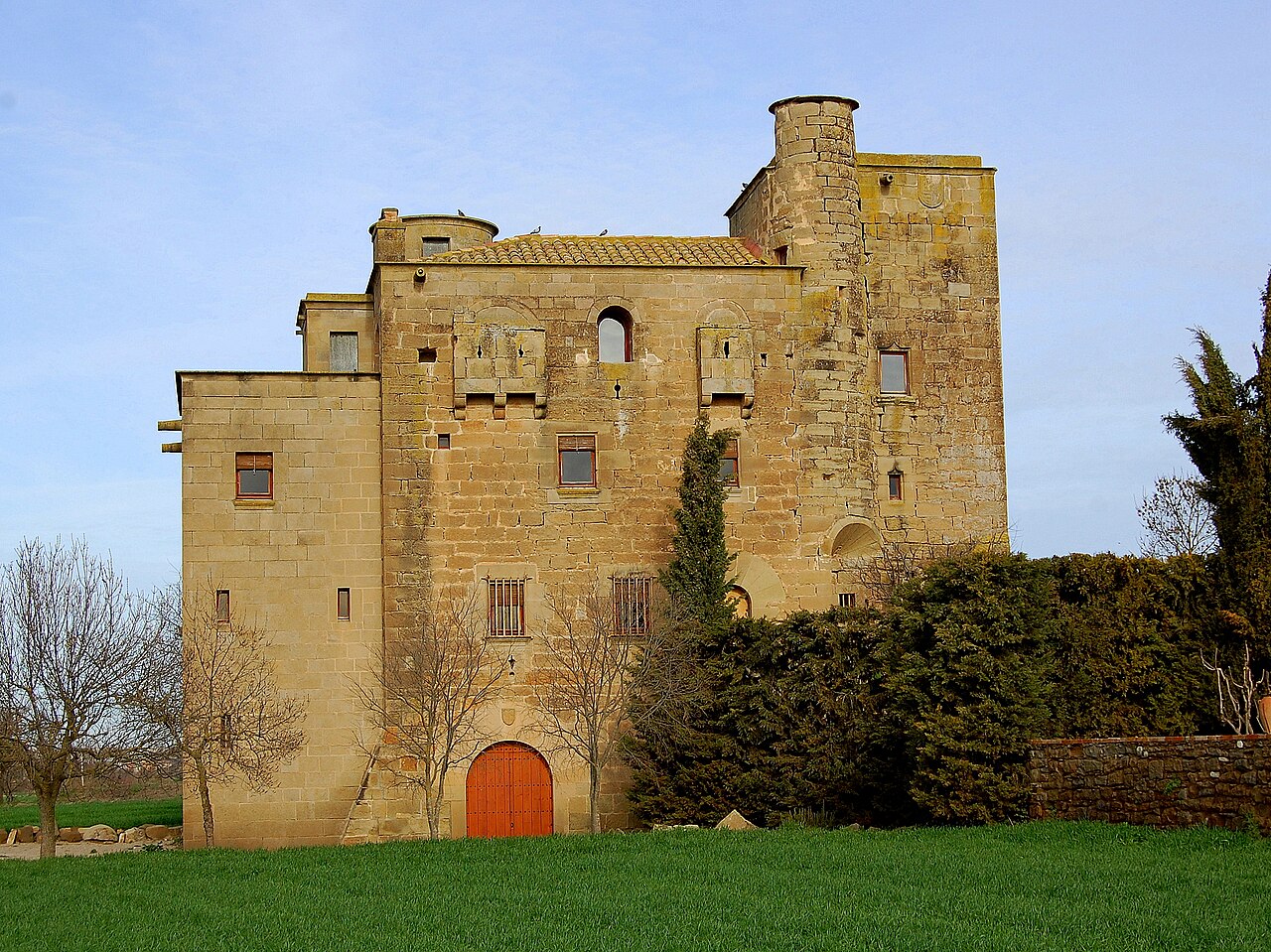
Castell de Montcortès
The Castell de Montcortès stands as a significant Renaissance hill castle located in the municipality of Montcortés de Segarra, Catalonia, Spain. Its origins date back to the late 11th century, with the earliest documentary evidence appearing in a 1095 testament of the knight Guillem Isarn de Trevics. This early record establishes the castle's role within the medieval feudal system and its strategic importance in the region.
Throughout the centuries, Castell de Montcortès witnessed a succession of noble families who shaped its history and architecture. By the early 14th century, it was governed by Berenguer d’Anglesola, and later, in the late 14th century, the Llompard family took control. Notably, Bernat Berenguer de Llompard is recorded in 1381 for his religious contributions, including founding the convent of Santa Clara in nearby Cervera, illustrating the castle's connection to ecclesiastical institutions.
Medieval origins and feudal significance
The castle's foundation in the medieval period reflects the typical defensive and administrative needs of the time. Positioned strategically on a high cliff, it provided commanding views over the surrounding landscape and the village below, ensuring control over local territories. The early feudal lords used the fortress both as a residence and as a stronghold against rival powers.
Renaissance transformation and architectural features
A major phase of architectural renewal occurred in 1493 under the ownership of Joan Sacirera. A documented contract with master builder Joan Barrufet initiated the reconstruction of the castle's main structure in the Renaissance style. This transformation modernized the fortress, blending defensive features with more comfortable residential quarters, reflecting evolving architectural trends of the period.
Structural layout and defensive elements
The castle is designed as a rectangular fortress divided into three main sections. The central part is a residential block intended for habitation. To the left, two parallel towers served defensive purposes, equipped with narrow slit windows and machicolations—openings for dropping projectiles on attackers. The right wing, smaller in scale, likely supported agricultural and storage functions related to the estate.
Facade and decorative details
The principal façade combines functional and ornamental aspects. The main entrance features a semicircular arch flanked by slit windows that provided light and ventilation to the lower storage areas. Above, three floors rise: the first floor with modest windows, the noble floor with three large windows framed by molded surrounds and decorated jambs, and the attic level marked by small lowered-arch windows and remnants of machicolations. A wide decorative brick cornice encircles the building, displaying influences from Moorish art that add an ornamental character to the fortress.
Historical occupants and cultural significance
In the 16th century, the castle came under the ownership of the Marc family, notable for their intellectual and cultural contributions. Figures such as Pere Ausiàs Marc i d’Oluja and his son Baltasar Ausiàs Marc i d’Alturub were recognized poets and legal experts, indicating the castle's role as a center of both governance and culture. After Baltasar's death in 1622 without heirs, the property passed to his widow, Anna Maria de Moixó, whose descendants have maintained ownership into modern times.
Surrounding environment and heritage context
Located atop a high cliff, Castell de Montcortès overlooks the village of Montcortés de Segarra and a small chapel beneath it. The surrounding area includes peasant houses from the 17th and 18th centuries and the village church of Santa Anna, dating to the 16th century. This ensemble forms a historically rich setting that reflects the castle's long-standing influence on local settlement patterns.
Architectural details of the right wing
The smaller right wing features a voussoired lowered-arch entrance leading to a vaulted interior space with a barrel-vaulted ceiling. This architectural solution was typical for durable storage or agricultural processing areas, emphasizing the castle's role not only as a fortress but also as an economic center.
Preservation and cultural status
Today, Castell de Montcortès is recognized as a cultural asset of national significance within Catalonia and Spain. Its well-preserved Renaissance architecture and historical lineage provide valuable insights into regional feudal history, noble life, and architectural evolution from the medieval to the Renaissance period.
Frequently asked questions (FAQ)
- When was Castell de Montcortès originally built?
- Castell de Montcortès dates back to at least the late 11th century, with the earliest record from 1095 indicating its existence.
- What architectural style characterizes Castell de Montcortès?
- The castle features a Renaissance architectural style, especially following a major reconstruction in 1493 that introduced modernized defensive and residential elements.
- What defensive features does the castle have?
- The castle includes defensive towers with slit windows and machicolations, which are openings used to drop projectiles on attackers, reflecting its fortified nature.
- Who were some notable historical occupants of the castle?
- Notable occupants include members of the Llompard family in the 14th century and the Marc family in the 16th century, who were known for their legal expertise and poetry.
- Is Castell de Montcortès open to visitors?
- Visiting information is not widely published, so potential visitors should check local sources or tourism offices for access details and opening hours.
Information
Website
Visit websiteSources & official resources
Verify the information above using these authoritative references.
Loading map...
Visitor reviews
No reviews yet. Been here? Write the first review and help other travelers!
Write the first reviewVisited this castle? Share your experience
Your review helps other travelers and adds first-hand knowledge to our encyclopedia.