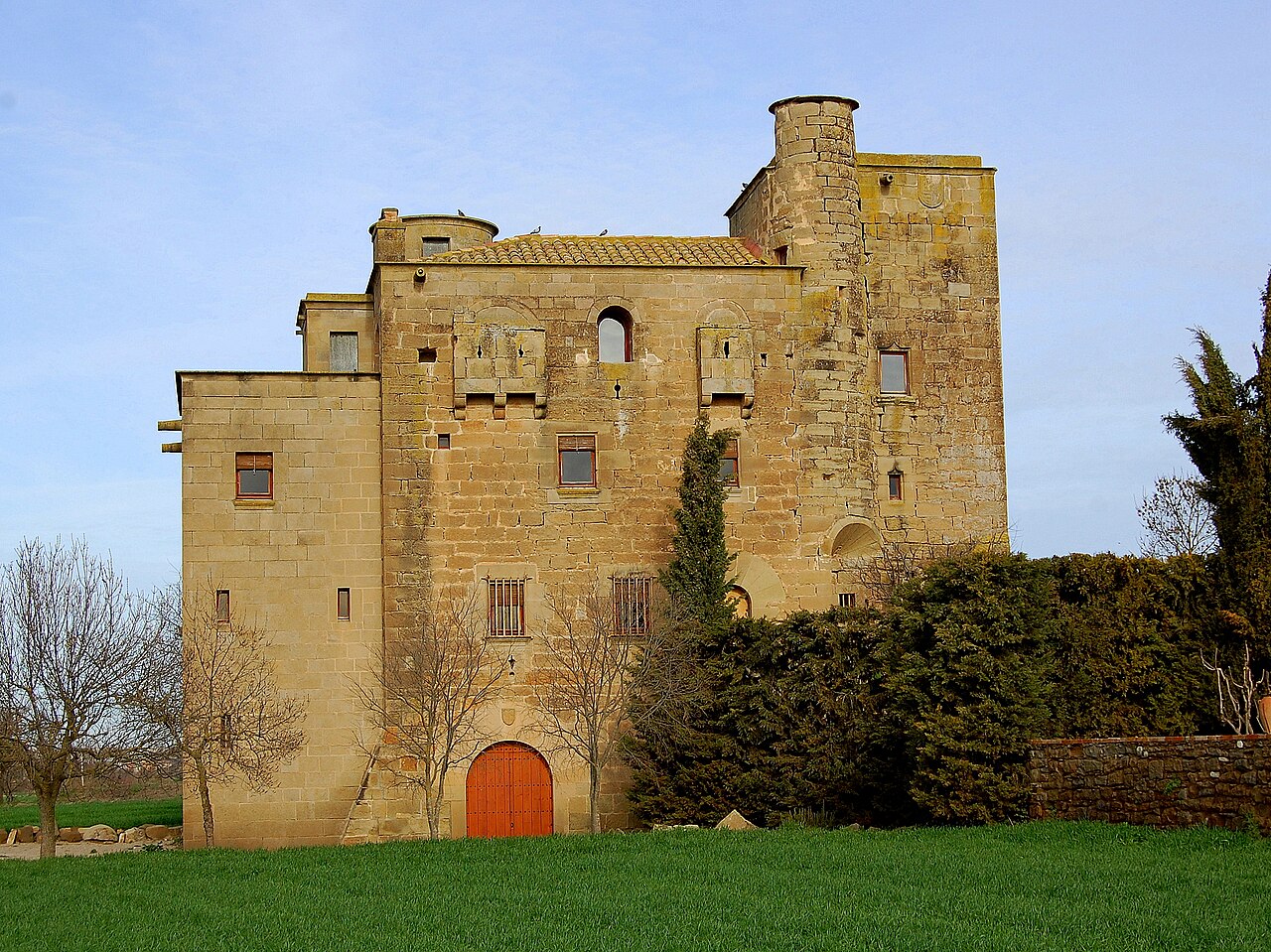
The Castell de Concabella stands as a remarkable example of a hill castle in the municipality of Concabella, Spain, reflecting centuries of architectural and historical evolution. Its origins trace back to the 10th century Caliphal era during Muslim rule, marking it as a site of strategic and cultural significance in the Iberian Peninsula. The castle's location atop a hill provided natural defensive advantages, typical of fortifications designed to oversee and control the surrounding landscape.
Documentary evidence first mentions the area in 1031, when Bishop Sant Ermengol of Urgell granted lands around Concabella, indicating early medieval settlement near the castle's site. This connection to the County of Urgell situates the castle within the complex feudal and territorial dynamics of medieval Catalonia.
Medieval origins and the concabella family
From the mid-11th century until the 14th century, the castle was the stronghold of the Concabella family, who served as vassals to the canonry of Urgell. This family played an active role in the political and social affairs of the region. Noteworthy members include Guillem Arnau de Concabella, a prominent figure at the Urgell court in 1077, and Bernat de Concabella, known for his turbulent activities in the 12th century. The family's influence extended into religious institutions, with members holding abbatial positions at the Poblet monastery in 1198 and 1253, illustrating their intertwined secular and ecclesiastical power.
In 1291, a pivotal moment occurred when Bernat and Ponç de Concabella pledged allegiance to King James II, transferring the castle's allegiance from the County of Urgell to direct royal control. This shift marked the beginning of the castle's transition through various noble hands, including the Berenguer de Peramola, Gombau de Vilalta, and Orís families, among others. Monastic ownership also featured, with monks from the monastery of Sant Jeroni de la Vall d’Hebron at one point holding the castle.
Architectural evolution from fortress to palace
The castle's architecture reveals a blend of military and residential elements, reflecting its long history and changing functions. The original fortress was laid out on a square plan with a prominent façade approximately 30 meters wide, enclosing a central courtyard and framed by several towers.
The southern tower and medieval defensive features
One of the oldest surviving structures is the massive southern tower, possibly dating to the 10th century Caliphal fortifications or the later 12th to early 13th century comital construction. Constructed with large, finely cut ashlar stones, this tower features inverted keyhole-shaped arrow slits designed for archers to defend the castle while remaining protected. Some of these slits have been filled in but remain visible, preserving the tower's defensive character. Historically, an iron bar across the upper section once held a cage for punishing offenders, underscoring the castle's judicial role in the community.
Renaissance modifications under the erill family
By the 16th century, the castle's military importance diminished, and under the ownership of the Erill family, it was transformed into a Renaissance-style palace. This period introduced large arched doorways and elegantly molded windows on the eastern façade, typical of Renaissance aesthetics. The addition of gunports beneath these windows reflects the adaptation to evolving military technology, accommodating firearms defense.
The western façade is flanked by two square towers, one featuring a richly decorated window adorned with carved foliage, human faces, and mythical beasts. This window aligns visually with a third window on the adjacent tower, creating a harmonious architectural composition. Above, a gallery of small arches crowns the façade, a refined element inspired by traditional battlements common in regional castles.
The castle's towers and layout
Originally, the castle had three surviving towers: the southern tower, an octagonal tower at the southwest corner—an unusual shape in the Segarra region with only one other example at Manresana de Sant Ramon—and a quadrangular tower at the northwest corner, now mostly ruins. Evidence suggests a fourth tower existed at the northeast corner but no longer survives.
Interior features and surrounding structures
Notable interior elements
Inside, a distinctive feature is the double latrine on the noble floor, supported by stone corbels and equipped with a ventilation shaft, indicating medieval concern for hygiene and comfort. While many original interior rooms have been lost due to abandonment and 19th-century modifications, remnants of noble floor fireplaces near the Renaissance windows offer insights into the castle's domestic life. The ground floor contains a vaulted hall with four vaults converging on a central pillar, demonstrating medieval architectural techniques for creating spacious interiors.
The romanesque church of sant salvador
Adjacent to the castle is the Romanesque church of Sant Salvador, notable for its portal richly decorated with Islamic-influenced ornamentation, characteristic of the 13th-century Lleida school of architecture. This highlights the cultural interplay between Christian and Islamic artistic traditions in medieval Catalonia.
Modern history and restoration efforts
During the Spanish Civil War (1936-1939), the castle's lower floors and nearby buildings were repurposed as a forced labor camp for political and common prisoners involved in military fortification construction, marking a somber chapter in its history.
Recognized as a monument of national cultural heritage, restoration efforts began in 1991 to repair the roof and remove a mid-20th-century café addition that had altered the southern façade. Further conservation starting in 2004 prepared the castle for new uses, including a social and health center and the Centre d’Interpretació dels Castells del Sió, a cultural institution inaugurated in 2008. Since 2014, the castle also hosts the Espai Pedrolo, dedicated to the life and work of Manuel de Pedrolo, a prominent local author.
These initiatives have preserved and revitalized the Castell de Concabella, allowing visitors to explore its rich history, architectural evolution, and cultural significance within Catalonia.
Frequently asked questions (FAQ)
- How do I get to Castell de Concabella?
- Castell de Concabella is located in the beautiful region of Catalonia, Spain. The best way to reach the castle is by car, as it is situated in a rural area with limited public transport options. The nearest major city is Lleida, which is approximately 30 kilometers away, and from there, you can follow local roads to the castle.
- What is the historical significance of Castell de Concabella?
- Castell de Concabella dates back to the 10th century and was an important defensive structure during the medieval period. It played a key role in the feudal system of the region and has witnessed various historical events over the centuries. The castle's well-preserved ruins offer a glimpse into Spain's rich history and architectural evolution.
- When was Castell de Concabella built?
- Construction of Castell de Concabella began in the late 10th century, with significant modifications made in subsequent centuries. Its strategic location and robust architecture reflect the military needs of the time. The castle has undergone restoration efforts to preserve its historical integrity for future generations.
- Can I visit Castell de Concabella year-round?
- Yes, Castell de Concabella is open to visitors year-round, although it's advisable to check for any seasonal hours or special events. The best time to visit is during the spring and fall when the weather is mild and perfect for exploring the castle grounds. Guided tours may also be available during peak tourist seasons.
- Why is the architecture of Castell de Concabella unique?
- The architecture of Castell de Concabella showcases a blend of Romanesque and Gothic styles, typical of medieval castles in Catalonia. Its sturdy stone walls and imposing towers were designed for defense, while intricate details reflect the craftsmanship of the era. The castle's layout and design also provide insights into the feudal lifestyle of its inhabitants.
- Is it possible to take guided tours of Castell de Concabella?
- Yes, guided tours of Castell de Concabella are available, offering visitors an in-depth understanding of its history and architecture. These tours are typically led by knowledgeable guides who can share fascinating stories and insights about the castle. It's recommended to book in advance, especially during busy tourist seasons.
- What are the ticket prices for visiting Castell de Concabella?
- Ticket prices for Castell de Concabella are generally affordable, making it accessible for all visitors. Adult tickets typically range from €5 to €8, while discounts may be available for children, students, and seniors. Special rates for guided tours or group visits can also apply, so it's worth checking the official website for the latest pricing information.
- What are the opening hours for Castell de Concabella?
- Castell de Concabella usually opens its doors to visitors from 10 AM to 6 PM, but hours may vary depending on the season. It is advisable to check the official website or contact the castle administration for the most accurate opening hours before planning your visit. Keep in mind that the castle may be closed on certain holidays.
- Are there any nearby attractions to visit while at Castell de Concabella?
- Yes, there are several nearby attractions that complement a visit to Castell de Concabella. You can explore the picturesque village of Concabella, which offers charming streets and local dining options. Additionally, the surrounding countryside is ideal for hiking and enjoying nature, making it a perfect day trip destination.
Information
Website
Visit websiteSources & official resources
Verify the information above using these authoritative references.
Loading map...
Visitor reviews
No reviews yet. Been here? Write the first review and help other travelers!
Write the first reviewVisited this castle? Share your experience
Your review helps other travelers and adds first-hand knowledge to our encyclopedia.