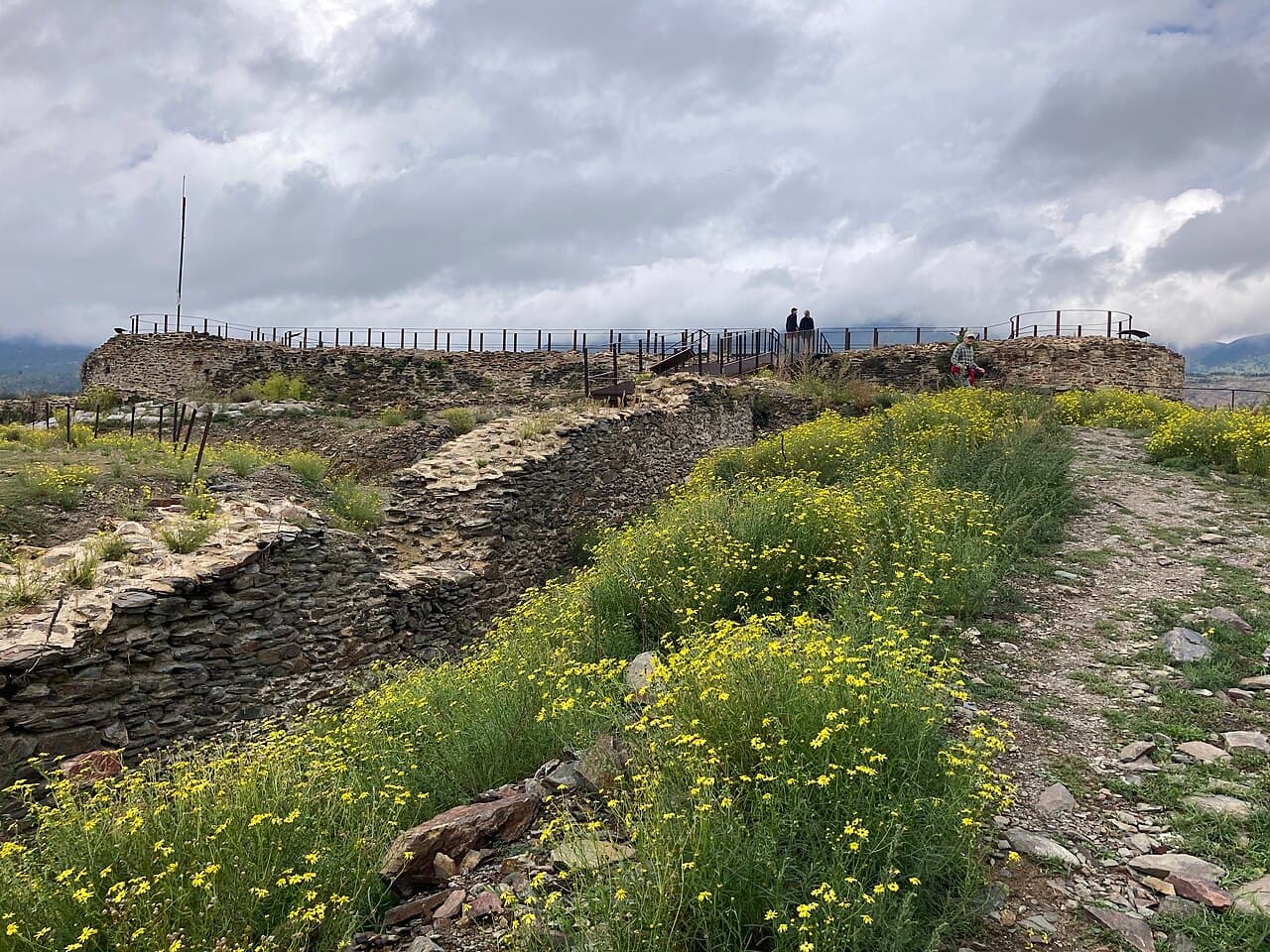
Castell de Llívia
Castell de Llívia is a prominent high medieval hill castle situated in the unique Spanish exclave of Llívia, surrounded by French territory in the eastern Pyrenees. Constructed in the 12th century, this fortress exemplifies medieval military architecture designed to oversee and control the surrounding mountainous region.
The strategic location and historical background
Perched on a natural elevation, Castell de Llívia occupies a commanding position that allowed it to serve as a defensive stronghold and a symbol of feudal power in the region. The castle's location was of particular importance during the Middle Ages due to its proximity to the borderlands between the Kingdom of Aragon and the County of Cerdanya, making it a key military and administrative center.
The castle's history is closely tied to the geopolitical complexities of the Pyrenean frontier. Its presence reflects the medieval efforts to secure territorial claims and protect trade routes through the mountains. Over the centuries, Castell de Llívia witnessed various conflicts and power struggles, adapting to the evolving military technologies and political alliances of the region.
Architectural features and construction details
The castle's layout follows the typical characteristics of hill castles from the high medieval period. Built primarily of local stone, it features robust defensive walls designed to withstand sieges. The curtain walls are punctuated by towers that provided vantage points for lookouts and archers.
Central to the castle is a keep, a fortified tower that served as the last line of defense and the residence of the lord. The keep's thick walls and limited openings reflect the defensive priorities of the time. Surrounding the keep is a courtyard that would have contained various auxiliary buildings such as storerooms, workshops, and living quarters for soldiers and servants.
The entrance to the castle is fortified with a gatehouse, often equipped with a portcullis and murder holes, enhancing the defensive capabilities against attackers. The castle's design incorporates natural terrain features to maximize defense, utilizing steep slopes and rocky outcrops.
Construction materials and techniques
The use of local stone not only provided strength but also helped the castle blend with its mountainous environment. Masonry techniques typical of the 12th century are evident in the thick walls and the stone vaulting used in some interior chambers. Timber was used for floors, roofs, and defensive hoardings.
Role through the centuries and preservation
Throughout its history, Castell de Llívia played a significant role in the defense and administration of the region. It was a focal point during various conflicts, including border disputes and local feudal skirmishes. Its strategic importance declined with the advent of modern artillery and changes in political boundaries.
Today, the castle remains a well-preserved example of medieval military architecture. Restoration efforts have aimed to maintain its structural integrity while allowing visitors to appreciate its historical and architectural significance. The castle is accessible to the public, offering insights into medieval life and the turbulent history of the Pyrenees.
Visiting Castell de Llívia
Visitors to Castell de Llívia can explore its imposing walls, towers, and the central keep. The site provides panoramic views of the surrounding landscape, highlighting its strategic placement. Informative displays and guided tours help contextualize the castle's history and architecture.
The castle's location within the Spanish exclave adds a unique cultural dimension, blending Spanish and French influences in the surrounding town. Nearby attractions include the historic center of Llívia and the scenic Pyrenean countryside.
Access and visitor information
- Opening hours: Typically open during daylight hours; specific times may vary seasonally.
- Ticket prices: Often free or low-cost entry; local tourism offices provide up-to-date information.
- Accessibility: The hilltop location involves some steep paths; visitors should be prepared for uneven terrain.
Architectural significance and cultural heritage
Castell de Llívia stands as a notable example of high medieval hill castle architecture in the Pyrenees. Its preservation allows for the study of medieval fortification techniques adapted to mountainous terrain. The castle contributes to understanding the historical dynamics of border defense and feudal power in Catalonia and the broader region.
As a cultural landmark, it embodies the complex history of territorial identity and military strategy in medieval Spain. The castle's enduring presence continues to attract historians, architects, and tourists interested in medieval heritage and mountain fortresses.
Frequently asked questions (FAQ)
- How do I get to Castell de Llívia?
- Castell de Llívia is located in the Spanish exclave of Llívia in Catalonia, accessible by road from nearby French and Spanish towns. Visitors can reach the castle by car or on foot from the town center.
- What is the historical significance of Castell de Llívia?
- The castle served as a strategic military stronghold in the 12th century, overseeing borderlands between the Kingdom of Aragon and the County of Cerdanya. It played a key role in regional defense and administration during the high medieval period.
- Can I tour the interior of the castle?
- Yes, visitors can explore the castle's walls, towers, and central keep. Guided tours and informational displays are often available to provide historical context and architectural details.
- When is the best time to visit Castell de Llívia?
- The best time to visit is during the warmer months when the weather is favorable for walking the hilltop terrain. Spring through early autumn offers pleasant conditions and extended daylight hours.
- Is the castle accessible for people with mobility issues?
- Due to its hilltop location and uneven terrain, the castle may be challenging for visitors with mobility issues. Some paths are steep and rocky, so caution is advised.
Photo gallery

Information
Opening hours
Daylight hours, seasonally variable
Ticket prices
Free or low cost, check locally
Current owner
Municipality
Loading map...
Visitor reviews
No reviews yet. Been here? Write the first review and help other travelers!
Write the first reviewVisited this castle? Share your experience
Your review helps other travelers and adds first-hand knowledge to our encyclopedia.



