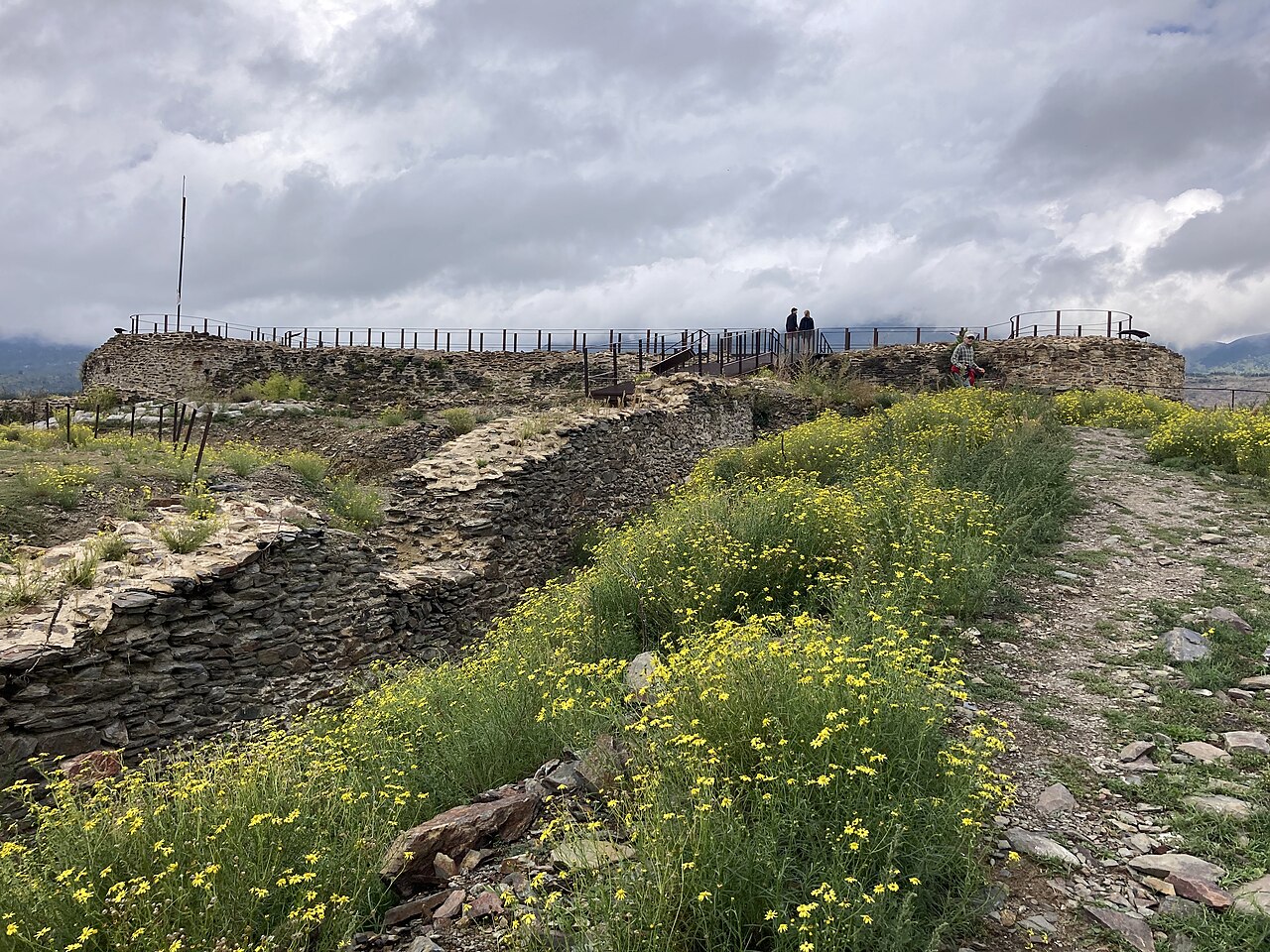
Torre de Riu stands as a notable example of a hill castle located in the municipality of Alp, Spain. Its origins trace back to the medieval period, beginning as a defensive tower designed to protect the surrounding lands. The castle's strategic position on elevated terrain provided natural advantages for surveillance and defense, typical of hill castles constructed during the Middle Ages.
Early history and medieval origins
The earliest phase of Torre de Riu dates from the 13th century, when the original tower was complemented by the addition of a small Romanesque chapel. This chapel, characterized by its rounded arches and solid masonry, reflects the religious practices and architectural styles prevalent during the Romanesque period. Its presence indicates the dual function of the castle as both a military stronghold and a place of worship.
The defensive tower itself was typical of medieval fortifications, constructed to withstand attacks and provide refuge. Its robust walls and elevated position would have made it a formidable obstacle for any would-be invaders.
Ownership and transformations through the centuries
By the 16th century, the estate was owned by Joan de Queralt i de Ribes, a nobleman active between 1553 and 1611. This period saw the castle functioning more as a noble residence while retaining its defensive features. In 1666, ownership transferred to Francesc Pasqual i de Cadell, a member of Barcelona’s aristocracy, who purchased the property for 5,000 lliures. The castle then passed through various noble families, with legal disputes in the 19th century confirming the rights of Eusebi d’Olzina i de Torres (1799–1878).
Around 1895, Josep Nicolau d’Olzina i Ferret, son of Eusebi, undertook a significant renovation that transformed the original defensive tower into a French-inspired manor house. This remodeling introduced two large square towers and decorative elements designed to evoke a romanticized medieval past. The original Romanesque chapel was replaced by a new neo-Romanesque chapel, inaugurated in 1901, reflecting the revival of Romanesque architectural motifs popular in the early 20th century.
Architectural features and stylistic elements
The current structure of Torre de Riu is a rectangular complex with a ground floor and two upper levels, all oriented to the south. It retains a crenellated wall that recalls its defensive origins, enclosing the property and enhancing its castle-like appearance. Two circular towers flank the main entrance, each topped with conical roofs that contribute to the silhouette reminiscent of medieval fortifications.
The main building’s upper section features four corner turrets, also with conical roofs, reinforcing the romantic medieval aesthetic introduced during the late 19th-century renovation. Openings throughout the building display a historicist style with neo-Gothic elements, including trifora windows framed by blind ogival arches. Above these windows, heraldic shields honor the noble families historically connected to the castle, such as the Morer, Riusech, Olzina, Feu, Ferret, and Pasqual lineages.
The roof is a four-sided pitched design covered with traditional slate tiles, consistent with European roofing practices. Adjacent to the main manor stands the neo-Romanesque chapel, which replaced the original 13th-century chapel during the 1895 renovation. This chapel features characteristic rounded arches and solid construction, typical of the Romanesque revival style.
20th-century history and varied uses
During the Spanish Civil War, Torre de Riu underwent notable changes in use and function. It was collectivized by the Workers’ Party of Marxist Unification (POUM) and transformed into the Sanatori Miquel Pedrola, a tuberculosis sanatorium operated under the international Red Aid organization (Socors Roig Internacional). This reflects the building’s adaptation to humanitarian needs during a period of conflict.
After the suppression of POUM in 1937, the castle served as a children’s colony before becoming a military medical clinic specializing in frostbite treatment (Clínica Militar no. 8) from July 1938. The clinic remained operational until shortly before the end of the war, when the building was evacuated.
Following the death of Josep Nicolau d’Olzina i Ferret in 1924, the estate passed to Josep Maria de Pallejà i Ferrer-Vidal (1891–1964), maintaining its noble associations into the 20th century.
Restoration and preservation
The 1895 renovation, led by master builder Calixte Freixa, significantly altered the original medieval character of the tower. The transformation into a manor house inspired by French medieval castles introduced both functional living spaces and decorative elements that evoke a romanticized past rather than a purely defensive fortress.
This work included the addition of two large square towers and ornamental features that contribute to the castle’s distinctive silhouette today. The preservation of the crenellated walls and conical-roofed towers maintains a connection to the site's defensive origins, while the neo-Gothic windows and heraldic shields enrich its historical narrative.
Frequently asked questions (FAQ)
- How do I get to Torre de Riu?
- Torre de Riu is located in the picturesque region of Spain, easily accessible by car or public transportation. If you are traveling by train, the nearest station is a short bus ride away, making it convenient for visitors. Be sure to check local transport schedules for the best routes.
- What is the historical significance of Torre de Riu?
- Torre de Riu dates back to the medieval period and played a crucial role in the region's defense against invaders. Its rich history is reflected in its architecture and the various artifacts found within the castle grounds. Visiting Torre de Riu offers a glimpse into Spain's past and the strategic importance of castles during that era.
- When was Torre de Riu built?
- Torre de Riu was constructed in the 12th century, showcasing the architectural styles of the period. Over the centuries, it has undergone several renovations to preserve its structure and historical integrity. Each renovation tells a story of the castle's enduring legacy through the ages.
- Can I take guided tours at Torre de Riu?
- Yes, guided tours are available at Torre de Riu, offering an in-depth exploration of its history and architecture. These tours are led by knowledgeable guides who can provide fascinating insights into the castle's past. It's advisable to book your tour in advance, especially during peak tourist seasons.
- Why is Torre de Riu a popular tourist destination?
- Torre de Riu attracts visitors due to its stunning architecture, historical significance, and breathtaking views of the surrounding landscape. The castle serves as a wonderful representation of medieval defensive structures, drawing history enthusiasts and photographers alike. Its unique charm and scenic location make it a must-visit destination in Spain.
- Is it possible to visit Torre de Riu with children?
- Yes, Torre de Riu is family-friendly and welcomes visitors of all ages. The castle grounds provide plenty of space for children to explore, and there are often activities tailored for younger visitors. Families can enjoy a day of learning and adventure together amidst the castle's rich history.
- What are the opening hours for Torre de Riu?
- Torre de Riu is open to visitors year-round, with varying hours depending on the season. Generally, the castle opens at 10 AM and closes at 6 PM, but it’s best to check the official website for any seasonal changes in hours. Planning your visit during these times will ensure you have enough time to fully explore the site.
- What are the ticket prices for Torre de Riu?
- Ticket prices for Torre de Riu are quite reasonable, with discounts often available for students, seniors, and children. A typical adult ticket costs around €10, while family packages may offer additional savings. Check the official website for current pricing and any promotional offers prior to your visit.
- What is the best time to visit Torre de Riu?
- The best time to visit Torre de Riu is during the spring and early autumn when the weather is mild and the landscape is at its most beautiful. These seasons also tend to have fewer crowds, allowing for a more relaxed experience. Additionally, visiting during local festivals can provide a unique glimpse into the culture surrounding the castle.
- Are there any nearby attractions to Torre de Riu?
- Yes, there are several nearby attractions, including charming villages and scenic hiking trails that complement your visit to Torre de Riu. Local museums and historical sites enrich your experience, providing a deeper understanding of the region's heritage. Make a day of it by exploring these additional sites after your castle visit.
Information
Website
Visit websiteSources & official resources
Verify the information above using these authoritative references.
Loading map...
Visitor reviews
No reviews yet. Been here? Write the first review and help other travelers!
Write the first reviewVisited this castle? Share your experience
Your review helps other travelers and adds first-hand knowledge to our encyclopedia.