Castell de Gardeny
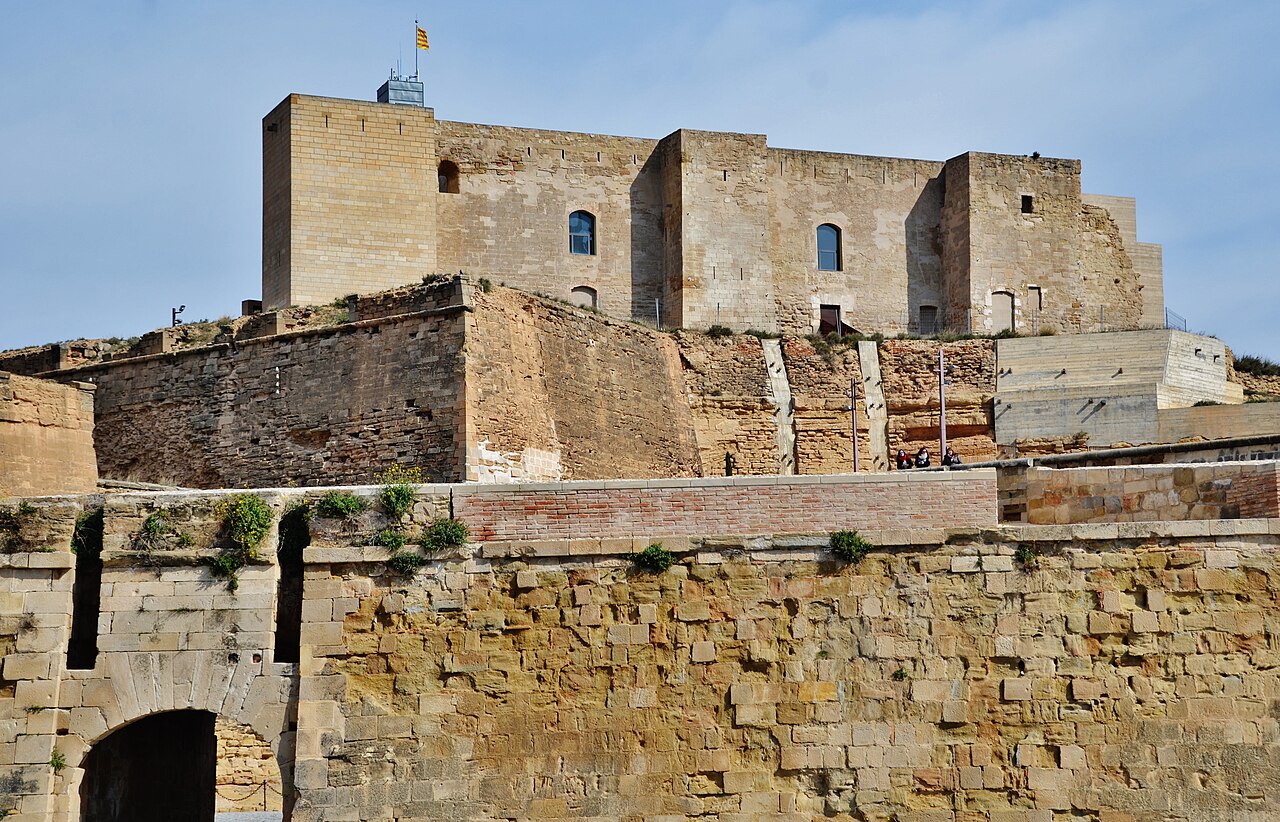
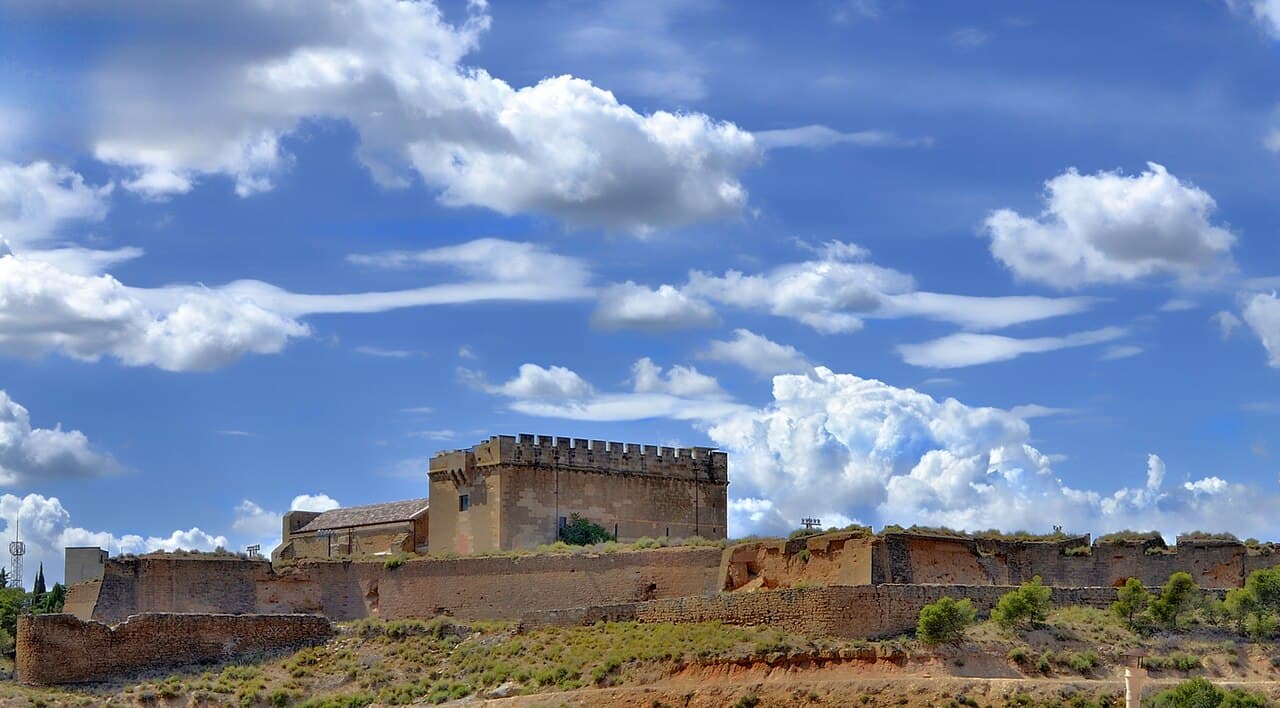
The Castell de Gardeny stands prominently on the hill of Gardeny overlooking the city of Lleida in Spain. This hill castle has a rich and layered history spanning from ancient Roman times through the medieval period and into the modern era. Its strategic location made it a vital military and religious center, particularly during the Middle Ages when it became a key Knights Templar commandery.
Originally, the site served as a defensive position in Roman times. In 49 BCE, during the civil war between Julius Caesar and Pompey, Caesar used the hill to regain control over the Roman province of Hispania Citerior. This early military significance laid the groundwork for the castle's later strategic importance.
Medieval origins and templar establishment
The castle's most notable chapter began in the 12th century. In 1123, Alfonso the Battler fortified the hill during his siege of Lleida, though this initial effort was unsuccessful and the site was briefly abandoned. The turning point came in 1149 when Ramon Berenguer IV, Count of Barcelona, besieged Lleida with crucial support from the Knights Templar. As part of the territorial arrangements following the siege, the Templars were granted control of the hill, establishing the Castell de Gardeny commandery shortly thereafter.
The first documented references to the Templar presence date from 1152. From this base, the Templars expanded their influence throughout the region, founding additional commanderies in nearby Barbens and Corbins. The castle served as the residence of Jacques de Molay, the last Grand Master of the Templars, in 1294, marking its significance within the order.
Architectural features of the templar complex
The core of the castle is characterized by two main medieval buildings arranged at right angles: a large residential tower and a conventual chapel. These were constructed in the mid-12th century by skilled stonemasons from the Occitan region, whose craftsmanship is evident in the finely cut local stone and distinctive masonry marks still visible today.
The residential tower is a substantial rectangular structure approximately 23 meters long and 7.5 meters wide, rising two stories plus a terrace. Its lower floor is partially subterranean, vaulted with stone ceilings, and was accessible only internally from above, a defensive feature typical of Templar fortifications. Access to the upper floors was originally via removable wooden stairways placed about four meters above ground level, enhancing security. Inside, the rooms are sparsely decorated, with simple moldings marking the start of pointed stone barrel vaults, and spiral staircases built within thick walls connect the floors.
Adjacent to the tower is the conventual chapel of Santa Maria de Gardeny, a remarkable example of late 12th-century Romanesque architecture transitioning into early Gothic. The chapel features a rectangular nave and an east-facing polygonal apse, with robust stone walls about 10 meters high and 1.5 meters thick. Stepped buttresses on the exterior recall French Romanesque influences from Occitania. Inside, the pointed barrel vault and transverse arch date to early 13th-century reinforcements, defining the presbytery area. Small chapels dedicated to Saint Anna and Saint Salvador flank the apse, with the southern chapel preserving mid-13th-century murals depicting geometric patterns and the twelve apostles.
The chapel's western façade is austere but notable for a decorated archivolt with scalloped motifs framing the main entrance and a simple two-window bell gable. Originally, multiple round-arched windows with splayed openings illuminated the nave. Two entrances served different functions: the western door faced a cemetery area, while the northern entrance led to an open gallery and courtyard.
Later modifications and military importance
Following the papal suppression of the Knights Templar in 1312, Pope Clement V transferred ownership of the castle to the Knights Hospitaller in 1317. The site continued to serve as a military stronghold, adapting to evolving warfare technologies.
During the 17th and 18th centuries, the castle underwent significant modifications to withstand artillery attacks. These included the construction of bastions, ditches, and retaining walls following principles similar to those used by the military engineer Vauban. The lower defensive enclosure was extensively remodeled, resulting in the loss of several original medieval structures such as the refectory, funerary chapel, cellars, and kitchens.
The castle's rooftop terrace, originally a lookout and defensive platform, was enclosed and repurposed as an attic during the Hospitaller period. Historical documents from 1591 mention additional constructions including a lookout point and a tower built by later priors.
Military role in later conflicts
The Castell de Gardeny played defensive roles during the Reapers' War in the mid-17th century and the War of Spanish Succession in the early 18th century. Its fortifications were crucial in resisting sieges and artillery bombardments during these turbulent periods.
In the 20th century, the castle housed the Gaspar de Portolà military base until its closure in 1996. This extended military use underscores the site's enduring strategic value over centuries.
Archaeological research and preservation efforts
Recent archaeological investigations have shed light on the castle's rapid construction in the mid-12th century by Occitan stonemasons, linking it stylistically to nearby ecclesiastical monuments. The discovery of masonry marks and the use of carefully cut stone demonstrate the high level of craftsmanship involved.
Restoration and stabilization efforts have focused on preserving the partially preserved medieval core alongside the later military fortifications. The castle is now recognized as a significant cultural and historical landmark in Lleida, attracting visitors interested in medieval military architecture and the legacy of the Knights Templar.
Adjacent to the chapel, the site of a former cemetery for notable individuals highlights the castle's dual military and religious functions. The combination of Romanesque and early Gothic architectural elements, alongside the later bastioned fortifications, makes Castell de Gardeny a unique example of evolving medieval and early modern military architecture in Catalonia.
Frequently asked questions (FAQ)
- How do I get to Castell de Gardeny in Lleida?
- Castell de Gardeny is located on the hill of Gardeny in Lleida, Catalonia. It is accessible by local roads and is a short distance from the city center, making it convenient for visitors traveling by car or public transport.
- What is the historical significance of Castell de Gardeny?
- Castell de Gardeny is historically significant as a Knights Templar commandery established in the 12th century. It was a strategic military site during Roman times and played important roles in medieval and early modern conflicts.
- Can I visit the chapel of Santa Maria de Gardeny?
- Yes, the chapel of Santa Maria de Gardeny is part of the castle complex and is notable for its Romanesque architecture with early Gothic elements. Visitors can explore its interior, including the mid-13th-century murals in the southern chapel.
- Is Castell de Gardeny suitable for visitors with limited mobility?
- Due to its hilltop location and historic structures, access to Castell de Gardeny may be challenging for visitors with limited mobility. Some areas involve uneven terrain and stairs, so it is advisable to check accessibility details before visiting.
- When is the best time to visit Castell de Gardeny?
- The best time to visit Castell de Gardeny is during the spring and autumn months when the weather is mild. These seasons offer comfortable conditions for exploring the hilltop site and enjoying panoramic views of Lleida.
- Are there guided tours available at Castell de Gardeny?
- Guided tours may be available through local tourism offices or cultural organizations in Lleida. These tours provide in-depth historical and architectural information about the castle and its significance.
Photo gallery

Information
Website
Visit websiteSources & official resources
Verify the information above using these authoritative references.
Loading map...
Visitor reviews
No reviews yet. Been here? Write the first review and help other travelers!
Write the first reviewVisited this castle? Share your experience
Your review helps other travelers and adds first-hand knowledge to our encyclopedia.