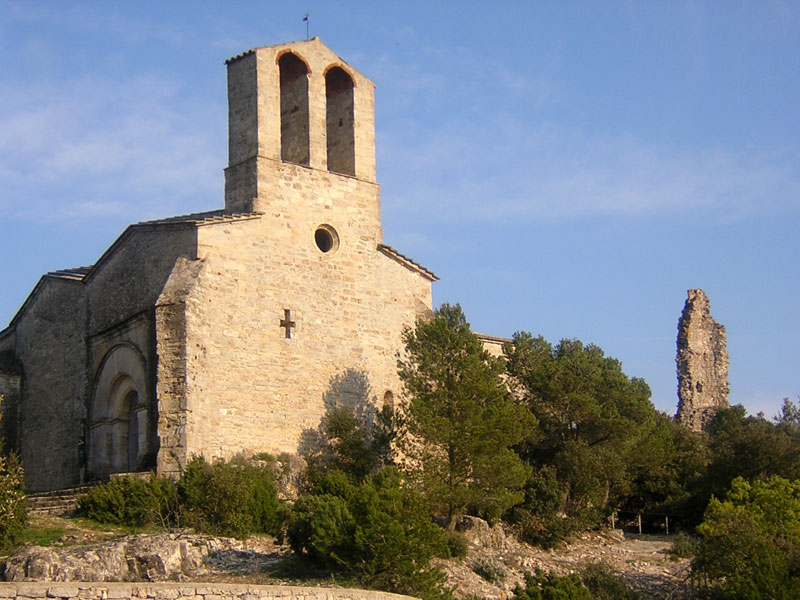
Castell de Font-rubí
The Castell de Font-rubí stands as a significant medieval fortress located in the municipality of Font-rubí within Catalonia, Spain. This hill castle was constructed during the early Middle Ages by Christian inhabitants as a stronghold for both defense and administration. Its strategic position on Castellot hill, a natural spur of the Serra del Bolet mountain range, at an elevation between approximately 759 and 795 meters, provided commanding views over the Penedès plain, crucial for surveillance and regional control.
The castle is first documented in 983 under the name Fonte Rubea, highlighting its early medieval origins. A notable mention in 986 by King Lothair of France confirms the castle's role in local land management, referencing a land gift within the territory known as castro Fonterubeo. By 1041, during repopulation efforts, it was recorded as Fontem Rubii, reflecting its continuing importance in the region. Between 1078 and 1082, the castle was placed under the authority of Rainardus by Ramon Berenguer II, Count of Barcelona, emphasizing its feudal ties to the counts rather than ecclesiastical powers.
Historical significance and feudal ties
The castle's feudal allegiance is further evidenced in 1121 when Berenguer de Queralt swore loyalty to Ramon Berenguer III concerning Castell de Font-rubí, cementing its status within the Counts of Barcelona's domain. Ownership changed hands multiple times over the centuries, reflecting the shifting political landscape of medieval Catalonia. In 1172, it belonged to Guillem de Bell-lloc, and by 1303, it was acquired by Arbert de Mediona. By the mid-14th century, specifically 1358, the castle had become royal property, underscoring its strategic and administrative value. At this time, the castle's territory included 106 hearths, with Alamanda, widow of Ferrer de Vilafranca, paying tribute, illustrating the castle's role as a center for collecting dues, often in the form of wine, from the local peasantry.
On March 17, 1391, King Joan II sold the castle and its lands to Pere de Febrer. Subsequent historical references to the castle become sparse, indicating a decline in its prominence. By around 1600, ownership had passed to Don Miguel Torrelles and Doña Codma, but the fortress gradually lost its military and administrative importance. Its last known use was between 1838 and 1840 during the Carlisle Wars, when the castle ruins served as a meeting place for a local Carlist junta. The final formal record from 1847 describes the site as ruined, marking the end of its active historical role.
Architectural features and remains
Tower and fortifications
The castle's central architectural feature is a rectangular tower with rounded corners, a transitional style between the earlier rectangular and later circular defensive towers typical of the 10th century. This tower is built directly on natural rock, with interior dimensions measuring approximately 3.5 by 3 meters and walls nearly 3 meters thick, reaching a preserved height of about 4 meters. The outer walls consist of large, finely cut stone blocks (ashlar masonry) about 25 by 45 centimeters, while the inner wall filling employs an opus spicatum or herringbone pattern made from smaller stones, demonstrating sophisticated medieval masonry techniques.
Enclosures and church ruins
Surrounding the tower are remnants of a large enclosure on the southern side and a lower enclosure further down the hillside, indicating a complex defensive system adapted to the natural terrain. To the southwest lie the ruins of a building believed to have been the castle's church, likely constructed slightly later than the main fortifications, probably in the early 11th century. This ecclesiastical structure would have served the religious needs of the castle's inhabitants and reflects the integration of spiritual functions within military sites.
Strategic role and regional context
Castell de Font-rubí was part of a broader network of fortifications established along the Prelitoral mountain range in the late 10th century. This defensive line included nearby castles such as those at Pontons, Torrelles de Foix, Sarroca, and Mediona. These fortresses collectively protected the frontier during the Reconquest period, serving as military bulwarks and administrative centers. The castle's location on a natural spur with cliff edges enhanced its defensive capabilities, making it a formidable obstacle to potential invaders.
Preservation and current condition
Today, the ruined Castell de Font-rubí remains a valuable archaeological site that offers insights into early medieval military architecture in Catalonia. The castle's walls and enclosures are in a state of ruin and face ongoing threats from natural erosion and lack of preservation. The site’s historical and architectural significance makes it an important cultural heritage landmark, highlighting the medieval frontier's defensive strategies and feudal organization.
Visitors to the site can observe the distinctive masonry techniques, the layout of the tower and enclosures, and the remains of the castle church, all set within a landscape that once played a critical role in Catalonia's medieval defense system. The castle's history, architecture, and strategic importance continue to attract interest from historians, archaeologists, and visitors fascinated by medieval fortifications.
Frequently asked questions (FAQ)
- How do I get to Castell de Font-rubí?
- You can reach Castell de Font-rubí by car, as it is located in the picturesque region of Font-rubí, Spain. Public transportation options may be limited, so it's advisable to plan your visit using a GPS navigation system or a map to ensure you find this historical gem easily.
- What is the historical significance of Castell de Font-rubí?
- Castell de Font-rubí dates back to the 10th century and played a crucial role in the defense strategy of the region during medieval times. The castle reflects the architectural styles of its era and offers insights into the feudal history of Catalonia.
- When was Castell de Font-rubí built?
- Construction of Castell de Font-rubí began in the late 10th century, making it one of the oldest castles in the area. It has undergone various renovations and restorations over the centuries, preserving its historical essence while adapting to modern visitor needs.
- Can I visit Castell de Font-rubí year-round?
- Yes, Castell de Font-rubí is open to visitors throughout the year, although specific opening hours may vary by season. It is recommended to check the official website or contact the visitor center for the most current information on visiting times.
- Why is Castell de Font-rubí a popular tourist destination?
- Visitors are drawn to Castell de Font-rubí for its stunning architecture, rich history, and breathtaking views of the surrounding landscape. The castle offers a unique glimpse into medieval life and serves as a beautiful backdrop for photography and exploration.
- Is it possible to enter the castle grounds?
- Yes, visitors are allowed to explore the castle grounds, including the exterior walls and surrounding areas. However, access to certain interior sections may be restricted due to preservation efforts, so be sure to follow all guidelines during your visit.
- What are the ticket prices for Castell de Font-rubí?
- Ticket prices for Castell de Font-rubí are generally affordable, with discounts available for students, seniors, and children. It is best to check the official website for the latest pricing information and any special promotions or group rates.
- What are the opening hours for Castell de Font-rubí?
- Castell de Font-rubí typically opens from 10 AM to 6 PM, but these hours may vary depending on the season or special events. Always confirm the current opening hours before planning your visit to ensure a smooth experience.
- What nearby attractions can I visit while in Font-rubí?
- While visiting Castell de Font-rubí, you can explore nearby attractions such as the stunning natural parks, local vineyards, and charming villages. These sites offer a chance to enjoy the region's rich culture and scenic beauty, making it a perfect day trip destination.
Information
Loading map...
Visitor reviews
No reviews yet. Been here? Write the first review and help other travelers!
Write the first reviewVisited this castle? Share your experience
Your review helps other travelers and adds first-hand knowledge to our encyclopedia.