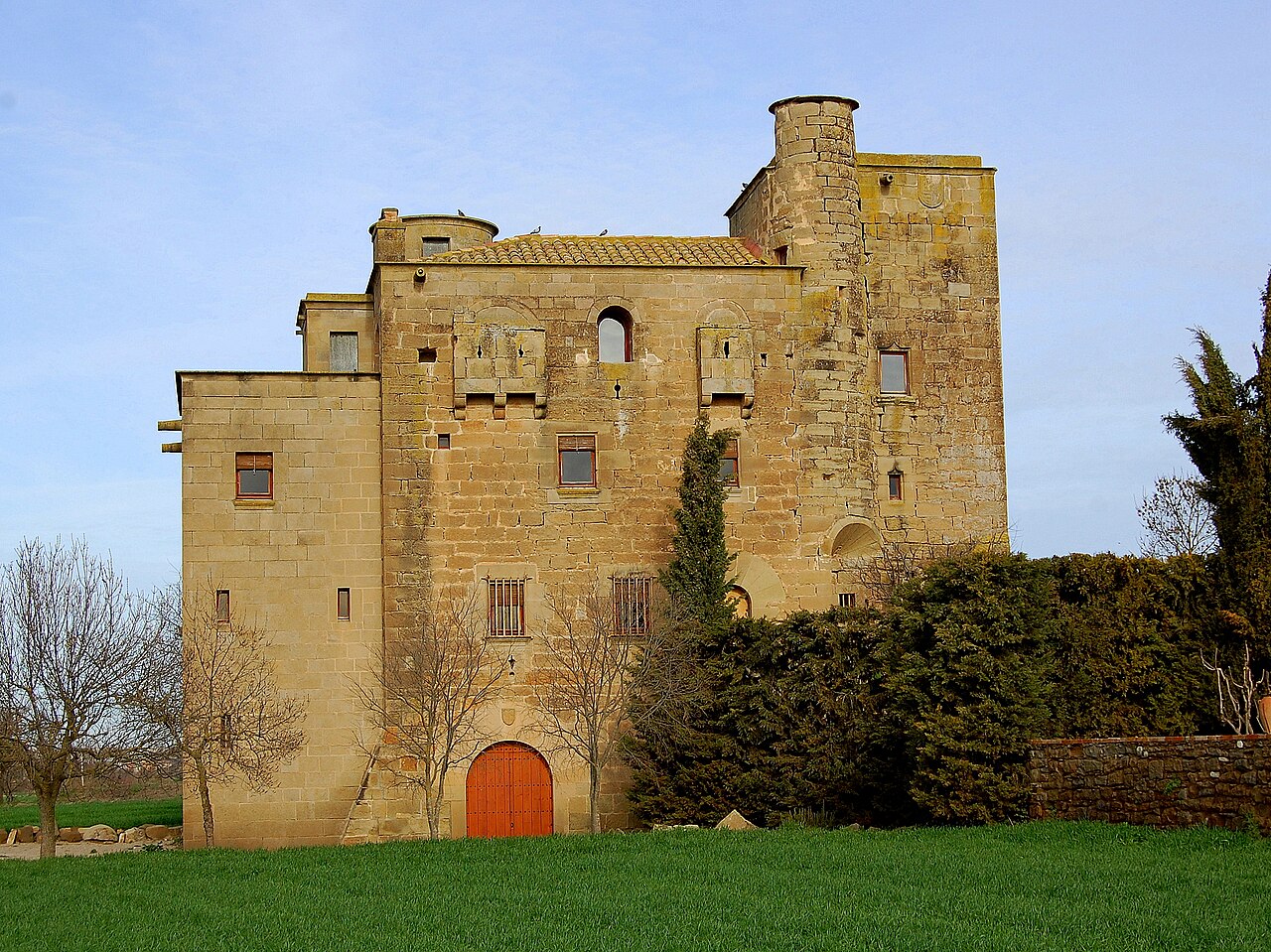
Castell de Gra
The Castell de Gra stands as a significant medieval hill castle located in the municipality of Gra, within the historic region of Catalonia, Spain. This fortress traces its origins to the early 11th century, a period marked by the Christian consolidation of territories following the Reconquista efforts in the Iberian Peninsula. The castle's strategic position atop a hill provided both defensive advantages and control over the surrounding lands, reflecting typical medieval military architecture adapted to the local topography.
Historical context and early records
The earliest documentary evidence of the site dates back to 1031, when Bishop Ermengol of Urgell mentioned a property in Torrefeta adjacent to an area called "Graza." By 1040, the castle is referenced in connection with the consecration of the church of Santa Maria of the Seu d’Urgell. This association places the castle within the domain of Castell de Guissona inside the County of Urgell, highlighting its integration within the ecclesiastical and feudal structures of the time. The castle's early ties to the Urgell canonry underscore its role not only as a military fortification but also as a territorial and administrative center under religious influence.
Donations and territorial significance
In 1106, a woman named Sicarda donated one-third of her holdings in a place referred to as "Grada" to the canonry of Santa Maria of the Seu, explicitly excluding the castle itself. This act reflects the complex land ownership and feudal relationships prevalent in medieval Catalonia, where religious institutions often held significant estates. Around 1109, documents list the castle of "Grada" among key territorial markers alongside other fortresses such as Vilagrasseta and Sant Martí de la Morana. This listing emphasizes the castle's importance in defining local boundaries and its role in the network of fortifications securing the region.
Ownership through the centuries
By the late 14th century, the castle was owned by Guerau d’Oluja, who also held the estate of Concabella, as recorded in the census of 1381. Throughout the 15th century, ownership changed hands multiple times, reflecting the shifting political and social landscape of Catalonia during the late medieval period. Eventually, the castle came under the control of the Requesens family, a notable noble lineage. At the dawn of the 16th century, ownership transferred to the monastery of Sant Jeroni de la Vall d’Hebron in Barcelona, marking a return to religious stewardship. This transition illustrates the enduring connection between the castle and ecclesiastical authorities.
Following the abolition of feudal jurisdictions in the 19th century, the castle passed into private hands, becoming property of the Boatella family. This change reflects broader societal transformations in Spain, where feudal structures were dismantled and many historic estates moved into private ownership.
Architectural features and structural evolution
The Castell de Gra is characterized by a robust three-level stone structure, constructed using irregularly arranged stones typical of medieval craftsmanship. Over the centuries, the castle underwent numerous modifications that altered its original appearance, revealing a layered history of architectural adaptation and repair.
Main façade and entrance
The castle's principal façade faces a square named Castell, featuring a main entrance highlighted by a flat arch framed with smooth stone molding. Adjacent to the entrance, a window mirrors this flat-arched design with identical framing, creating a balanced and harmonious frontage. The first floor contains three windows, each with flat arches, sills, and framed moldings consistent with the entrance style. On the second floor, a similar window arrangement appears on a smaller scale, although part of the façade on the left side shows signs of loss or remodeling, indicating structural changes over time.
Rear façade and additions
The rear wall is less restored, preserving several original elements that offer insight into the castle's medieval construction techniques. Built from uneven stone courses, it retains traces of plaster that once covered the surface. The ground floor includes a doorway with a flat arch framed by smooth stone, accompanied by a small rectangular window set with stone blocks. Notably, two later additions stand out: one structure adjoins the wall featuring a stone staircase, and another is embedded into the rear façade itself, reflecting functional adaptations made through the centuries.
The upper rear floor has a door opening onto a wrought iron balcony, flanked by flat-arched windows with matching stone frames and sills. Above this level, the attic features three oval-shaped openings likely intended for light and ventilation, a practical design element common in medieval buildings.
Cultural significance and preservation
Today, the Castell de Gra is recognized for its historical and cultural value, protected as a Cultural Asset of Local Interest within Catalonia's architectural heritage. The castle embodies the region's medieval history, illustrating the interplay between feudal, religious, and military influences over nearly a millennium. Its preservation allows visitors and scholars to explore the architectural evolution and historical narratives embedded in its stone walls.
Although the castle is not fully restored, its partially preserved condition offers a tangible connection to the past, showcasing medieval construction techniques and the strategic importance of hill castles in Catalonia. The site serves as a reminder of the region's complex history and the enduring legacy of its fortified structures.
Visiting information and accessibility
While specific visitor details such as opening hours and ticket prices are not widely published, the castle's status as a protected cultural site encourages respectful visitation and study. Its location on a hill provides scenic views of the surrounding landscape, enhancing the visitor experience. Those interested in medieval architecture and Catalan history will find the Castell de Gra a compelling destination for exploration.
Frequently asked questions (FAQ)
- When was the Castell de Gra originally built?
- The Castell de Gra was originally built in the early 11th century, during the period of Christian consolidation in Catalonia.
- What architectural features define the Castell de Gra?
- The castle features a three-level stone structure with flat-arched windows and entrances framed by smooth stone moldings, as well as a wrought iron balcony and oval attic openings.
- Who owned the castle during the late medieval period?
- In the late 14th century, the castle was owned by Guerau d’Oluja and later passed to the Requesens family before coming under the monastery of Sant Jeroni de la Vall d’Hebron in the 16th century.
- Is the Castell de Gra open to visitors?
- Specific visitor information is limited, but the castle is recognized as a Cultural Asset of Local Interest and can be visited respectfully, offering scenic views and historical insights.
- What is the cultural significance of the Castell de Gra?
- The castle is a valuable example of medieval hill castles in Catalonia, reflecting the region's feudal and ecclesiastical history and preserved as a protected cultural heritage site.
Information
Website
Visit websiteSources & official resources
Verify the information above using these authoritative references.
Loading map...
Visitor reviews
No reviews yet. Been here? Write the first review and help other travelers!
Write the first reviewVisited this castle? Share your experience
Your review helps other travelers and adds first-hand knowledge to our encyclopedia.