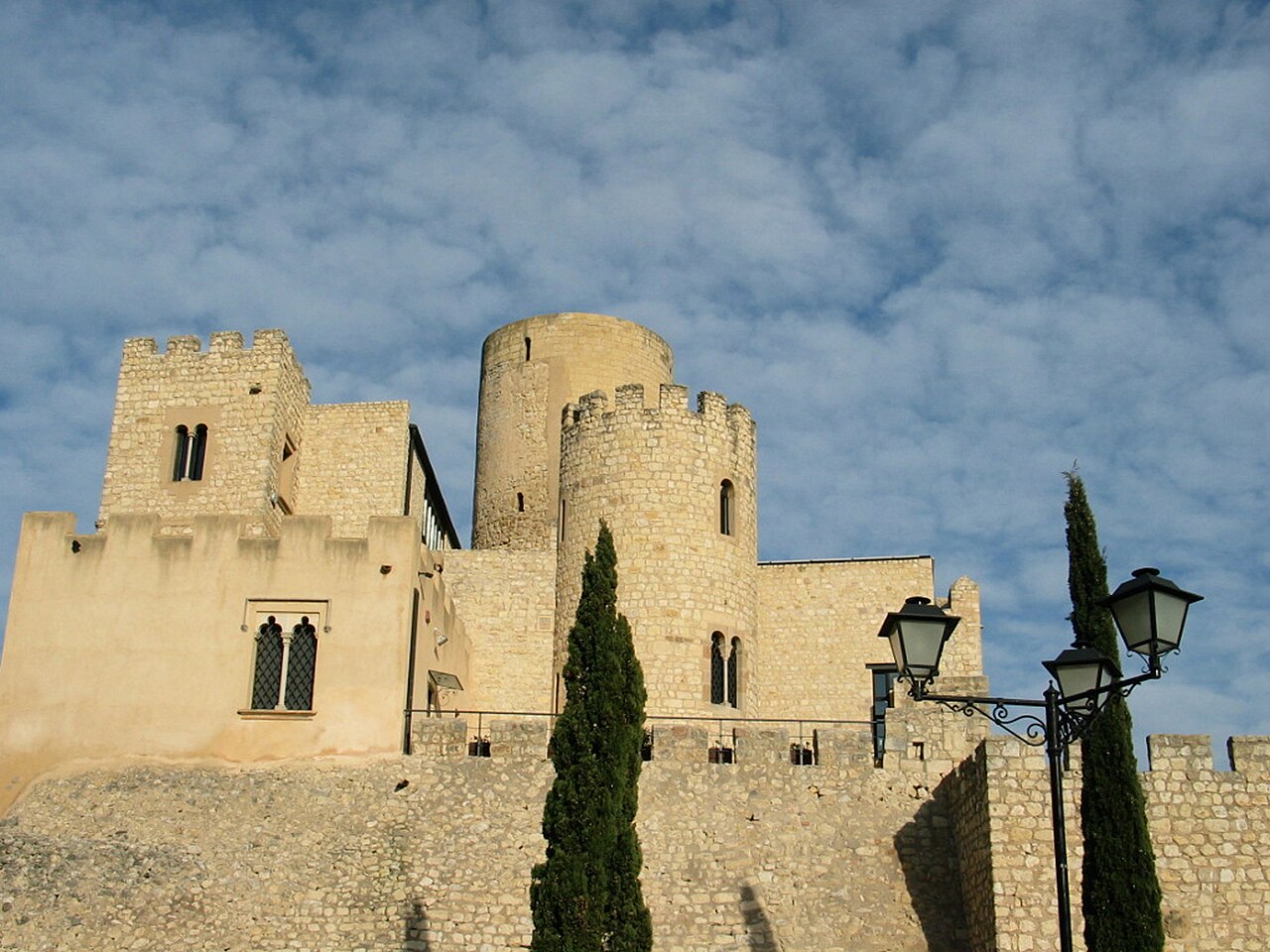
Castell de Calafell
The Castell de Calafell is a striking example of a medieval hill castle located in the town of Calafell, Spain. Perched approximately 58 meters above sea level, it commands expansive views of the surrounding landscape, a strategic position that was crucial during its initial construction in the early 11th century. This fortress was erected by local Christian nobility amidst the dynamic territorial consolidations that characterized the region during the Early Medieval period.
The castle is first documented in 1037, associated with a land dispute naming Bernat Otger as its original owner. Over the following centuries, the fortress played a pivotal role in local power struggles and religious life. By the late 12th century, the castle housed a chapel dedicated to the Holy Cross, referenced in a testament from 1189, underscoring its dual military and ecclesiastical significance. Ownership passed through influential families including the Castellbisbal and Palou lineages, reflecting the castle's importance within regional noble networks.
Historical context and ownership
During the reign of King Ferdinand II of Aragon, efforts were made to reclaim the castle for the crown, reversing prior sales made under King Pere III. This highlights the castle's strategic and symbolic value within the Crown of Aragon’s territorial ambitions. The castle's history is marked by conflict, notably suffering destruction around 1640 during the turbulent events of the 17th century, likely linked to the Catalan Revolt and associated warfare.
Despite this devastation, the 18th century saw significant reconstruction efforts. The castle was rebuilt with notable modifications including the addition of an access staircase, adapting the fortress to evolving needs. The castle's church served as a vital community center, functioning as both a parish church and cemetery chapel until 1935. It once housed a revered Romanesque statue of the Virgin of the Cave, the town’s patron saint, which was tragically destroyed during the Spanish Civil War.
Architectural features and layout
The castle is characterized by its elongated fortified enclosure that closely follows the natural contours of the hill it occupies. Constructed predominantly from rubble masonry, the defensive walls exhibit a distinctive opus spicatum or herringbone pattern, a technique common in medieval masonry that adds both strength and aesthetic texture. These walls were adapted in the 15th and 16th centuries to accommodate advancements in military technology, featuring two types of defensive openings: early rectangular loopholes and later designs with rounded bases and rectangular tops suited for firearms.
Upon entering, visitors encounter the oldest section of the castle on the left, opposite the chapel, dating back to the 11th century. The areas to the right and front of the entrance, developed between the 12th and 14th centuries, are fortified with battlements that enhanced the castle’s defensive capabilities during the Middle Ages.
The romanesque chapel of santa creu
A key architectural and cultural feature is the Romanesque chapel of Santa Creu, located in the castle’s eastern section. This chapel consists of a single nave covered by a barrel vault supported by a transverse arch, culminating in a semicircular apse decorated with characteristic Lombard bands. Beneath the apse lies a crypt containing Gothic-style wall paintings, notable for their artistic and historical value, positioned higher than the nave floor.
In later adaptations, the apse was transformed into a defensive tower, marked by the addition of a bell gable at the junction of the apse and nave. A second nave was added on the southern side by removing part of the original church wall; this extension also features a barrel vault and ends in a semicircular chapel that serves as the entrance. Above the original nave, a structure known as a "comunidor" was built for spiritual functions, further demonstrating the chapel’s multifaceted role.
The decorative paintings on the Romanesque apse show stylistic parallels with artworks found in the Chapel of the Holy Sepulchre at Olerdola, indicating regional artistic influences during the medieval period.
Burial grounds and crypt
Underneath the church floor lies an ancient burial ground featuring anthropomorphic tombs carved directly into the rock, dating from the 11th and 12th centuries. These tombs provide valuable archaeological insight into medieval funerary practices and the religious significance of the site.
Military evolution and defensive adaptations
The castle’s fortifications evolved significantly over several centuries to meet changing military demands. The original medieval walls were reinforced and modified in the 15th and 16th centuries to accommodate the introduction of firearms and artillery, reflected in the design of the defensive openings. The combination of early loopholes and later gunports illustrates the transition from traditional medieval defense to early modern military architecture.
The castle’s elongated layout maximizes the use of the hill’s natural topography, with battlements strategically positioned to provide overlapping fields of fire and surveillance. The adaptation of the chapel’s apse into a defensive tower exemplifies the integration of religious and military functions within the fortress.
Cultural significance and preservation
Today, the Castell de Calafell stands as a protected cultural heritage site recognized nationally for its historical and architectural importance. Despite the destruction it suffered in the 17th century, the castle’s remains, including the church and defensive walls, are well preserved. This preservation allows for a tangible connection to the region’s medieval past and offers valuable opportunities for study and tourism.
The castle’s role as a religious center, military stronghold, and community focal point over nearly a millennium underscores its multifaceted significance. Its architectural features, from the Romanesque chapel to the evolving fortifications, provide rich insights into the cultural and historical developments of Catalonia and the broader Crown of Aragon territories.
Visitors to the site can explore the castle’s complex history through its well-preserved structures and archaeological remains, gaining an appreciation for medieval architecture, military strategy, and religious life. The site’s elevated position continues to offer commanding views, much as it did for its original builders, linking past and present in a striking landscape setting.
Frequently asked questions (FAQ)
- What is the historical significance of Castell de Calafell?
- Castell de Calafell dates back to the 11th century and served as a strategic defense point during the Reconquista. Its location provided a commanding view of the surrounding area, making it an essential fortification for the region's security and control.
- When was Castell de Calafell built?
- Construction of Castell de Calafell began in the early 11th century, with significant modifications and expansions occurring over the centuries. The castle reflects various architectural styles, showcasing its evolving purpose throughout history.
- Can I visit Castell de Calafell?
- Yes, Castell de Calafell is open to visitors, allowing you to explore its rich history and stunning views. Guided tours are available, providing an in-depth understanding of the castle's significance and architecture.
- What are the opening hours for Castell de Calafell?
- Castell de Calafell is typically open daily from 10 AM to 6 PM, but hours may vary seasonally. It is advisable to check the official website for the most up-to-date information before planning your visit.
- Is it possible to access Castell de Calafell with a wheelchair?
- The castle has made efforts to improve accessibility; however, due to its historical structure, some areas may be challenging for wheelchair users. It is recommended to contact the site in advance to inquire about specific accessibility options.
- What is the best time to visit Castell de Calafell?
- The best time to visit Castell de Calafell is during the spring and fall when the weather is mild and pleasant. Visiting during these seasons also helps avoid the summer crowds, allowing for a more enjoyable experience.
- What are the ticket prices for Castell de Calafell?
- Ticket prices for Castell de Calafell are generally affordable, with discounts available for students and seniors. Children under a certain age may enter for free, making it a great family-friendly destination.
- Are there any nearby attractions to Castell de Calafell?
- Yes, nearby attractions include the beautiful beaches of Calafell, where visitors can relax and enjoy water activities. Additionally, the charming town itself offers various dining and shopping options, making it an ideal day trip destination.
Information
Website
Visit websiteSources & official resources
Verify the information above using these authoritative references.
Loading map...
Visitor reviews
No reviews yet. Been here? Write the first review and help other travelers!
Write the first reviewVisited this castle? Share your experience
Your review helps other travelers and adds first-hand knowledge to our encyclopedia.