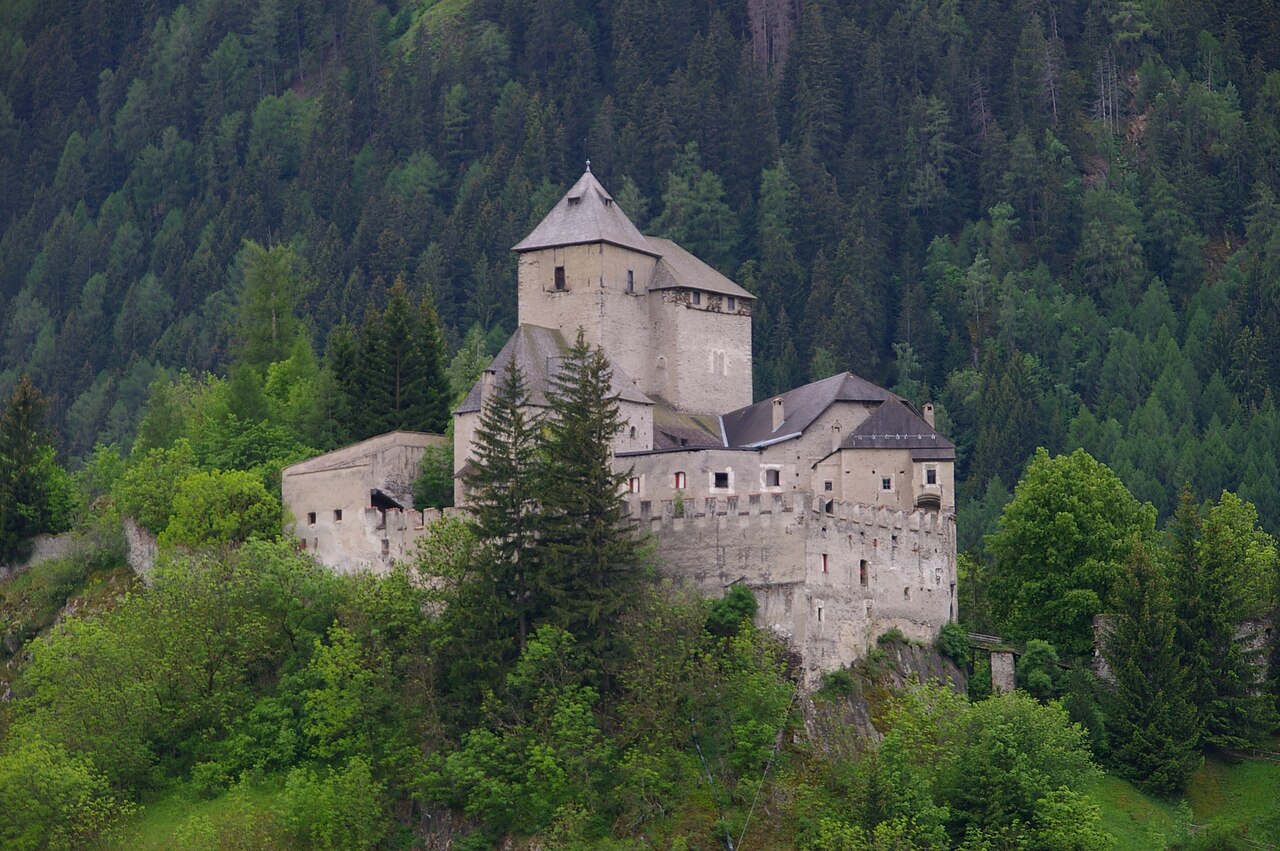
Castel Pietra
Castel Pietra, also known by its German name Sprechenstein Schloss, is a striking hill castle located in the commune of Freienfeld, near Campo di Trens in the Trentino-Alto Adige region of northern Italy. It overlooks the southern basin near the town of Sterzing (Vipiteno) and faces the nearby Castel Tasso. This castle is a remarkable example of high medieval fortification architecture, with origins dating back to the 13th century. It holds significant historical and architectural value, combining medieval defensive features with later Renaissance and Gothic elements.
Historical background and ownership
The castle's history is closely tied to the noble Auersperg family from Salzburg, who have owned and inhabited the castle since the late 18th century. Over the centuries, Castel Pietra has witnessed various phases of construction, destruction, and restoration. During World War II, the castle suffered severe damage due to bombing, which necessitated extensive restoration efforts in the post-war period. These restorations have ensured the castle's preservation and continued use as a residence, making it one of the few medieval castles in the region still inhabited today.
Architectural features and layout
The round tower and medieval structures
One of the most distinctive features of Castel Pietra is its circular keep, a hallmark of 13th-century medieval military architecture. This round tower is situated at the upper part of the rocky spur on which the castle is built, serving as a formidable defensive stronghold and lookout point. The tower is the oldest surviving part of the castle and exemplifies the strategic use of natural topography in medieval fortifications.
The late-Gothic palace and chapel
In contrast to the medieval keep, the castle also includes a palace structure constructed in the 15th century, reflecting the transition from purely military to residential and representational functions. This palace is located closer to the castle walls and incorporates more refined architectural elements.
Attached to the palace is the late-Gothic chapel of St. Erasmus, completed in 1511. This chapel is renowned for its artistic features, including a small winged altar and well-preserved murals and frescoes that showcase the religious and cultural patronage of the castle’s noble inhabitants. The chapel adds significant cultural and spiritual value to the castle complex.
Modern restoration and current use
Following the extensive damage sustained during World War II, Castel Pietra underwent a thorough restoration process that restored its habitability and structural integrity. Between 2007 and 2008, the castle complex was expanded with the addition of private apartments, a private house, and a dairy farm on the adjacent grounds. This development reflects a modern approach to preserving historical sites by integrating heritage conservation with sustainable local agriculture.
The dairy farm opened in 2009 and represents an innovative use of the castle's surrounding land, emphasizing the importance of cultural heritage alongside agricultural traditions. Local officials, including Luis Durnwalder and Armin Holzer, highlighted the castle's role in promoting cultural preservation and regional development during this period.
Legends and cultural significance
Castel Pietra is also steeped in local legend, adding to its mystique and cultural allure. According to tradition, the castle is haunted by the ghost of a murdered knight who once lived there with his beloved wife. The story tells that the knight was killed by a jealous rival from nearby Refenstein Castle, with an arrow still said to be lodged in his heart. While this tale remains part of local folklore, it enhances the castle’s identity as a site of historical intrigue and romantic tragedy.
Visiting and accessibility
Although Castel Pietra is privately owned and inhabited, visitors can view the castle from the outside, appreciating its impressive silhouette against the landscape. The castle's location on a rocky spur offers stunning views of the surrounding valleys and mountains, making it a popular subject for photographers and history enthusiasts alike. Its well-preserved condition and combination of medieval and late-Gothic features make it a significant cultural landmark in the Trentino-Alto Adige region.
Frequently asked questions (FAQ)
- How do I get to Castel Pietra?
- Castel Pietra is located in Campo di Trens, Italy, and is easily accessible by car or public transport. If you're driving, take the A22 highway and follow the signs to Campo di Trens. Public transportation options include regional trains and buses that connect to the nearby towns.
- What is the historical significance of Castel Pietra?
- Castel Pietra dates back to the 12th century and served as a strategic military fortification throughout its history. It played a key role in the defense of the region during various conflicts, contributing to the historical narrative of the area. Today, it stands as a testament to medieval architecture and the rich history of South Tyrol.
- When was Castel Pietra built?
- Construction of Castel Pietra began in the 12th century, making it one of the oldest castles in the region. Over the centuries, it has undergone various renovations and restorations, preserving its historical features while adapting to modern needs. The castle's enduring structure reflects the architectural styles of different eras.
- Can I take a guided tour of Castel Pietra?
- Yes, guided tours of Castel Pietra are available and highly recommended for a deeper understanding of its history and architecture. Tours typically include access to the castle's main areas and insightful commentary from knowledgeable guides. It's best to check the castle's official website for tour schedules and availability.
- Why is Castel Pietra considered an architectural gem?
- Castel Pietra is renowned for its impressive medieval architecture, featuring thick stone walls, tall towers, and beautifully preserved interiors. The castle's design reflects the defensive needs of its time while also showcasing artistic details that highlight the craftsmanship of the era. Visitors often admire its scenic views and unique structural elements.
- Is it possible to host events at Castel Pietra?
- Yes, Castel Pietra offers facilities for hosting various events, including weddings, corporate gatherings, and cultural activities. The picturesque setting and historical ambiance make it a popular choice for special occasions. Interested parties should contact the castle's management for more information on availability and services.
- What are the opening hours for Castel Pietra?
- Castel Pietra is typically open to visitors from April to October, with varying hours depending on the season. During peak tourist months, the castle may extend its hours to accommodate more visitors. It's advisable to check the official website for the most current opening hours and any special closures.
- What are the ticket prices for Castel Pietra?
- Ticket prices for Castel Pietra vary based on age and group size, with discounts often available for students and seniors. Children under a certain age may enter for free. For the latest pricing details, including any special offers, please visit the castle's official website.
- What is the best time to visit Castel Pietra?
- The best time to visit Castel Pietra is during the spring and early autumn months when the weather is mild and pleasant. This period also sees fewer tourists, allowing for a more enjoyable experience. Special events and festivals may occur during the summer, making it a vibrant time to explore the castle.
- Are there any nearby attractions to visit after Castel Pietra?
- Yes, there are several nearby attractions worth exploring after your visit to Castel Pietra. The charming town of Bressanone, known for its beautiful cathedral and historic center, is just a short drive away. Additionally, the stunning natural landscapes of the Puez-Odle Nature Park offer opportunities for hiking and outdoor activities.
Information
Loading map...
Visitor reviews
No reviews yet. Been here? Write the first review and help other travelers!
Write the first reviewVisited this castle? Share your experience
Your review helps other travelers and adds first-hand knowledge to our encyclopedia.