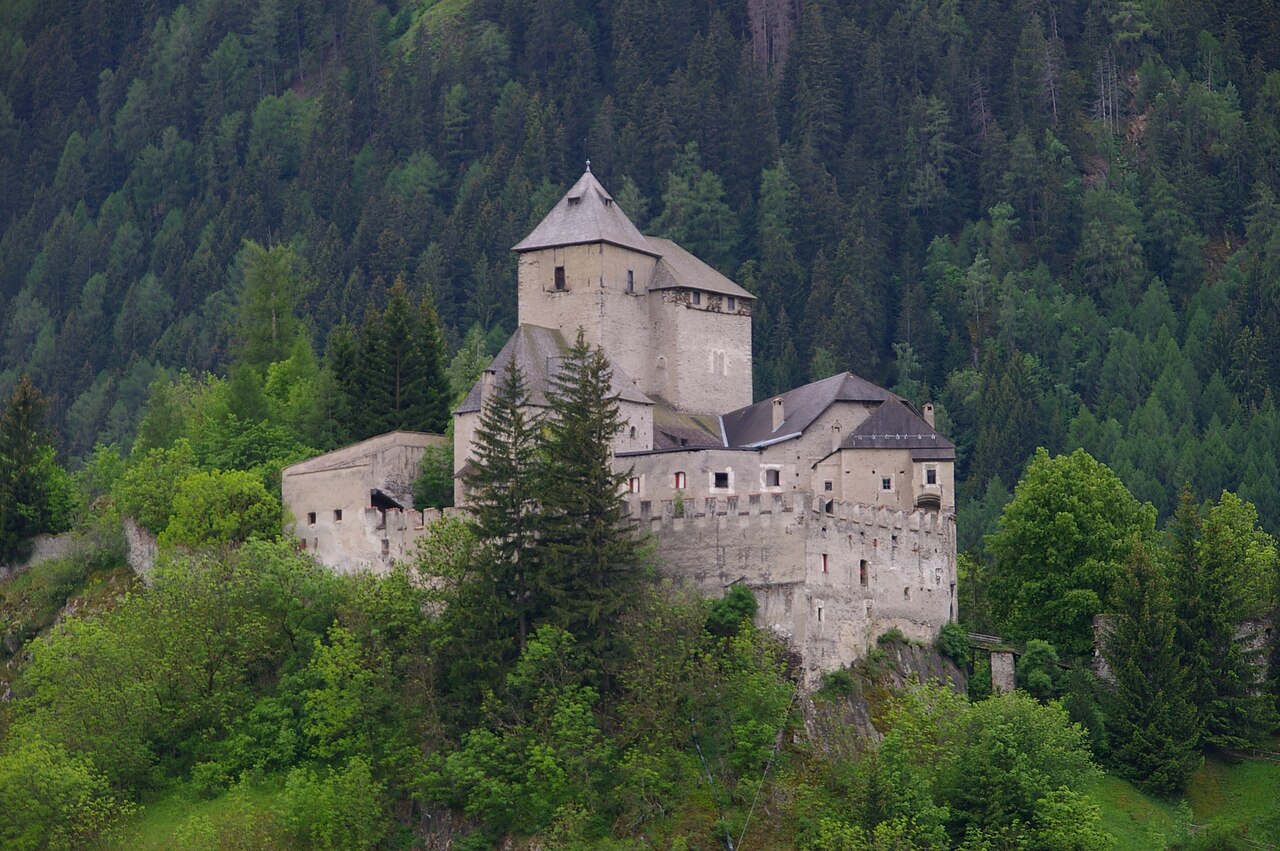
Burg Reifenstein
Burg Reifenstein, also known as Castel Reifenstein or Castel Tasso, is a remarkable medieval fortress situated on a rocky hill in the Wipptal valley within the municipality of Freienfeld, near Vipiteno in South Tyrol, Italy. Overlooking the valley, it faces the imposing Talking Stone Castle across the way, forming a strategic defensive pair in the region. The castle’s commanding position atop a rocky outcrop exemplifies the typical hill castle design, optimized for defense and surveillance during the High Medieval period.
Early history and ownership transitions
The origins of Burg Reifenstein date back to the early 12th century, with the castle first documented in 1110. It was initially granted as a fief to the Bressanone ministries of Stelvio-Reifenstein-Monguelfo, a noble lineage entrusted with regional governance and military responsibilities. Following the extinction of this family line around 1189/90, Burg Reifenstein passed into the hands of the influential Trautson family, who maintained control over the castle for several decades.
In 1470, the castle’s ownership changed significantly when Duke Sigismund of Austria-Tyrol sold the fief to the Teutonic Knights. This transfer marked the beginning of a new chapter, as the Teutonic Order held the castle for over three centuries, until their dissolution in 1813. During this period, the castle was not only maintained but also expanded and militarily reinforced to meet evolving defensive needs.
Architectural features and military significance
Burg Reifenstein is renowned for being one of the best-preserved castle complexes in South Tyrol, a status owed to its unique history of never having been conquered or destroyed. The castle’s architecture reflects its continuous adaptation to military advancements over the centuries. Its fortified walls, defensive towers, gatehouses, and battlements showcase the typical elements of a High Medieval hill castle designed for both defense and residence.
The castle’s layout includes a series of interconnected buildings arranged around a central courtyard, with the main keep serving as the stronghold. The presence of armories, dungeons, and living quarters highlight its dual role as a military fortress and noble residence. The Teutonic Knights’ tenure saw further strengthening of the castle’s defenses, adapting it to the changing nature of warfare, including the introduction of artillery fortifications.
Post-teutonic era and thurn und taxis ownership
After the dissolution of the Teutonic Order in 1813, Burg Reifenstein was granted to the Innsbruck line of the Counts Thurn and Taxis by the Kingdom of Bavaria. This transfer was part of a compensation arrangement related to the postal services operated by the Thurn und Taxis family in the region. The family had a significant historical role in managing the Tyrolean postal system from the early 18th century, with their seat at Neuhaus Castle on the Danube.
The Thurn und Taxis family has retained ownership of Burg Reifenstein ever since, preserving its historical integrity and maintaining its status as a private property. Their stewardship has contributed to the castle’s excellent condition, allowing it to remain a vivid testament to the region’s medieval heritage.
Cultural and historical significance
Burg Reifenstein stands as a symbol of the rich medieval history of South Tyrol, embodying the architectural and military traditions of the High Medieval period. Its uninterrupted preservation offers invaluable insights into the life and defense strategies of noble families and military orders such as the Teutonic Knights. The castle’s survival without destruction or conquest makes it a rare and precious example of medieval fortification in the Alpine region.
Today, Burg Reifenstein is recognized not only for its historical importance but also as a cultural landmark that attracts scholars, historians, and visitors interested in medieval architecture and the complex history of Tyrol. Its location in the scenic Wipptal valley further enhances its appeal, providing a picturesque setting that complements its formidable structure.
Visitor information and accessibility
While Burg Reifenstein remains privately owned by the Thurn und Taxis family, its exterior can be admired from public viewpoints in the Wipptal valley. The castle’s well-preserved state and dramatic setting make it a popular subject for photography and historical tours in the region. Visitors interested in exploring the castle’s interior or detailed history should seek guided tours or events that occasionally grant access under special arrangements.
The castle’s position on a rocky hill means that access involves some hiking or driving along mountain roads, typical of many hill castles in the Alps. Its proximity to Vipiteno ensures that visitors can combine a trip to Burg Reifenstein with other cultural and natural attractions in South Tyrol.
Frequently asked questions (FAQ)
- How do I get to Burg Reifenstein?
- Burg Reifenstein is located in Freienfeld, Italy, and can be easily accessed by car or public transport. The nearest major city is Bolzano, from where you can take a regional train or bus to Freienfeld.
- What are the opening hours for Burg Reifenstein?
- Burg Reifenstein is typically open to visitors from March to November, with varying hours depending on the season. It is recommended to check the official website for the most up-to-date information on opening hours before your visit.
- Can I take guided tours of the castle?
- Yes, guided tours are available at Burg Reifenstein, providing visitors with in-depth information about its history and architecture. These tours often run multiple times a day, so be sure to check the schedule and book in advance if possible.
- When was Burg Reifenstein built?
- Burg Reifenstein was constructed in the 12th century, making it a significant historical site in the region. Its architecture showcases the medieval style typical of the era, and it has been well-preserved through the centuries.
- Why is Burg Reifenstein historically significant?
- Burg Reifenstein holds historical significance as a strategic fortress that played a role in the region's defense during various conflicts. Its location and architecture reflect the medieval power struggles in Northern Italy.
- Is it possible to host events at Burg Reifenstein?
- Yes, Burg Reifenstein offers facilities for hosting special events, including weddings and corporate gatherings. Interested parties should contact the castle administration for details on availability and arrangements.
- What is the ticket price for visiting Burg Reifenstein?
- Ticket prices for Burg Reifenstein can vary, but they generally range from €5 to €10 for adults, with discounts available for children and seniors. It’s advisable to check the official website for the most current pricing and any special offers.
- What nearby attractions can I visit while in Freienfeld?
- While visiting Burg Reifenstein, you can also explore the beautiful surrounding landscape, including hiking trails and other historical sites. Nearby attractions include the charming town of Sterzing and the scenic mountains of the South Tyrol region.
- What is the best time to visit Burg Reifenstein?
- The best time to visit Burg Reifenstein is during the spring and early fall when the weather is pleasant and the crowds are smaller. Additionally, these seasons offer beautiful views of the surrounding landscape, enhancing your experience.
Information
Loading map...
Visitor reviews
No reviews yet. Been here? Write the first review and help other travelers!
Write the first reviewVisited this castle? Share your experience
Your review helps other travelers and adds first-hand knowledge to our encyclopedia.