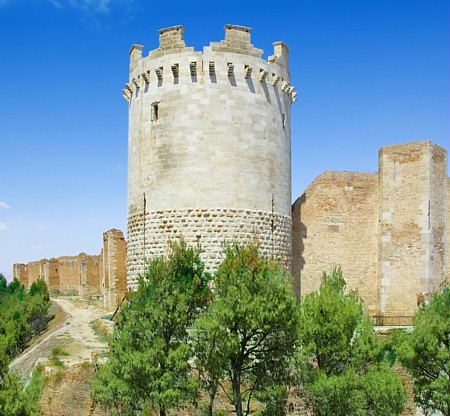
Castel Fiorentino
Castel Fiorentino stands as a poignant reminder of medieval history on a solitary hill in the northern countryside of Puglia, Italy, near the towns of Torremaggiore and Castelnuovo della Daunia. The castle's ruins evoke the strategic importance it held from the 11th to the 13th century, a period marked by intense territorial control and military significance in the region. Although now in ruins, the site still commands a sweeping view of the surrounding landscape, underscoring its original purpose as a defensive stronghold.
Historical significance and association with emperor frederick ii
The castle is famously linked to Holy Roman Emperor Frederick II (1194-1250), one of the most powerful and enigmatic rulers of the Middle Ages. Historical accounts suggest that Frederick II died at Castel Fiorentino, adding a layer of imperial importance to the site. Frederick II was known for his patronage of the arts and sciences, as well as his strategic military campaigns across Italy and the Holy Roman Empire. Castel Fiorentino's role as a residence or refuge for the emperor underscores its prominence in medieval political and military affairs.
Architectural features and layout
Although much of Castel Fiorentino lies in ruins, significant architectural elements remain visible. Among these are the remains of a prominent tower, which would have served as a lookout and defensive position. The castle's construction reflects typical medieval military architecture, with robust stone walls designed to withstand sieges and attacks. The elevated hilltop location provided natural defenses, complemented by man-made fortifications that controlled the surrounding territory.
Defensive structures
The castle's walls were likely thick and fortified, incorporating battlements and possibly crenellations to protect archers and defenders. The tower remains suggest a multi-level structure, which would have allowed for surveillance and signaling across the countryside. While detailed plans of the castle are scarce, the strategic placement and surviving ruins indicate a well-planned defensive complex typical of hill castles in medieval Italy.
Strategic importance in medieval puglia
During the 11th to 13th centuries, Castel Fiorentino was a crucial military and administrative center. Its location on a lonely hill allowed control over important routes and the surrounding agricultural lands. The castle's presence helped secure the region against incursions and facilitated the exertion of feudal power by its lords or imperial representatives. This strategic role was vital in a period characterized by shifting alliances and frequent conflicts among local nobility and external forces.
Current condition and visitor experience
Today, Castel Fiorentino is classified as ruins, with only partial remains of its original structures still standing. Visitors to the site can explore the remnants of the tower and sections of the defensive walls. The hilltop location offers a panoramic view of the Puglian countryside, providing a tangible connection to the castle's historical purpose as a lookout and fortress. The solitude and natural beauty of the site enhance the experience, making it a place of reflection on medieval history and architecture.
Accessibility and preservation
While the castle is accessible to visitors, facilities are limited due to its ruinous state. Preservation efforts focus on maintaining the stability of the remaining structures and preventing further deterioration. The site is an important cultural landmark within the region, attracting historians, architecture enthusiasts, and tourists interested in medieval heritage.
Frequently asked questions (FAQ)
- How do I get to Castel Fiorentino?
- Castel Fiorentino is located in Torremaggiore, Italy, and is easily accessible by car or public transport. If you are traveling by car, you can find parking nearby. For public transport, check the local bus schedules that connect to Torremaggiore.
- What is the historical significance of Castel Fiorentino?
- Castel Fiorentino dates back to the Middle Ages and played a crucial role in the defense of the region. It has witnessed various historical events and changes in power, making it a significant landmark for understanding the local history of Italy.
- When was Castel Fiorentino built?
- The construction of Castel Fiorentino began in the 12th century, with various modifications and expansions occurring over the centuries. This long history has contributed to its unique architectural features and historical layers.
- Can I take guided tours of Castel Fiorentino?
- Yes, guided tours are available for visitors to explore Castel Fiorentino. These tours typically include insights into the castle's history, architecture, and the surrounding area, providing a deeper understanding of its significance.
- Why is the architecture of Castel Fiorentino unique?
- The architecture of Castel Fiorentino reflects a blend of medieval defensive structures and Renaissance influences, showcasing the evolution of castle design over time. Its strategic location and design elements highlight the importance of fortifications in historical conflicts.
- Is it possible to visit Castel Fiorentino year-round?
- Yes, Castel Fiorentino is open to visitors year-round, though the best time to visit is during the spring and fall when the weather is pleasant. It is advisable to check for any seasonal events or potential closures before planning your visit.
- What are the opening hours for Castel Fiorentino?
- Castel Fiorentino typically opens at 9 AM and closes at 6 PM, but hours may vary seasonally. It’s best to verify the current hours on the official website or contact the visitor information center before your visit.
- Are there ticket prices for visiting Castel Fiorentino?
- Yes, there is an admission fee to enter Castel Fiorentino. Ticket prices are generally affordable, with discounts available for students and seniors, so be sure to check the official site for the latest pricing and offers.
- What nearby attractions should I visit while in Torremaggiore?
- While in Torremaggiore, consider visiting the nearby ancient ruins and local museums that showcase the area’s rich history. Additionally, the picturesque countryside offers beautiful walking trails and opportunities to explore traditional Italian culture.
Information
Website
Visit websiteSources & official resources
Verify the information above using these authoritative references.
Loading map...
Visitor reviews
No reviews yet. Been here? Write the first review and help other travelers!
Write the first reviewVisited this castle? Share your experience
Your review helps other travelers and adds first-hand knowledge to our encyclopedia.