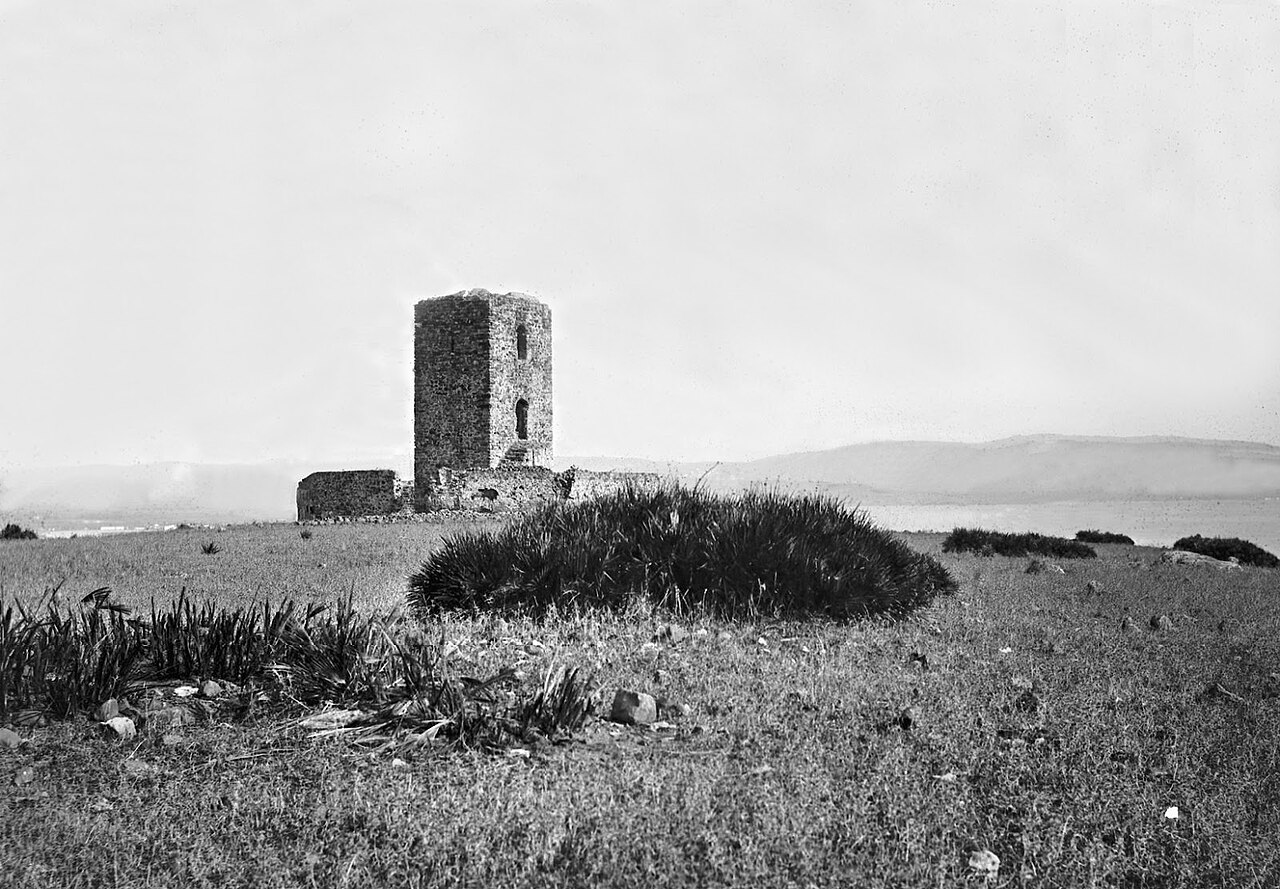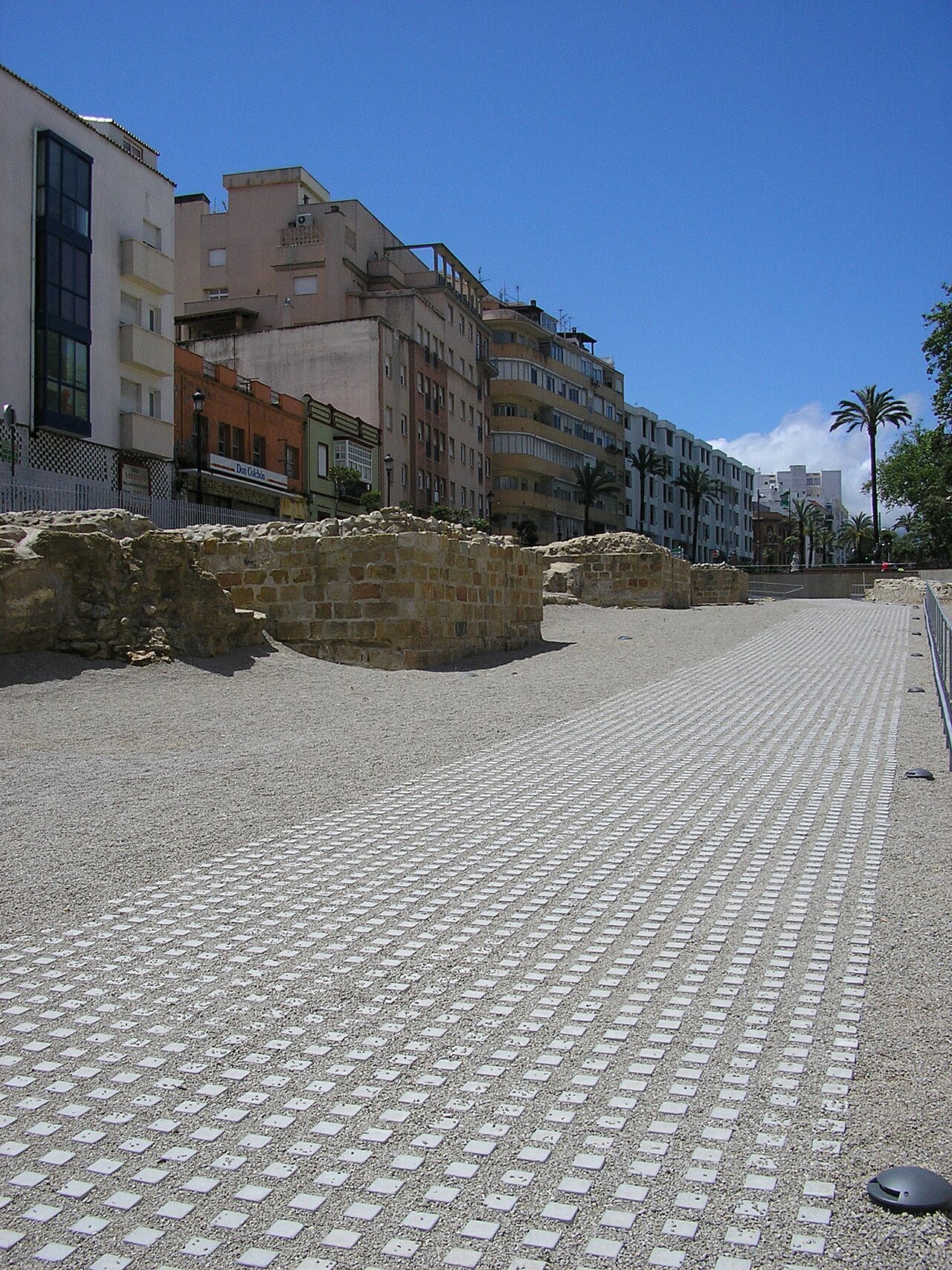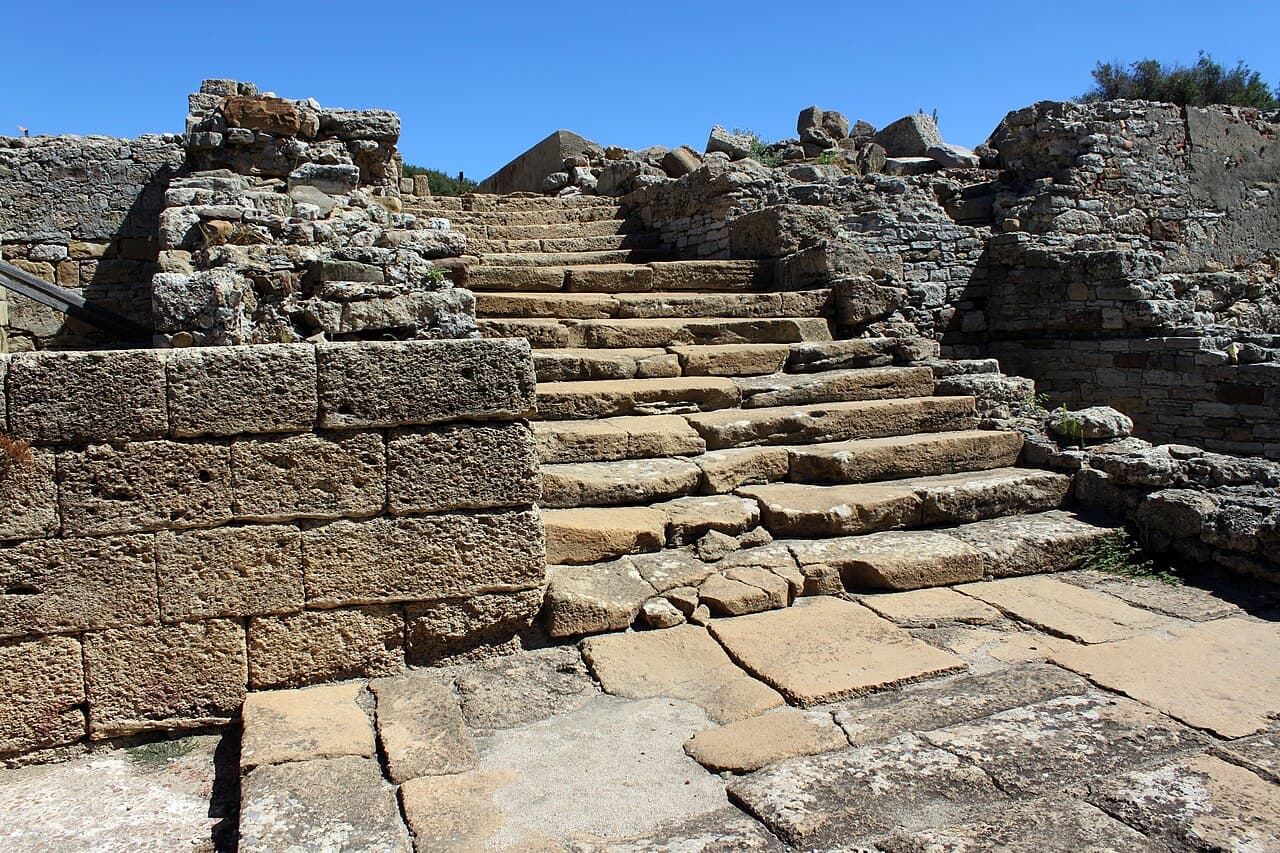
Carteia (Ancient Greek: Καρτηίᾳ) was a significant Phoenician and later Roman town located at the head of the Bay of Gibraltar in what is now southern Spain. Positioned on elevated ground overlooking the sea, it stood near the confluence of two rivers, the modern Guadarranque and Cachon, close to the town of San Roque. This location, approximately halfway between the contemporary cities of Algeciras and Gibraltar, provided a commanding view and strategic control of maritime routes in the western Mediterranean.
The town's origins trace back to around 940 BC, when it was founded as the Phoenician trading settlement known as Kʿrt, meaning "city" in the Phoenician language. This name is linguistically related to other prominent Phoenician-founded cities such as Carthage and Cartagena. The settlement thrived due to its advantageous position and access to abundant natural resources. The surrounding hinterland of southern Andalusia was rich in valuable commodities including wood, cereals, citrus fruits like oranges and lemons, and a variety of metals such as lead, iron, copper, and silver. Additionally, the region was renowned for the extraction of dyes, particularly from the murex shellfish, which produced the highly prized Tyrian purple, a luxury item in antiquity.
Historical significance and early development
Carteia held considerable importance as a commercial hub during the Phoenician era, serving as a gateway for trade between the Mediterranean and the Atlantic. Ancient geographers such as Strabo and Pomponius Mela noted the town’s prominence, with some sources suggesting that Carteia was associated with the legendary Tartessos, an ancient civilization famed for its wealth and early metallurgy. Pliny the Elder also recorded that the Greeks referred to Carteia as Tartessos, indicating its longstanding cultural and economic significance in the region.
Role in Carthaginian and Roman conflicts
During the 2nd and 3rd centuries BC, Carteia's strategic position made it a focal point in the conflicts between Carthage and the expanding Roman Republic. It is believed to have been the landing site of the Carthaginian general Hamilcar Barca in 237 BC, who brought his army and war elephants to the Iberian Peninsula to strengthen Carthaginian influence after the First Punic War.
Later, in 206 BC, the Carthaginian admiral Adherbal retreated to Carteia with the remnants of his fleet following a defeat by the Roman commander Gaius Laelius at the Battle of Carteia. This naval engagement was part of the larger struggle for control over the Iberian territories during the Second Punic War. The town's fortifications and harbor provided a temporary refuge for Carthaginian forces during these turbulent times.
By around 190 BC, Carteia had fallen under Roman control, marking a significant shift in the political landscape of the region. Under Roman rule, the settlement continued to develop, benefiting from the Pax Romana and integration into the Roman provincial system. It was granted the status of a municipium, allowing local inhabitants certain legal rights and self-governance under Roman law.
Architectural and archaeological features
Though no substantial castle structure survives at Carteia as it was primarily a town rather than a fortified castle, the site featured typical ancient urban defensive elements such as walls and gates adapted to the terrain on elevated ground. Its position on a hill overlooking the bay provided natural defense advantages, consistent with a hill castle classification in terms of strategic placement.
Archaeological excavations have revealed remains of urban planning including street layouts, residential quarters, and public buildings reflecting Phoenician and Roman influences. The site offers insights into the evolution of Mediterranean urbanism from the early Iron Age through Roman times.
Legacy and cultural importance
Carteia is a key archaeological and historical site that illustrates the complex interactions between Phoenician traders, Carthaginian military ambitions, and Roman imperial expansion. Its rich natural resources and strategic location shaped its role as a trading and military center in antiquity. Today, Carteia contributes valuable knowledge about ancient Mediterranean civilizations and their networks of commerce and conflict.
Frequently asked questions (FAQ)
- What is the historical significance of Castle Carteia?
- Castle Carteia is a remarkable historical site that dates back to the Roman Empire, serving as a vital port and military base. Its strategic location allowed it to play a crucial role in trade and military operations, making it an important hub in the region.
- When was Castle Carteia built?
- Castle Carteia was originally established in the 3rd century BC, with significant expansions and renovations occurring during the Roman period. The remains that visitors see today are a testament to its long and storied history.
- Can I visit Castle Carteia?
- Yes, visitors can explore Castle Carteia and its surrounding archaeological site. The castle is open to the public, and guided tours are often available to enhance your experience.
- What are the opening hours for Castle Carteia?
- Castle Carteia typically opens from 9 AM to 7 PM during the summer months and has reduced hours in the winter. It is recommended to check ahead for any seasonal changes or special closures.
- Is it possible to access Castle Carteia with public transport?
- Yes, Castle Carteia is accessible via public transport, with several bus routes connecting it to nearby towns and cities. Additionally, the site is located within a reasonable distance from major cities, making it a convenient stop for visitors.
- What is the best time to visit Castle Carteia?
- The best time to visit Castle Carteia is during the spring and fall when the weather is mild and pleasant for exploring. Additionally, visiting during these seasons can help avoid the summer crowds.
- Are there any nearby attractions to visit while at Castle Carteia?
- Yes, there are several nearby attractions, including the beautiful beaches of Tarifa and the historic city of Cádiz. These sites provide a great opportunity to enhance your visit to the region.
- How much does it cost to enter Castle Carteia?
- The entry fee for Castle Carteia is generally modest, making it an affordable destination for history enthusiasts. Discounts may be available for students, seniors, and groups, so be sure to inquire upon arrival.
- What architectural features can I expect to see at Castle Carteia?
- Castle Carteia showcases a mix of Roman and Moorish architectural styles, with well-preserved walls and ruins that reflect its historical significance. Visitors can admire the intricate stonework and the layout that reveals the castle's strategic design.
Photo gallery

Information
Loading map...
Visitor reviews
No reviews yet. Been here? Write the first review and help other travelers!
Write the first reviewVisited this castle? Share your experience
Your review helps other travelers and adds first-hand knowledge to our encyclopedia.