Carrigaphooca Castle
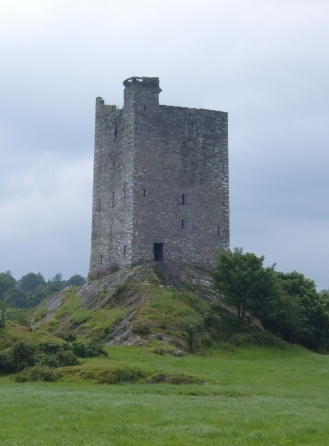
Carrigaphooca Castle is a striking example of a 15th-century military tower located in County Cork, Ireland, near the townland of Glounarig. The castle's name, meaning "rock of the fairy," hints at the local legends of spirits and hauntings that surround the site. Built between 1436 and 1451, this tower was likely commissioned by Donal MacCarthy of Drishane Castle, a prominent member of the MacCarthys of Muskerry. This family was engaged in efforts to reclaim territories lost in the 13th century, positioning Carrigaphooca on a strategic route between Macroom and County Kerry.
Historical context and significance
The castle was constructed during the High Medieval period, a time marked by frequent conflicts and territorial disputes in Ireland. The MacCarthys, a powerful Gaelic dynasty, used Carrigaphooca primarily for military purposes. This is evidenced by the castle's austere design, notably the absence of fireplaces, which suggests it was not intended for comfortable residential use but rather as a defensive stronghold.
Carrigaphooca Castle played a significant role in the turbulent history of the region. It was repeatedly attacked, particularly by Donal Cam O'Sullivan Beare, a noted Irish chieftain who opposed the MacCarthys. The castle also served as a refuge for Cormac Teige McCarthy following the Siege of Kinsale in 1601, a pivotal conflict during the Nine Years' War. After siding with the Irish forces, Cormac sought forgiveness from Elizabeth I by writing her a personal apology, highlighting the castle's role as a sanctuary in times of political upheaval.
Architectural features and layout
The castle is essentially a square, five-storey tower built on a prominent rock outcrop. This rock is steeped in folklore, reputed to be haunted by a phuca, a mischievous spirit from Irish mythology. The tower's verticality and robust stone construction are typical of defensive structures from the period, designed to provide vantage points and protection against attackers.
Historical records indicate that the tower was once surrounded by two outer walls, enhancing its defenses. However, these walls have since vanished without leaving visible traces. The castle's position overlooking a nearby prehistoric stone circle adds to its cultural and historical significance, linking it to the ancient landscape of the region.
Interior and defensive elements
Inside, the castle's floors are connected by narrow staircases, typical of tower houses designed to maximize defensibility. The absence of fireplaces suggests that the interior was sparse and utilitarian, focused on military needs rather than domestic comfort. The battlements and narrow windows served as defensive features, allowing occupants to observe and repel attackers while minimizing exposure.
Legends and cultural importance
Carrigaphooca Castle is renowned locally as one of Ireland's most haunted castles. The legend of the phuca haunting the rock on which it stands contributes to its eerie reputation. This folklore, combined with the castle's dramatic setting and turbulent history, makes it a site of fascination for those interested in Irish myths and medieval history.
Access and preservation
The castle is situated on private property and is not generally open to the public. However, occasional access has been granted by local residents, allowing visitors to explore the tower and its surroundings. Despite its isolated location and limited accessibility, the castle remains in a well-preserved state, retaining much of its original structure and character.
Visitors who have been fortunate enough to enter the castle note the impressive verticality of the tower and the commanding views it offers over the surrounding countryside. The presence of a friendly local farm dog accompanying visitors adds a unique charm to the experience, juxtaposing the castle's haunting legends with warm hospitality.
Geographical setting and strategic importance
Located just south of the N22 road, Carrigaphooca Castle occupies a strategic position controlling the route between Macroom and County Kerry. This location was vital for monitoring movements and defending territory during the 15th century. The castle's placement on a rocky outcrop not only provided a natural defensive advantage but also a commanding view of the surrounding landscape, essential for early warning against approaching enemies.
The nearby prehistoric stone circle adds an additional layer of historical depth, suggesting that the site has been of significance for many centuries, long before the castle's construction. This connection to Ireland's ancient past enhances the cultural value of the castle and its surroundings.
Frequently asked questions (FAQ)
- How do I visit Carrigaphooca Castle?
- Carrigaphooca Castle is located on private property and is not generally open to the public. Access may occasionally be granted by local residents, but visitors should seek permission beforehand.
- What is the historical significance of Carrigaphooca Castle?
- Built in the 15th century by the MacCarthys of Muskerry, Carrigaphooca Castle served as a military stronghold during regional conflicts and was involved in events such as the Siege of Kinsale.
- Is Carrigaphooca Castle haunted?
- Local legends claim that Carrigaphooca Castle is haunted by a phuca, a mischievous spirit from Irish folklore, contributing to its reputation as one of Ireland's most haunted castles.
- What architectural style is Carrigaphooca Castle?
- Carrigaphooca Castle is built in the Gothic style typical of 15th-century military towers, featuring a square, five-storey design with defensive battlements and narrow windows.
- Can I see prehistoric sites near Carrigaphooca Castle?
- Yes, the castle overlooks a prehistoric stone circle in a nearby field, adding archaeological interest to a visit in the area.
Information
Current owner
Private owner
Loading map...
Visitor reviews
No reviews yet. Been here? Write the first review and help other travelers!
Write the first reviewVisited this castle? Share your experience
Your review helps other travelers and adds first-hand knowledge to our encyclopedia.