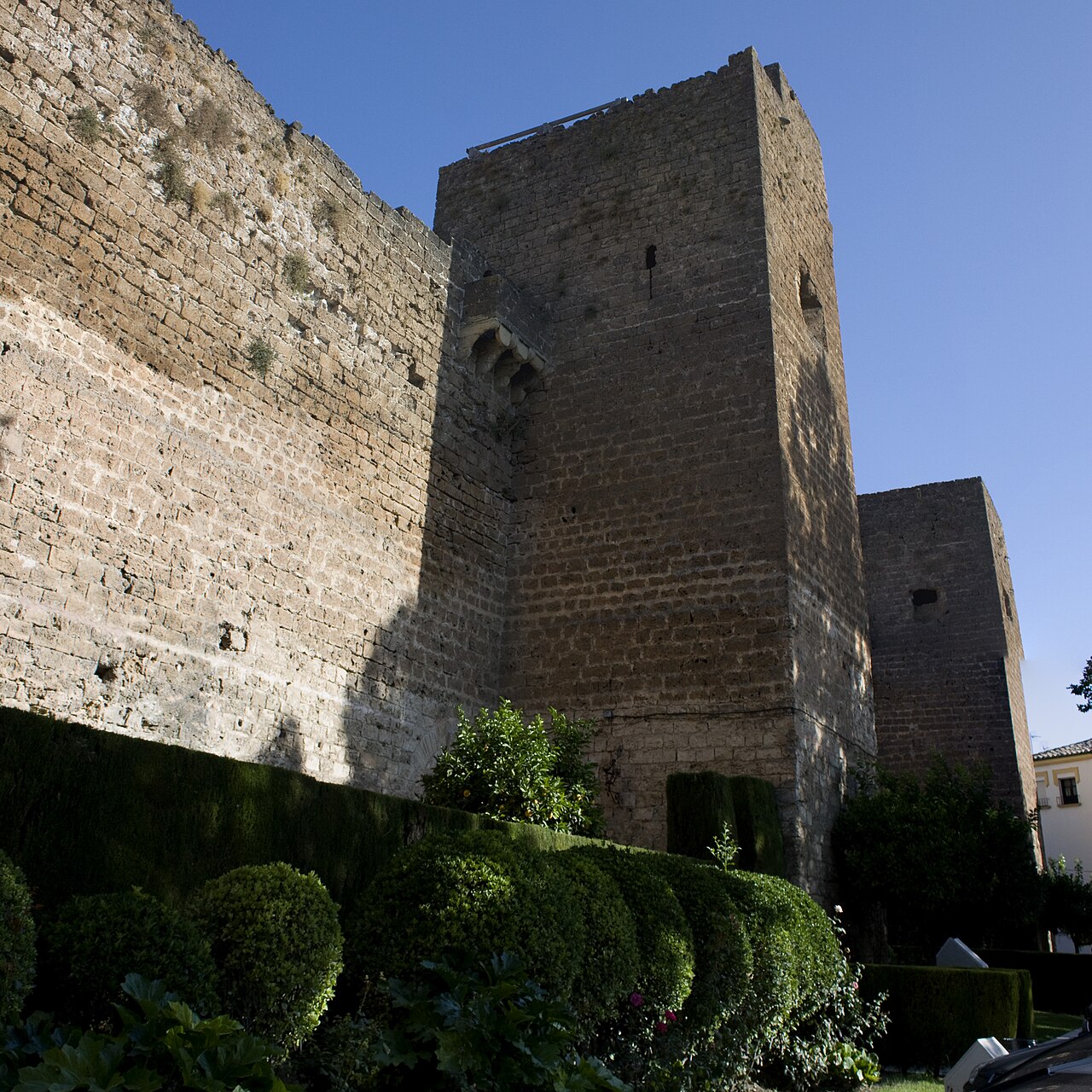
Carcabuey Castle
Carcabuey Castle, also known as Castillo Fuente Úbeda, stands as a remarkable example of a high medieval hill castle located in the town of Carcabuey, Spain. This fortress embodies the complex history of the Iberian Peninsula during the Middle Ages, reflecting layers of Islamic and Christian influence through its architecture and strategic role in regional conflicts.
Originally constructed atop a Roman enclosure dating back to antiquity, the castle's earliest documented mentions arise in the 9th century, during the period of Muslim rule in Al-Andalus. The fortress was initially linked to a local muladí rebel leader, Ben Mastana, who is thought to have built the early fortifications. It played a significant role during the rebellion of Omar ibn Hafsún, a prominent figure resisting the emirate's central authority. In 892, the castle was destroyed by the forces of emir Abd Allah after the surrender of Ben Mastana, marking a turbulent beginning for the site.
Following the Christian reconquest, King Fernando III of Castile captured Carcabuey Castle in 1225. He initiated extensive reconstruction efforts, drawing inspiration from other contemporary fortifications such as those at Iznájar and Fuengirola. These renovations established the castle's characteristic triangular layout adapted to the rocky hilltop terrain, combining sillarejo masonry—roughly shaped stones laid irregularly—and tapial (rammed earth) construction techniques. The castle's defenses were enhanced with five towers—two square and three circular—strategically distributed along the perimeter walls to maximize protection.
The castle's role during medieval conflicts
Carcabuey Castle was a focal point during the struggles between Muslim and Christian forces in the 13th and 14th centuries. After its capture by Fernando III, the fortress was entrusted to the Order of Calatrava, a military-religious order tasked with defending Christian territories. The castle briefly fell back into Muslim hands in 1339 under Nasrid ruler Yusuf I but was retaken by Alfonso XI in 1341, reaffirming Christian control.
One of the castle's most poignant historical episodes involves the conflict between King Alfonso X and his son, Infante Don Sancho. According to legend, the castle's governor, Pero Nuño Tello, remained fiercely loyal to Alfonso X despite Sancho's attempts to undermine the king by exploiting the governor's daughter. The tragic story culminates with Tello's suicide, symbolizing unwavering fidelity amidst political turmoil.
Architectural features and layout
The fortress's triangular plan follows the natural contours of the hill, optimizing defensive capabilities. The perimeter walls incorporate a mix of rough stone masonry and rammed earth, reflecting pragmatic medieval construction methods. The five towers serve as key defensive points, with the two square towers providing robust bastions and the three circular towers offering enhanced fields of fire and resistance to siege engines.
The main entrance, located on the eastern side, is accessed via a steep path, emphasizing the castle's defensible position. Near this gate lies a Roman cistern or aljibe, carved directly into the rock, which historically collected and stored water, a vital resource during sieges.
Inside the castle walls, the courtyard or patio de armas contains the Ermita de Nuestra Señora del Castillo, a late 18th-century hermitage built in a cruciform plan. The chapel features a half-point arch entrance and a ribbed dome ceiling, housing religious artworks such as a 1770 altarpiece and a gilded wooden tabernacle. It also preserves a relic associated with Saint Mary of Egypt, underscoring the site's spiritual significance.
Historical transformations and ownership
Throughout the late medieval period, Carcabuey Castle underwent several changes in ownership and function. After its reconquest by Alfonso XI, the castle became part of the Señorío de Aguilar following multiple royal donations. By 1385, governance passed to Ruy Díaz de Berrio under King Juan I, and later in 1465, ownership transferred to Alonso Fernández de Córdoba through sale.
By the late 18th century, the fortress had been largely abandoned as a military installation. The chapel's reconstruction after the 1951 earthquake in nearby Alcaudete reflects the community's ongoing dedication to preserving the site's cultural heritage.
Archaeological significance and preservation efforts
Carcabuey Castle is not only a medieval fortress but also an archaeological site revealing evidence of continuous occupation from prehistoric times through the Roman era and into the Middle Ages. Excavations have uncovered structural remains with square plans from various periods, illustrating the site's strategic importance over centuries.
Today, the castle's walls and towers remain partially preserved and are subject to ongoing restoration projects aimed at stabilizing the ruins, improving visitor access, and enhancing educational interpretation. These efforts ensure that Carcabuey Castle continues to be a valuable monument for understanding the complex history and architectural evolution of medieval fortifications in southern Spain.
Visitor experience and cultural importance
Visitors to Carcabuey Castle can explore the rugged hilltop site, appreciating the blend of Islamic and Christian architectural elements that tell the story of centuries of conflict and coexistence. The castle's commanding views over the surrounding landscape highlight its strategic location, while the hermitage offers insight into the spiritual dimension of the fortress.
The castle's rich history, from its early Islamic origins through its role in the Reconquista and noble lordships, makes it a significant cultural landmark. Its preservation contributes to the broader understanding of medieval military architecture and the historical narratives of Andalusia.
Frequently asked questions (FAQ)
- When was Carcabuey Castle originally built?
- Carcabuey Castle was originally built in the 13th century, with earlier fortifications dating back to the 9th century during the Muslim period.
- What architectural styles are evident in Carcabuey Castle?
- The castle shows a mix of medieval Islamic and Christian architectural features, including sillarejo masonry and tapial construction, with five defensive towers.
- Is Carcabuey Castle open to visitors?
- Yes, Carcabuey Castle is open to visitors. It offers access to the hilltop ruins, the 18th-century hermitage, and panoramic views of the surrounding Andalusian landscape.
- What is the significance of the Ermita de Nuestra Señora del Castillo?
- The Ermita de Nuestra Señora del Castillo is an 18th-century chapel within the castle grounds, notable for its cruciform plan, ribbed dome ceiling, and religious artworks, including a relic of Saint Mary of Egypt.
- How did the castle change hands during the medieval period?
- The castle was captured by King Fernando III in 1225, later controlled by the Order of Calatrava, briefly retaken by Nasrid forces in 1339, and reconquered by Alfonso XI in 1341, before passing to various noble owners.
Information
Current owner
Municipality
Loading map...
Visitor reviews
No reviews yet. Been here? Write the first review and help other travelers!
Write the first reviewVisited this castle? Share your experience
Your review helps other travelers and adds first-hand knowledge to our encyclopedia.