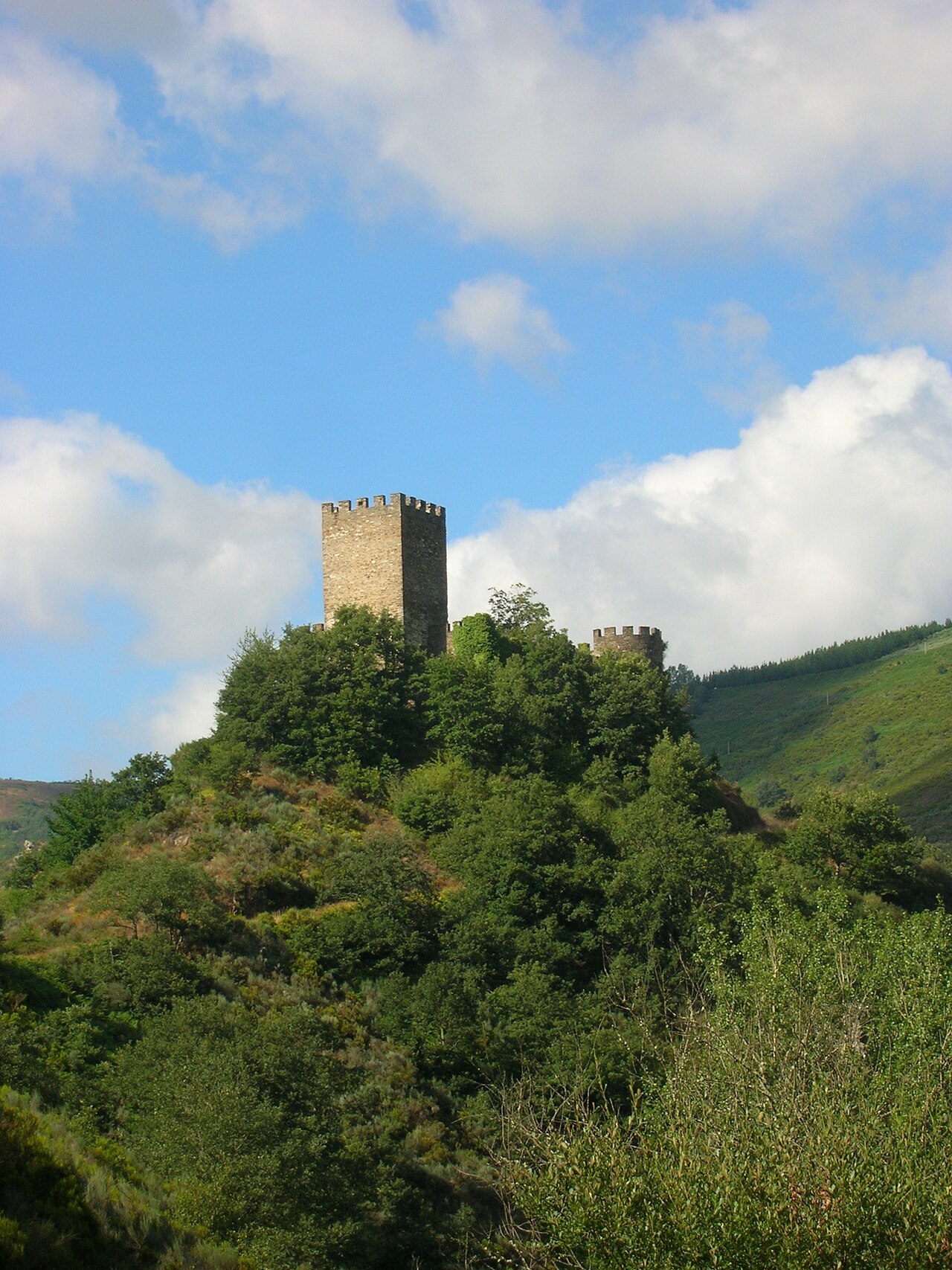
Castle of Balboa
The Castle of Balboa stands as a remarkable example of a 13th-century hill castle located near the town of Balboa in the autonomous community of Castile and León, Spain. This fortress was originally constructed by medieval builders during a period when the establishment of territorial control by noble families was crucial to regional governance. Positioned strategically on a prominent hilltop, the castle's location provided commanding views over the surrounding landscape, a critical defensive advantage in the turbulent medieval era.
Historical significance and ownership
The earliest documented reference to the Castle of Balboa dates back to 1260, when it was recognized as a center of power for the influential Valcarce-Balboa family. This family played a vital role in the administration and defense of their lands, using the castle as a stronghold to exert authority throughout the region. The castle's strategic importance continued through the centuries, witnessing significant historical events that shaped the local and broader Spanish medieval landscape.
One of the most turbulent episodes in the castle's history occurred during the 15th century amid the Irmandiña Revolt, a widespread uprising involving peasants and nobles challenging feudal power structures. The castle, along with other fortresses such as those in Sarracín and Corullón, suffered considerable damage during this conflict. The revolt led to the partial destruction of the fortress, reflecting the widespread social upheaval of the period.
After the revolt, the castle was restored under the direction of Pedro Álvarez Osorio, the Count of Lemos. His reconstruction efforts likely incorporated elements of the original medieval structure, blending preservation with necessary repairs to maintain the castle's defensive capabilities. Ownership later transferred to the Marquesado de Villafranca, who retained control until the 19th century. The abolition of feudal rights by the Cortes of Cádiz in the 19th century marked a significant turning point, resulting in the castle passing into private hands and reflecting the broader decline of feudalism in Spain.
In the 21st century, the castle became property of the Balboa Town Council in 2006. This transfer initiated a new phase focused on the preservation and protection of the site. Starting in 2021, restoration work has concentrated on stabilizing the remaining structures, particularly the keep tower, to prevent further decay and preserve this important medieval monument for future generations.
Architectural features and remains
Perched on its commanding hilltop, the Castle of Balboa is primarily known today for the remains of its keep tower, or Torre del Homenaje. This tower served as the fortress's last line of defense and is a quintessential feature of medieval military architecture. Constructed using locally sourced stone, the tower's thick walls were designed to withstand sieges and attacks, reflecting the practical defensive needs of the time.
The surviving ruins reveal multiple phases of construction and repair, with visible layers indicating the castle's evolution over centuries. The most significant alterations correspond to the 15th-century rebuilding by the Count of Lemos following the damage sustained during the Irmandiña Revolt. Although detailed records of the castle's original layout and decorative elements are scarce, the structural remains provide valuable insights into medieval fortification techniques.
The castle's ruins, while fragmentary, maintain a well-defined silhouette against the skyline. The recent restoration and stabilization efforts have been crucial in securing the integrity of the keep tower, preventing collapse, and enabling visitors to appreciate the site's historical and architectural significance. The weathered stonework and elevated position continue to convey the fortress's former military importance and its role in the region's medieval heritage.
Cultural and heritage importance
The Castle of Balboa is not only a symbol of medieval military architecture but also an emblem of the region's feudal history and social transformations. Its endurance through centuries of conflict and change illustrates the dynamic history of northern Spain during the Middle Ages. The castle's association with prominent noble families such as the Valcarce-Balboa lineage and the Counts of Lemos highlights its role as a focal point of power and governance.
Today, the castle is an important cultural landmark within the municipality of Balboa. Efforts to preserve and restore the site reflect a broader commitment to safeguarding Spain's medieval architectural heritage. The castle attracts historians, architects, and visitors interested in exploring the tangible remains of feudal Spain and understanding the complexities of medieval fortification design.
Visiting the castle of balboa
Visitors to the Castle of Balboa can explore the ruins, including the stabilized keep tower, which offers a glimpse into medieval defensive architecture. The castle's hilltop location provides panoramic views of the surrounding countryside, enhancing the visitor experience with scenic vistas alongside historical exploration.
While the castle is in ruins, ongoing preservation efforts have made it accessible and safe for visitors interested in Spain's medieval past. The site is managed by the Balboa Town Council, which oversees maintenance and facilitates educational initiatives to promote awareness of the castle's historical importance.
Architectural details of the keep tower
The keep tower stands as the most prominent feature of the castle ruins. Its robust construction features thick stone walls, narrow window slits for archers, and a rectangular plan typical of medieval keeps designed for both defense and habitation. The tower's height and strategic positioning allowed defenders to monitor approaching threats and coordinate the castle's defense effectively.
The tower's interior, though now largely exposed, would have contained multiple floors connected by wooden staircases or ladders. These floors likely housed living quarters, storage rooms, and defensive positions, illustrating the multifunctional nature of the keep within the castle complex.
The castle's role in regional defense
During its active use, the Castle of Balboa formed part of a network of fortifications that secured the region against external threats and internal conflicts. Its elevated position and strong defensive features made it a key asset in controlling movement through the valley and protecting the interests of its noble owners.
The castle's history of destruction and rebuilding reflects the contested nature of power in medieval Spain, where fortresses frequently changed hands and were focal points in regional disputes. The Irmandiña Revolt is a prime example of such conflicts, demonstrating the castle's central role in the social and military struggles of its time.
Landscape and surroundings
The castle's hilltop setting not only provided defense but also symbolized authority over the surrounding lands. From its vantage point, the castle overlooks the town of Balboa and the surrounding natural landscape, including valleys and forested areas. This commanding view reinforced the castle's function as a seat of power and a deterrent against potential aggressors.
The surrounding landscape remains largely rural, preserving the historical context in which the castle operated. This setting offers visitors a sense of the medieval environment and the strategic considerations that influenced the castle's placement and design.
Frequently asked questions (FAQ)
- How do I get to the Castle of Balboa?
- The Castle of Balboa is located near the town of Balboa in Castile and León, Spain. Visitors can reach it by car or local transport, with parking available near the site.
- What is the best time to visit the Castle of Balboa?
- The best time to visit is during spring and summer when the weather is mild and the surrounding landscape is lush, enhancing the scenic views from the castle.
- Is the Castle of Balboa accessible to visitors?
- Yes, the castle ruins are accessible to visitors. Recent restoration work has improved safety, but some areas may be uneven due to the ruinous condition.
- Are there guided tours available at the Castle of Balboa?
- Guided tours may be available through the local tourist office or Balboa Town Council. It is recommended to check in advance for availability and schedules.
- What architectural style is the Castle of Balboa?
- The castle primarily exhibits Gothic architectural features typical of the High Medieval period, especially seen in its keep tower construction.
Information
Current owner
Balboa Town Council
Loading map...
Visitor reviews
No reviews yet. Been here? Write the first review and help other travelers!
Write the first reviewVisited this castle? Share your experience
Your review helps other travelers and adds first-hand knowledge to our encyclopedia.