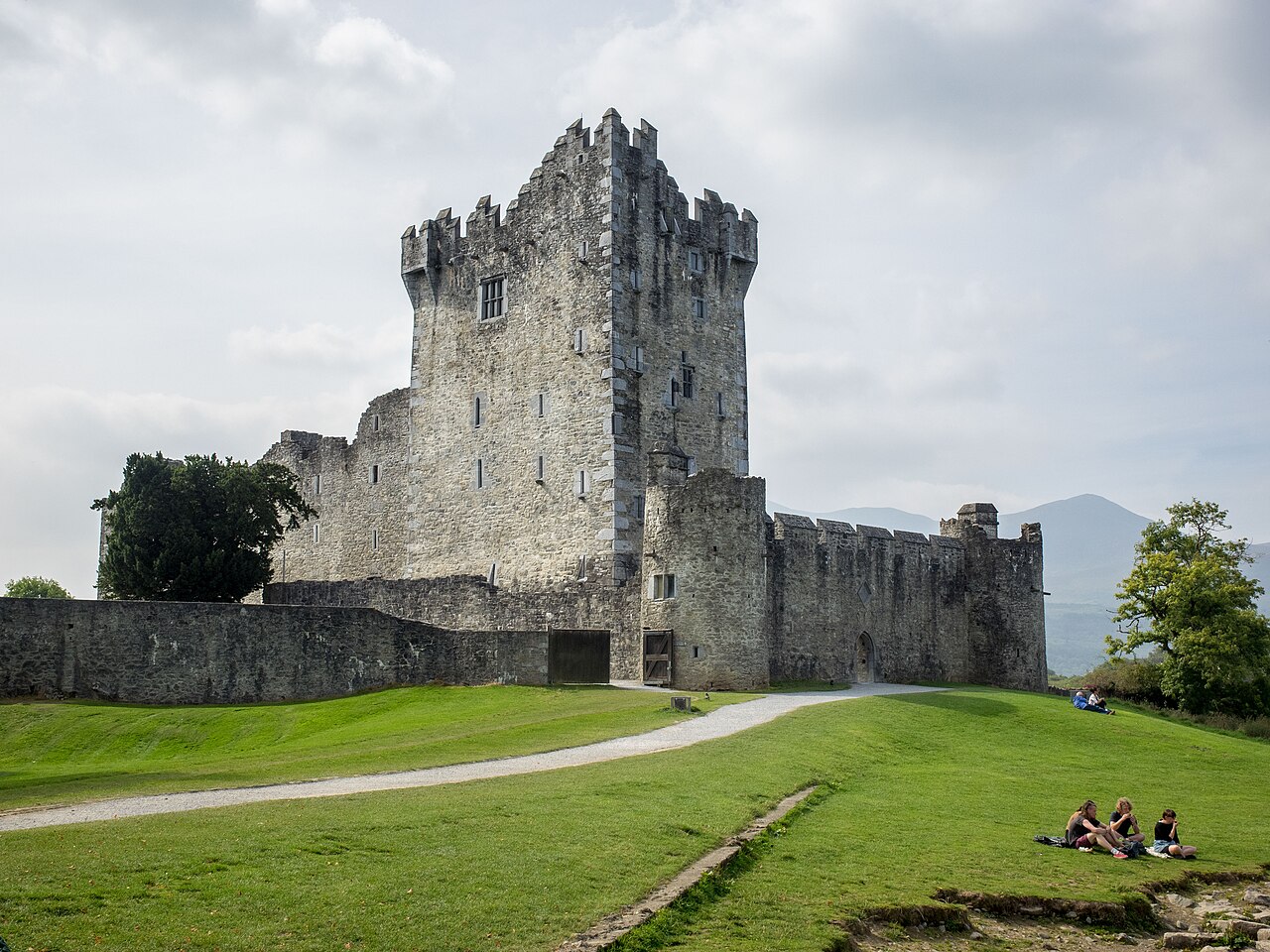
Cappanacush Castle
Cappanacush Castle is a historic tower house ruin located in a dense forest near the settlement of Templenoe in County Kerry, Ireland. This castle, built around the mid-15th century, served as a significant stronghold for the O'Sullivan Mór clan, one of the prominent Gaelic families in the region. Though now largely overgrown and in ruins, the site retains the remains of its defensive structure, offering insight into the turbulent history of southwest Ireland during the late medieval and early modern periods.
Origins and early history
The castle was likely constructed circa 1440 by Conchur O'Sullivan, a member of the O'Sullivan Mór family, who were powerful Gaelic chieftains in Kerry. The tower house was part of a network of fortifications that the clan used to assert control over their lands and defend against rival families and English incursions. Its location south of the N70 road, known as the Ring of Kerry, placed it strategically within their territory.
The O'Sullivan Mór family seat and 17th-century conflicts
By the 17th century, Cappanacush Castle had become the principal seat of the O'Sullivan Mór family, alongside nearby Dunkerron Castle. Both castles played defensive roles during the Cromwellian conquest of Ireland in the mid-1600s. The O'Sullivan Mórs resisted the Parliamentary forces, but following their defeat, their lands and castles were confiscated under the Act for the Settlement of Ireland 1652. These properties were subsequently granted to William Petty, a supporter of Oliver Cromwell.
Impact of the Jacobite rising
Cappanacush Castle is also notable as the birthplace of Sir John William O'Sullivan in 1700. He later became a professional soldier and served as the adjutant general to Bonnie Prince Charlie during the Jacobite rising of 1745. His military career reflects the continuing influence of the O'Sullivan family in Irish and British history beyond the castle's active use.
Architectural features and current condition
The castle was originally a tower house, a common type of fortified residence in Ireland during the late medieval period. Today, only two walls of the large tower remain standing, with much of the structure lost to time and vegetation. The ruin is heavily overgrown, making detailed architectural features difficult to discern. The thick forest surrounding the site adds to its secluded and somewhat mysterious atmosphere.
Access and preservation
Access to Cappanacush Castle is challenging due to the absence of clear roads or paths leading to the site. Visitors must navigate through dense woodland, which limits casual tourism but preserves the site from heavy foot traffic. The castle is in a ruined state, with no significant restoration efforts recorded, reflecting its status as a historical relic rather than an active heritage site.
Historical significance and cultural context
Cappanacush Castle represents the Gaelic lordship era in southwest Ireland, illustrating the architectural and social strategies of native Irish clans during the late medieval and early modern periods. Its association with the O'Sullivan Mór family ties it to key events such as the Cromwellian conquest and the Jacobite risings, which shaped Irish history profoundly. The castle's decline by the 19th century marks the broader transition of Irish society and the fading of Gaelic aristocratic power.
Relation to nearby castles
The proximity of Dunkerron Castle highlights the O'Sullivan Mórs' network of fortified residences, which served both defensive and administrative functions. Together, these castles provide valuable insights into the territorial control and clan dynamics of the region during a period marked by conflict and change.
Frequently asked questions (FAQ)
- How do I access Cappanacush Castle?
- Cappanacush Castle is located in a dense forest near Templenoe with no direct roads or paths. Visitors should be prepared for a challenging walk through thick woodland to reach the site.
- What is the historical significance of Cappanacush Castle?
- The castle was a key seat of the O'Sullivan Mór family and played a role during the Cromwellian conquest of Ireland. It is also the birthplace of Sir John William O'Sullivan, a notable Jacobite soldier.
- What remains of Cappanacush Castle today?
- Only two walls of the original tower house remain, heavily overgrown and in ruin. The site offers limited architectural details but reflects the defensive design typical of 15th-century Irish tower houses.
- Is Cappanacush Castle open to the public?
- There are no formal visitor facilities or opening hours. Access is unrestricted but difficult due to the remote forest location and lack of paths.
- When was Cappanacush Castle built?
- The castle was likely built around 1440 by Conchur O'Sullivan, during the late medieval period.
Information
Loading map...
Visitor reviews
No reviews yet. Been here? Write the first review and help other travelers!
Write the first reviewVisited this castle? Share your experience
Your review helps other travelers and adds first-hand knowledge to our encyclopedia.