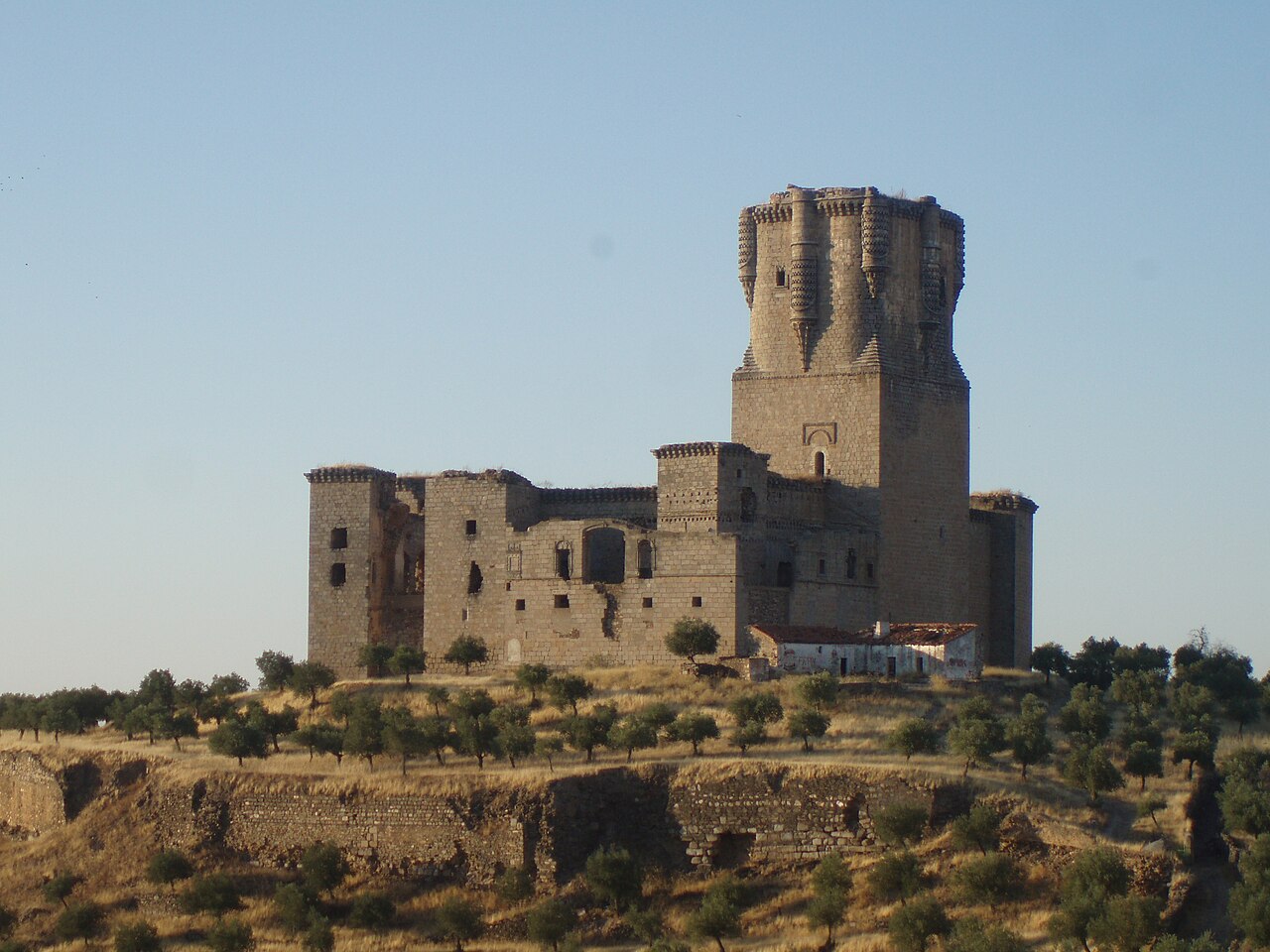
Capilla Castle is a historic fortress located in Melilla, Spain, with origins tracing back to ancient Roman fortifications. Initially constructed by the Moors, this castle occupies a strategic position atop a rugged crag, commanding views of the surrounding landscape. The site was seized in 1226 by King Ferdinand III of Castile and León, who ordered its reconstruction shortly thereafter, marking the castle's transition from Islamic to Christian control during the High Medieval period.
Architectural layout and defensive features
The castle's plan is an irregular polygon, carefully adapted to the abrupt and uneven terrain of the crag on which it stands. This irregularity reflects the builders' efforts to maximize defensive capabilities by utilizing the natural landscape. A prominent feature is the barbican that protects the main entrance, a fortified outwork designed to impede attackers and provide an additional layer of security.
Beyond the barbican, visitors enter into two distinct courtyards, which served as central spaces within the castle complex. The interior is marked by cylindrical towers that once played a crucial role in defense, allowing defenders to observe and repel assaults from multiple angles. Although some parts of the structure, such as the allure (the walkway behind the battlements), are partially demolished, remnants of a machicolation remain visible, illustrating the castle's military function. Machicolations allowed defenders to drop projectiles or boiling substances on attackers at the base of the walls.
Historical significance and transformations
The castle's history is deeply intertwined with the shifting control of the Iberian Peninsula during the medieval era. Its original construction by the Moors indicates its role in the Islamic defensive network in the region. Following the Christian reconquest led by Ferdinand III, significant rebuilding efforts adapted the fortress to new military needs and styles, reflecting the broader cultural and political changes of the 13th century.
Despite centuries of wear and partial destruction, Capilla Castle retains visible elements of its Arabic walls, particularly on the south and north sides. These walls provide valuable insight into the castle's early construction techniques and defensive strategies. Additionally, the original stone paving of staircases and rooms survives in parts, offering a tangible connection to the castle's medieval inhabitants.
Current condition and visitor experience
Today, Capilla Castle stands as a partially preserved monument showcasing a blend of Moorish and Christian medieval architecture. Visitors can explore the ruins, including the towers, courtyards, and defensive structures, gaining an appreciation for the castle's strategic importance and architectural ingenuity. The site’s rugged setting and the visible layers of history make it a compelling destination for those interested in medieval fortifications and the complex history of southern Spain.
Architectural elements of note
- Cylindrical towers: Key defensive structures allowing wide fields of fire and observation.
- Barbican: Fortified gateway protecting the main entrance.
- Machicolations: Defensive openings for dropping projectiles on attackers.
- Arabic walls: Remnants of original Moorish construction, visible on multiple sides.
- Stone paving: Original medieval flooring in staircases and rooms.
Strategic location and terrain adaptation
The castle’s location on a crag provided natural defenses, making assaults difficult. Its irregular polygonal shape reflects the adaptation of the fortress layout to the uneven terrain, optimizing defensive coverage while integrating with the rocky landscape.
Historical context within the region
Capilla Castle's history is emblematic of the broader Reconquista period, during which Christian forces gradually reclaimed territory from Muslim rulers in the Iberian Peninsula. The castle's capture by Ferdinand III was part of a series of military campaigns that significantly altered the political landscape of southern Spain. The fortress thus represents a physical record of these transformative historical processes.
Military role through the ages
Throughout its history, Capilla Castle served primarily as a defensive stronghold. Its robust fortifications and strategic position allowed it to control surrounding routes and resist sieges. The presence of machicolations and multiple towers underscore its design focused on active defense and surveillance.
Architectural influences and styles
The castle exhibits architectural characteristics typical of the High Medieval period, with a blend of Islamic and Christian military architecture. The preservation of Moorish walls alongside Christian additions illustrates the layered history and cultural exchange evident in the castle’s fabric.
Construction techniques
Stone masonry dominates the construction, with thick walls designed to withstand attacks. The use of cylindrical towers was a common feature in medieval fortifications, providing structural strength and enhanced defensive capabilities. The machicolations are indicative of advanced military engineering for the period.
Visiting information
While specific visiting hours and ticket prices are not widely published, Capilla Castle remains accessible to the public as a historical site in Melilla. Visitors are encouraged to explore the ruins carefully, respecting the fragile state of some structures. The site offers a unique window into medieval military architecture and the complex history of the region.
Frequently asked questions (FAQ)
- How do I get to Capilla Castle?
- Capilla Castle is located in the charming town of Capilla, Spain. Visitors can reach the castle by car or public transportation from nearby cities, with ample parking available nearby. If traveling from larger cities like Zaragoza or Huesca, consider taking a regional train or bus for convenience.
- What is the historical significance of Capilla Castle?
- Capilla Castle is a remarkable example of medieval architecture, reflecting the rich history of the region. Originally built in the 12th century, it served as a defensive stronghold during various conflicts and showcases the strategic importance of the area. Today, it stands as a symbol of Capilla's cultural heritage.
- When was Capilla Castle built?
- Capilla Castle was constructed in the early 12th century, during the height of the medieval period in Spain. Its architecture and design reflect the styles and defensive needs of that era, making it a fascinating site for history enthusiasts. The castle has undergone various restorations to preserve its historical integrity.
- Can I enter the castle and explore its interior?
- Yes, visitors are welcome to enter Capilla Castle and explore its interior. Guided tours are available, providing insightful information about the castle's history and architecture. Be sure to check the schedule, as tours may vary based on the season.
- Why is Capilla Castle a popular tourist destination?
- Capilla Castle attracts visitors due to its stunning architecture, rich history, and picturesque location. Surrounded by beautiful landscapes, it offers breathtaking views and a glimpse into Spain's medieval past. Additionally, the castle hosts various cultural events throughout the year, enhancing its appeal.
- Is it possible to visit Capilla Castle year-round?
- Yes, Capilla Castle is open to visitors year-round, although opening hours may vary seasonally. It is advisable to check the official website or local tourism information for the most current hours before planning your visit. Regardless of the season, the castle offers a unique experience for all who come.
- What are the ticket prices for visiting Capilla Castle?
- Ticket prices for Capilla Castle are quite reasonable, typically ranging from €5 to €10 for adults, with discounts available for children and seniors. Group rates may also apply, making it an affordable option for families and school tours. Be sure to check for any special promotions or events that may offer reduced admission.
- What is the best time to visit Capilla Castle?
- The best time to visit Capilla Castle is during the spring and fall months when the weather is mild and pleasant. These seasons also provide beautiful scenery with blooming flowers and autumn foliage, enhancing your visit. Summer can be quite hot, while winter may bring colder temperatures, making spring and fall ideal for exploration.
- Are there any nearby attractions to visit after Capilla Castle?
- Yes, there are several nearby attractions that complement a visit to Capilla Castle. Explore the charming town of Capilla with its quaint streets, local shops, and traditional Spanish cuisine. Additionally, nearby natural parks and hiking trails offer beautiful landscapes for outdoor enthusiasts.
Loading map...
Visitor reviews
No reviews yet. Been here? Write the first review and help other travelers!
Write the first reviewVisited this castle? Share your experience
Your review helps other travelers and adds first-hand knowledge to our encyclopedia.