Çandarlı Castle — Turkey castle

Çandarlı Castle

Çandarlı Castle in Izmir: a historic hill castle with ancient roots
Kale Sk., Turkey
Early Medieval (5th–10th c.)

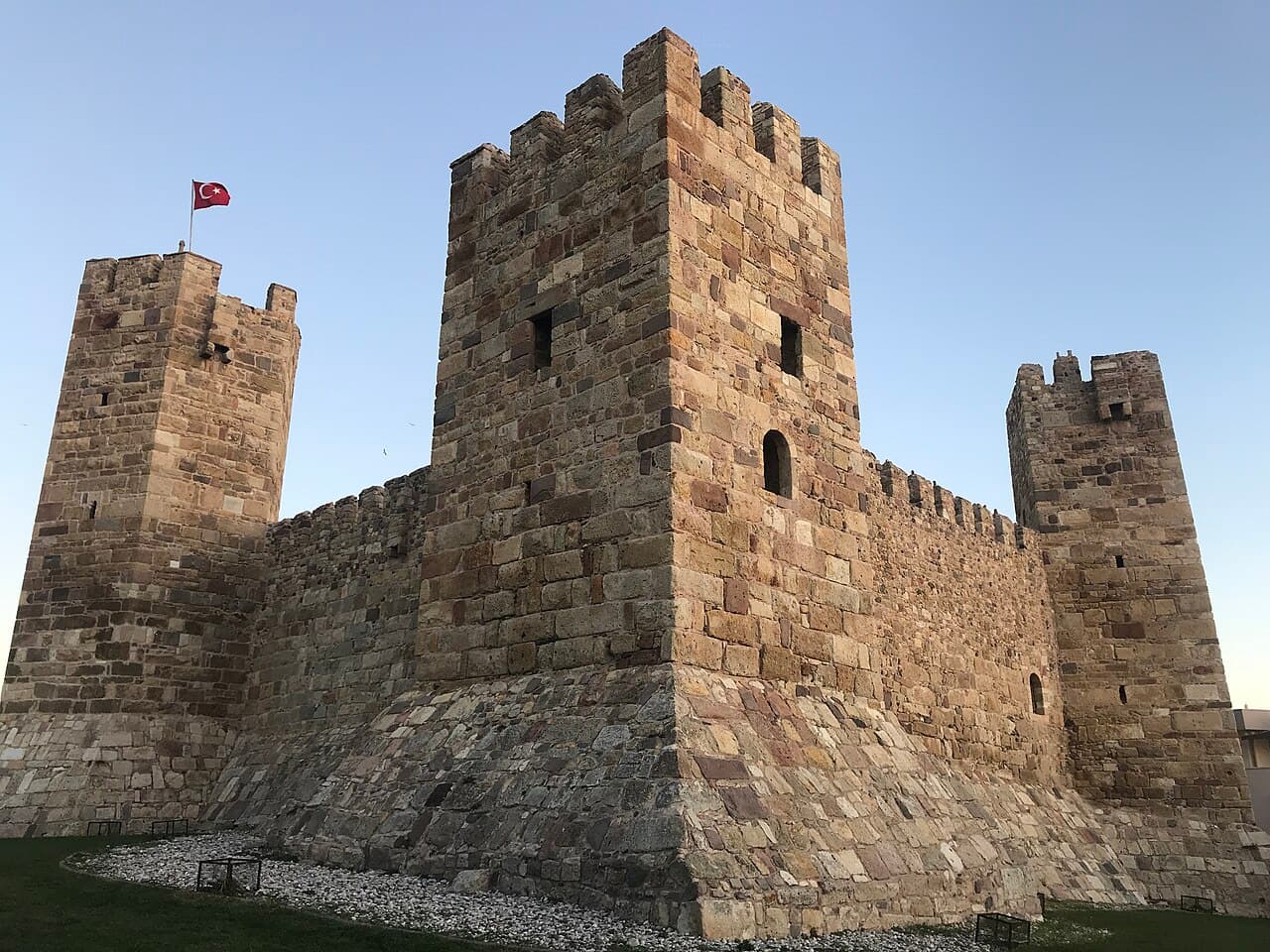
Çandarlı Castle, also known locally as Çandarlı Kalesi, is a significant historic fortress located in the seaside town of Çandarlı within the province of Izmir, Turkey. This hill castle stands prominently on the narrow neck of a small peninsula, commanding strategic views over the Aegean coast. Its long and complex history reflects the many civilizations that have controlled this vital maritime region.

The earliest fortifications at the site of Çandarlı Castle are believed to be the remnants of the ancient city walls of Pitane, a Greek settlement established in the 6th century BC. Pitane was an important maritime hub during the era of the Kingdom of Pergamon (282-129 BC), which contributed to the castle's initial military significance. Archaeological evidence shows that some of the oldest stones used in the castle's construction date back to the 2nd century BC, highlighting the site's deep historical roots.

Ancient origins and early fortifications

The site of Çandarlı Castle has witnessed multiple phases of construction, destruction, and rebuilding throughout the Greek, Roman, and Byzantine periods. The castle's location on a rocky promontory offered natural defensive advantages, which successive powers exploited to fortify the area against maritime threats. Excavations within the castle grounds have uncovered Byzantine wall fragments and floors at various levels, indicating multiple layers of occupation and architectural development over centuries.

One notable feature from this era is a large cistern used for water storage, dating from between 667 BC and 330 AD, underscoring the castle's role as a self-sustaining fortress capable of withstanding sieges. The castle's compact layout, covering approximately 2,230 square meters, reflects careful adaptation to the natural terrain, with battlemented walls and towers designed to maximize defense.

Medieval transformations under the genoese

In the 14th century, the strategic importance of the site was reaffirmed when the Genoese, a powerful maritime republic from Italy, took control of the nearby city of Phocaea (modern Foça) and extended their influence over the region. The Genoese rebuilt and reinforced the castle to protect their commercial interests along the Aegean coast. Their architectural interventions included strengthening the walls and towers, adapting the fortress to the evolving military technologies and threats of the late medieval period.

Ottoman reconstruction and renaming

By the 15th century, the castle had fallen into disrepair. With the expansion of the Ottoman Empire into western Anatolia, the fortress was restored under the direction of Çandarlı Halil Pasha the Younger, a prominent grand vizier serving Sultan Murad II. This restoration was motivated by the need to protect the young sultan, who resided in the nearby city of Manisa, from potential maritime and land-based threats.

Çandarlı Halil Pasha not only rebuilt the castle but also renamed the town from Pitane to Çandarlı, reflecting his family's name and legacy. The Ottoman reconstruction included the addition of defensive features suitable for the period, and the main gate bears an inscription with faint verses from the Al-Fath Surah of the Qur'an, symbolizing the fortress's Islamic heritage and the empire's spiritual authority.

Architectural features and layout

The castle's defensive perimeter is reinforced by battlemented walls and punctuated by five towers, which served as lookout points and strongholds during sieges. The compact fortress is carefully integrated into the rocky terrain, with slopes descending from east to west, enhancing its natural defenses.

The main gate is a prominent architectural element, notable for its religious inscription and robust construction. Inside the courtyard, archaeological excavations have revealed multiple layers of flooring and wall remains, testifying to the castle's long history of use and adaptation.

Modern restoration and heritage significance

Starting in 2009, a comprehensive restoration project was undertaken to preserve Çandarlı Castle's structural integrity and historical character. This work was completed in 2014, stabilizing the fortress and allowing it to be opened to the public after years of closure. Despite this, visitor access can be limited, and information about opening hours is not always readily available.

Çandarlı Castle is recognized for its layered historical significance, representing ancient Greek, Roman, Byzantine, Genoese, and Ottoman influences. It was included on the UNESCO World Heritage Tentative List in 2013 as part of a group of fortifications associated with Genoese trade routes connecting the Mediterranean and Black Seas.

Visiting and exploring çandarlı castle

Visitors to Çandarlı Castle can appreciate the fortress's commanding views over the Aegean Sea and its well-preserved defensive structures. The castle's towers, battlements, and gate offer insights into medieval military architecture and the strategic importance of the region throughout history.

Although the castle has undergone restoration, access to the interior and towers may be restricted at times. Prospective visitors are advised to check local sources for current opening hours and any visitor regulations.

Frequently asked questions (FAQ)

What is the historical significance of Çandarlı Castle?
Çandarlı Castle, built in the 14th century, played a crucial role in the defense of the Aegean coast during medieval times. It is an excellent example of Byzantine and Ottoman architecture, reflecting the military strategies of its era and the cultural exchanges that occurred in the region.
When was Çandarlı Castle constructed?
Çandarlı Castle was constructed in the 14th century, specifically around the year 1388. It was built by the Aydinids, a local Turkish emirate, and later expanded by the Ottomans, showcasing a blend of different architectural styles over the centuries.
Can I visit Çandarlı Castle year-round?
Yes, Çandarlı Castle is open to visitors year-round, although hours may vary based on the season. It’s advisable to check local listings for any seasonal changes in opening hours before planning your visit.
Is it possible to access the castle with public transportation?
Yes, Çandarlı Castle is accessible via public transportation from nearby cities, although schedules may be limited. Many visitors find it convenient to rent a car or use local taxis for easier access to the castle and surrounding areas.
What are the opening hours for Çandarlı Castle?
Çandarlı Castle typically opens at 9 AM and closes at 7 PM during the summer months, while winter hours may vary. It’s best to verify current hours before your visit to ensure you have ample time to explore.
What are the ticket prices for Çandarlı Castle?
The entrance fee for Çandarlı Castle is quite affordable, generally around 20 Turkish Lira for adults. Discounts may be available for students and seniors, so it’s worth checking at the ticket counter.
When is the best time to visit Çandarlı Castle?
The best time to visit Çandarlı Castle is during the spring and fall when the weather is mild and pleasant for exploring. Summer can be quite hot, while winter may bring cooler temperatures and rain.
Are there any nearby attractions to visit after Çandarlı Castle?
Yes, after visiting Çandarlı Castle, you can explore the nearby Çandarlı village, known for its charming streets and local cuisine. Additionally, the beautiful beaches along the Aegean coast are just a short drive away, offering a perfect way to unwind after your historical tour.

Photo gallery

Çandarlı Castle
Click to view

Photo by BSRF•CC BY-SA 4.0

1 photo • Click any image to view in full screen

Information

Hill Castle

Sources & official resources

Verify the information above using these authoritative references.

Loading map...

Visitor reviews

No reviews yet. Been here? Write the first review and help other travelers!

Write the first review

Visited this castle? Share your experience

Your review helps other travelers and adds first-hand knowledge to our encyclopedia.
Write a review

(5/5)

0/2000 characters

Your review will be visible after admin approval

Nearby castles

33.4 km
Beş Kapılar Castle — Turkey castle

Beş Kapılar Castle

Foça, Turkey

Beş Kapılar Castle, also known locally as Beş Kapılar Kalesi, is a historic fortress located in the harbor town of Foça in the Izmir province of Turkey. This castle stands on a small peninsula that juts into the bay, a site with a rich history dating back to the ancient Greek city of Phocaea. The area was originally fortified by city walls that followed the natural outline of the peninsula, protecting the settlement and its important harbor. The castle's name, which translates to "Five Doors Castle", derives from a distinctive section of the fortress featuring five gates. These gates were part of a defensive complex built into the city walls during the Ottoman period between 1538 and 1539, commissioned by Silahtar Iskender Ağa. At that time, the sea reached the castle walls, highlighting its strategic maritime role. The castle likely functioned more as a fortified boathouse, known locally as a kayıkhane, than as a traditional military fortress. Historical background and evolution The origins of the fortifications at Foça trace back to the ancient Greek colony of Phocaea, with the earliest walls dating from approximately 590–580 BC. These early defensive structures were built to protect the prosperous city, which was notable for its maritime trade and cultural influence in the Aegean region. Through the centuries, the fortress underwent multiple phases of rebuilding and repair. During the Byzantine era, the walls were maintained and reinforced to defend against various invasions and pirate raids. The castle's strategic location made it a valuable military asset for controlling access to the Gulf of İzmir. In the 13th century, the castle came under the control of the Republic of Genoa, a powerful maritime state from what is now Italy. The Genoese undertook significant reconstruction efforts, adapting the fortress to their defensive needs and enhancing its fortifications to secure their trading interests in the region. During the 14th century, the castle gained historical significance when Şehzade Halil, an Ottoman prince, was abducted and imprisoned within its walls. This event underscores the castle's continued importance in regional political and military conflicts. Following the Ottoman conquest of Foça, the fortress was further modified between 1538 and 1539. The Ottomans repaired the walls and added new towers, integrating the castle into their defensive network along the Aegean coast. These renovations reflected Ottoman military architecture and their strategic priorities in securing maritime routes. Architectural features and layout Beş Kapılar Castle occupies a commanding position on a peninsula surrounded by the sea on three sides, utilizing natural defenses to protect the harbor. The castle's layout takes full advantage of this geography, overseeing key access points between northern İzmir, the town of Çandarlı, and the wider Gulf of İzmir. The fortress consists of a combination of Byzantine and Ottoman fortification styles, visible in the construction techniques and materials used in the walls and towers. The castle walls are robust and include several towers positioned to maximize defensive coverage. One of the most notable architectural elements is a tower near the northern tip of the peninsula, close to the site of the ancient Temple of Athena. This tower marks a boundary of the fortress and exemplifies the layered history of the site, blending ancient religious significance with military purposes. The southwestern section of the castle features the distinctive five gates ("Beşkapılar"), which gave the castle its name. During the Ottoman period, this part of the fortress was adapted to serve as a kayıkhane, or boatshed, reflecting a shift in function from purely military to also supporting maritime activities. The castle walls and towers are constructed primarily from stone, using building techniques consistent with Byzantine masonry, later repaired and supplemented during the Ottoman renovations. The combination of styles and materials illustrates the fortress's long history of occupation and adaptation. Strategic importance and maritime role The castle's location near the islands of İncir, Oraq, and Fener highlights its role as a critical defensive point for maritime traffic in the region. It controlled access to the harbor and served as a lookout for potential naval threats. During the Ottoman era, the castle's function as a fortified boathouse was integral to maintaining naval readiness and protecting the town's economic interests tied to shipping and trade. The proximity of the fortress to the sea allowed for quick deployment of boats and defense against pirates or enemy fleets. Preservation and current status Today, Beş Kapılar Castle stands as a partly restored and preserved historical site. Restoration efforts, notably in 1983, have helped stabilize the structure and maintain its visibility as a cultural landmark. Additionally, a large stretch of the city walls connected to the castle has been rebuilt in recent years, enhancing the overall historical ambiance of the site. Despite these restoration efforts, the castle itself is currently not accessible to the public and does not serve any active function. The site remains an important symbol of Foça's rich past, attracting interest from historians, architects, and visitors intrigued by its layered history. In recognition of its cultural and historical significance, the castle was placed on the UNESCO World Heritage Tentative List in 2013, underscoring its value as part of Turkey's heritage and the broader history of Mediterranean fortifications. Visiting Beş Kapılar Castle and Foça While the castle itself is not open for interior visits, the town of Foça offers a charming historical atmosphere with its ancient walls, harbor views, and nearby archaeological sites. Visitors can explore the surrounding area, enjoy the coastal scenery, and learn about the castle's history through local museums and guided tours. The combination of ancient Greek, Byzantine, Genoese, and Ottoman influences makes Beş Kapılar Castle a fascinating study in the evolution of military architecture and coastal defense strategies over more than two millennia.

Post-Renaissance (17th–18th c.)
Details
37.7 km
Castle of Mytilene — Greece castle

Castle of Mytilene

Mytilene, Greece

The Castle of Mytilene, also known as the Fortress of Mytilene, is a monumental hill castle located in the city of Mytilene on the Greek island of Lesbos in the North Aegean. Covering approximately 60 hectares, it ranks among the largest castles in the Mediterranean. The castle's strategic position atop a hill dominating the city and its harbors has made it a key defensive and administrative center throughout its long history. The castle's origins trace back to the 6th century AD during the reign of Byzantine Emperor Justinian I (527–565), who ordered the construction of a fortress on the site of an ancient acropolis. This early fortification incorporated materials from classical structures, notably the ancient theater of Mytilene, reflecting the continuity of settlement and defense on this prominent hill. The fortress served as a crucial military stronghold and administrative hub for the Byzantine Empire, safeguarding the island and controlling maritime routes in the Aegean Sea. Byzantine foundations and early medieval fortifications The initial construction phase under Emperor Justinian I established the castle's core defensive walls and towers, designed to withstand sieges and protect the local population. The Byzantine builders skillfully reused stones from earlier classical buildings, integrating them into the new fortifications. The castle's layout included the Upper Castle or Acropolis, which housed the main defensive towers and administrative buildings, and the Middle Castle, which connected the fortifications to the city and port. Throughout the early medieval period, the castle was periodically repaired and reinforced in response to regional conflicts and natural disasters. Notably, it endured a significant earthquake in 1384, which caused damage to the walls and necessitated restoration efforts. This resilience reflects the castle's strategic importance in the Byzantine defensive network across the Aegean islands. The gattilusio family's influence and late medieval expansions In the mid-14th century, the castle came under the control of the Genoese Gattilusio family, who ruled Lesbos as a semi-independent lordship. Around 1373, Francesco I Gattilusio initiated extensive reconstruction and expansion projects that transformed the fortress into a fortified noble residence. The Gattilusio enhancements included strengthening the walls, adding new residential quarters, and erecting symbolic features such as coats of arms and Latin inscriptions that asserted their authority. The family's architectural contributions are evident in the Queen's Tower, also known as the Tower of Vassilopoula, which bears their heraldic emblems. They also adapted existing structures, such as the church dedicated to St. John, reflecting the castle's evolving religious and cultural functions during Genoese rule. Their tenure marked a period of relative stability and prosperity, with the castle serving as both a military bastion and a noble seat. Ottoman conquest and architectural transformations The castle was captured by the Ottoman Empire in 1462, ushering in a new era of architectural and functional changes. The Ottomans undertook significant modifications to the fortress, including the construction of religious and communal buildings such as a hammam (public bath), a tekke (Sufi lodge), and a madrasa (Islamic school). These additions reflect the integration of Ottoman cultural and religious practices within the castle complex. Military infrastructure was also enhanced with the building of a powder magazine, a military hospital and prison, and the expansion of fortifications with the Lower Castle (Saplitza) in 1644 under Sultan Ibrahim Khan. The Lower Castle was strategically designed to protect the northern harbor, Epano Skala, featuring a large circular tower and multiple watchtowers guarding the harbor entrances. Ottoman restoration efforts followed damage from natural disasters and conflicts, including the Venetian-Ottoman wars at the turn of the 16th century. Notable restorers included Sultan Bayezid II in 1501 and Bekir Pasha in the 1640s, who modernized the fortifications to meet contemporary military needs. The castle's Ottoman period is characterized by a blend of defensive, residential, and religious architecture, illustrating its multifaceted role. Architectural features and layout of the castle complex Upper castle (acropolis) The Upper Castle occupies the southern and western sectors of the fortress, dominating the skyline with its five defensive towers and imposing walls. This area includes the Central Western Gate and the Tower of Vassilopoula, which prominently displays the Gattilusio coat of arms. The ruins of the Ottoman-era Kule Mosque stand on the site of a former Genoese church dedicated to St. John, highlighting the site's layered religious history. At the highest point, known as the Great Enclosure or Acropolis, the castle was fortified with a moat and a drawbridge. The eastern tower served as the official residence, while the central courtyard, the plateia magna, hosted the curia or ruling council. Adjacent to this courtyard were the Loggia, a gathering place for the nobility, and the Chancellery, the administrative office. The Loggia site now contains an Ottoman powder magazine with a distinctive pent-style roof and a façade featuring five arches. Beneath the southern defensive wall lies an extensive network of vaulted crypts covering approximately 600 square meters. These crypts, connected by arched openings and equipped with ventilation and lighting, were historically used as shelters and later repurposed as military barracks after 1912. Middle castle The Middle Castle is accessed through the Ottoman Orta Kapu gate, built in 1644 and flanked by a circular tower replacing an earlier square fortification. The Gattilusio Gate, dated to 1373, forms the northwest boundary of earlier fortifications and connects the port with the city. This gate is protected by a Byzantine square tower that incorporates a Roman relief of a gladiator, a unique decorative element symbolizing the site's ancient heritage. Within the Middle Castle lies a large semi-subterranean cistern or kinsterna, originally Byzantine but rebuilt during the Ottoman period. This cistern, capable of holding around 400 cubic meters of rainwater, was ingeniously designed with three chambers to settle sediments and prevent overflow, ensuring a reliable water supply during sieges. The Middle Castle also housed several Ottoman-era residences, including a near-square building arranged around a central courtyard with hearths, latrines, and storage facilities. The madrasa founded by Admiral Hayreddin Barbarossa in the 16th century was a prominent two-story U-shaped complex with domed rooms, a prayer hall with a mihrab, and an imaret or public kitchen, reflecting the castle's role as a center of religious education and social welfare. Additional Ottoman structures included a bathhouse with a vaulted rectangular design and wall vents for heat distribution, and a Bektashi tekke distinguished by an octagonal dome and central hearth. The powder magazine near the road to the Upper Castle features a monumental arched entrance with a marble plaque inscribed with Quranic verses, emphasizing its sacred and military significance. Opposite the powder magazine, a complex comprising a military hospital and prison is arranged around a courtyard and protected by a gate within a tower-like structure. The basement served as a detention area. This building is attributed to the architect Musa Baba, active in the mid-17th century. Lower castle (saplitza) The Lower Castle, known as Saplitza, was constructed primarily in the early 16th century and expanded in 1644 to defend the northern harbor. It features robust fortifications including a large circular tower overseeing harbor entrances and a main gate flanked by two smaller watchtowers. This section also contained a 17th-century Ottoman bathhouse, a fountain, and the chapel of Panagia Galousa. Historically, the Lower Castle area supported a small community of about eighty houses, many inhabited by Greek refugees from Asia Minor, reflecting the castle's role as a living fortress with civilian populations. Secondary defensive towers such as Varvakana, Panagia, Loranda, and Kastreli (Bourtzi) guarded the harbor approaches, with Kastreli now marked by the Statue of Liberty at the southern harbor pier. Archaeological discoveries and restoration efforts Archaeological excavations beginning in 1913, led by Nikolaos Kyparissis and later by the Canadian Archaeological Institute in the 1980s, have uncovered significant remains within the castle, including the sanctuary of Demeter and Kore, the Gattilusio church, and numerous ceramic artifacts spanning from the Hellenistic through Ottoman periods. These finds highlight the castle's continuous occupation and cultural exchanges across centuries. Since the 1930s, systematic restoration and conservation projects have been undertaken to stabilize the castle's walls, gates, and key buildings. Supported by the Greek government and the European Union, these efforts have preserved the fortress as a cultural landmark and tourist attraction, allowing visitors to explore its complex history and architectural evolution. Today, the Castle of Mytilene stands as a well-preserved example of layered Mediterranean fortifications, reflecting Byzantine, Genoese, and Ottoman influences. Its vast area, diverse architectural features, and rich archaeological record make it a significant monument of medieval and early modern military architecture in Greece.

Early Medieval (5th–10th c.)
Details
44.9 km

Yoğurtçu Castle

Near Uzunburun Köyü, Turkey

Yoğurtçu Castle, known locally as Yoğurtçu Kalesi or simply Kale, is a medieval fortress located on a prominent hill just south of the village of Uzunburun Köyü in the province of Manisa, Turkey. This castle occupies a strategic vantage point overlooking the valley of the ancient Hermos River, now called the Gediz River, which was historically significant for controlling access and monitoring movements through the region. Historical background and strategic importance Though some Roman artifacts have been discovered near the site, the castle itself is a product of the Byzantine Empire's defensive efforts during the 13th century. Constructed in the High Medieval period, it served as a fortified stronghold against frequent incursions and raids by Arab forces into Byzantine territories in western Anatolia. Its location on elevated terrain provided a commanding view of the surrounding landscape, enabling early detection of approaching enemies and safeguarding critical routes along the Gediz River valley. During the Ottoman period, the castle suffered significant destruction, likely due to changing military technologies and shifting political priorities, which rendered many such fortifications obsolete. Today, the remains of the castle stand as ruins, reflecting its turbulent history and gradual decline. Architectural features and layout While the castle has not yet been subjected to formal archaeological excavation, the visible ruins suggest a typical Byzantine hill castle design. The fortress was likely constructed using local stone and mortar, possibly incorporating unique materials as suggested by local lore. The castle's walls and defensive structures would have been designed to maximize protection against siege warfare common in the medieval period. The castle's current name, Yoğurtçu, meaning "yogurt maker" in Turkish, is believed to have originated from either a traditional practice of mixing yogurt and milk into the mortar during construction or from its later use as a site for yogurt production or storage during Ottoman times. This anecdote highlights the castle's integration into local cultural practices beyond its military function. Possible monastic connections Some historical sources propose that Yoğurtçu Castle may have originally been a fortified monastery known as Sosandra during Byzantine times. However, no definitive architectural evidence, such as church remains or religious iconography, has been found to confirm this theory. The absence of excavation means that the castle's full historical context and original function remain partly speculative. Current condition and visitor experience Presently, Yoğurtçu Castle exists as a ruined medieval fortress. Its structures are partially preserved but largely in a state of decay due to centuries of neglect and natural erosion. The site is freely accessible to visitors, offering an opportunity to explore the remains and appreciate the castle's commanding position over the Gediz River valley. The castle's interior spaces, including a notably large room, are sometimes inhabited by local livestock such as sheep, which seek shelter from the sun. This pastoral presence adds a unique character to the site, blending historical ruins with contemporary rural life. Geographical and cultural context Located within the Manisa region, Yoğurtçu Castle is part of a broader network of medieval fortifications that once dotted western Anatolia. These castles played crucial roles in regional defense, administration, and control of trade routes. The Gediz River valley itself has been a significant corridor since antiquity, linking inland Anatolia with the Aegean coast. Though not extensively developed as a tourist destination, Yoğurtçu Castle attracts visitors interested in Byzantine history, medieval architecture, and rural Turkish heritage. Its accessibility and evocative ruins offer a tangible connection to the area's complex past. Future prospects and archaeological potential Given that Yoğurtçu Castle has not been excavated, it holds considerable potential for archaeological study. Systematic research could uncover more about its construction techniques, historical phases, and possible monastic associations. Such investigations would contribute valuable insights into Byzantine military architecture and regional history during the High Medieval period. Preservation efforts, if undertaken, could stabilize the ruins and improve visitor facilities, enhancing the castle's role as a cultural and historical landmark in Manisa Province.

High Medieval (11th–13th c.)
Details