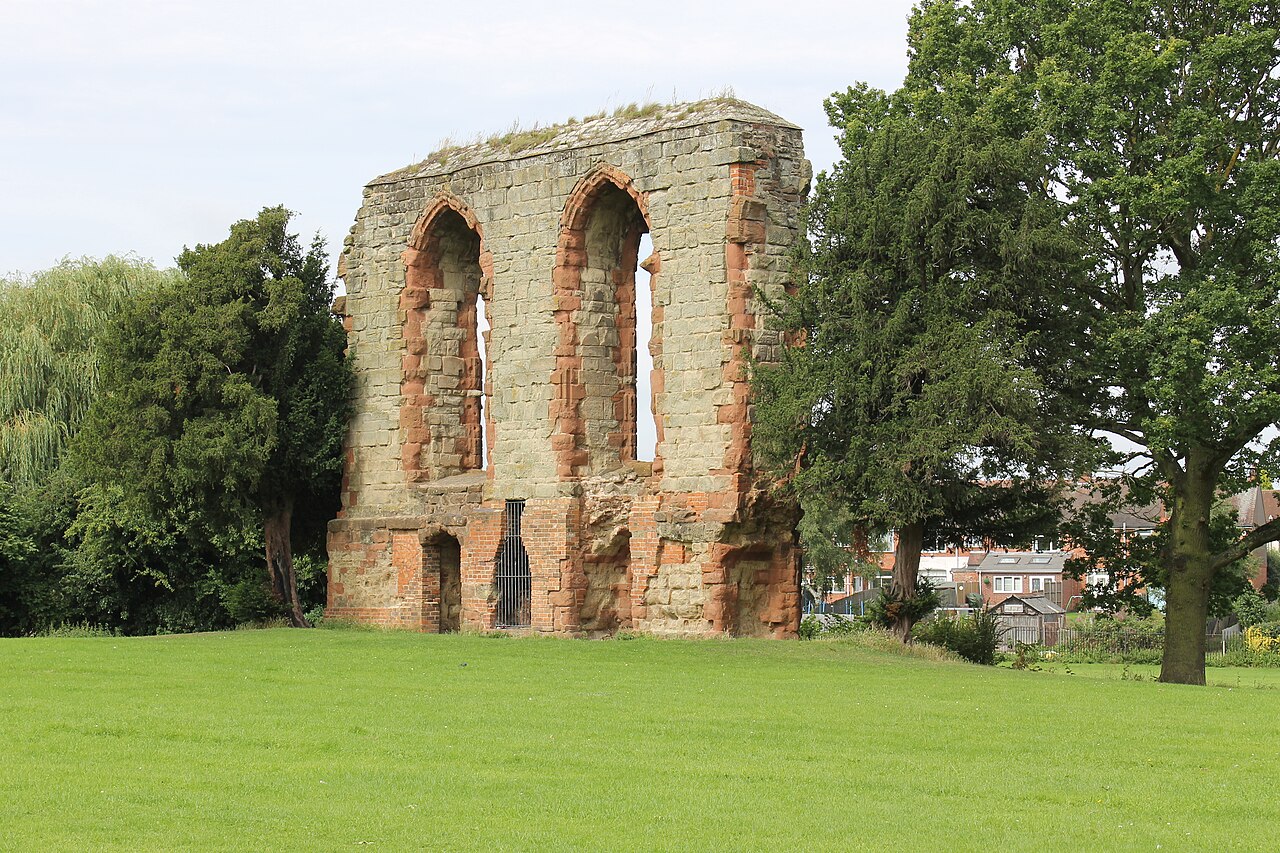
Brinklow Castle
Brinklow Castle stands as a significant example of Norman military architecture in Warwickshire, England. Constructed shortly after the Norman Conquest of 1066, this motte-and-bailey castle occupies a site with a history reaching back to prehistoric times. The castle's name derives from the Old English word hlāw, meaning barrow or burial mound, indicating the location's ancient funerary significance long before the Normans established their fortification.
Historical context and early construction
The castle was initiated in the late 11th century by Aubrey de Coucy, the first Norman lord of Brinklow. He transformed the site into a classic motte-and-bailey design, featuring a large artificial mound (the motte) and an enclosed courtyard (the bailey). This style was typical of Norman fortifications, intended to assert control over newly conquered territories rapidly.
Brinklow Castle's motte rises approximately 12 meters above the surrounding landscape, which itself is situated at about 110 meters above sea level. This elevation provided strategic views across the flat terrain, allowing defenders to monitor and control the surrounding area effectively.
At the time of the Domesday Book survey in 1086, the castle's lands were recorded as unassigned, suggesting a period of transition or instability after Aubrey de Coucy lost possession of the estate. Despite this, the castle remained in use through the subsequent centuries.
Architectural features and layout
The castle's bailey was notably large and rectangular, measuring roughly 121 meters wide by 152 meters long. The enclosure was defined by substantial earth banks and defensive ditches, typical of Norman fortifications designed for both defense and administrative control.
Later modifications to the bailey included the construction of an additional ditch and earth rampart that divided the enclosed area. These changes indicate a reduction in the bailey's usable space, possibly reflecting shifts in the castle's military or domestic functions during its later occupation.
The motte-and-bailey design of Brinklow Castle is a textbook example of Norman fortification techniques, emphasizing rapid construction, strategic placement, and earthwork defenses rather than stone structures. While no significant stone buildings survive on the site, the earthworks remain remarkably well-preserved, offering valuable insights into medieval castle construction and landscape use.
Later history and abandonment
The castle continued to be occupied through the 12th and early 13th centuries but was ultimately abandoned during the 1200s. The precise reasons for this desertion are not documented, leaving historians to speculate whether political changes, military obsolescence, or economic factors led to its decline.
Following abandonment, the castle fell into ruin, with the earthworks gradually becoming the primary visible remnants. The lack of stone fortifications may have contributed to the site's vulnerability to decay and the absence of later rebuilding efforts.
Preservation and significance today
Today, Brinklow Castle is recognized for its well-preserved earthwork remains, which clearly outline the motte and the subdivided bailey. The site offers a rare glimpse into the early Norman military landscape and the adaptation of prehistoric sites for medieval defense.
Its location in the village of Brinklow situates it within the broader historic landscape of Warwickshire, a county rich in medieval heritage. The castle's earthworks are accessible to visitors and serve as a tangible connection to England's Norman past and the evolution of castle architecture.
Brinklow Castle's significance lies not only in its military function but also in its reflection of the Norman strategy of consolidating control through rapid fortification of key sites. The castle exemplifies the transitional period of English history following the conquest, where new power structures were established through both architecture and landscape manipulation.
Archaeological importance
The presence of prehistoric features, such as the burial mound indicated by the name "hlāw," adds an additional layer of cultural and archaeological interest. This continuity of site use from ancient times through the medieval period highlights the enduring strategic and symbolic importance of the location.
Excavations and surveys have focused primarily on the earthworks, revealing construction techniques and modifications that illustrate the castle's changing role over time. The absence of extensive stone remains directs attention to the significance of timber and earth in early Norman fortifications.
Visitor experience
Visitors to Brinklow Castle can explore the prominent motte and the extensive bailey earthworks, gaining an understanding of Norman defensive strategies and medieval landscape use. The site is open to the public, offering an outdoor historical experience that connects the present with over a millennium of history.
Interpretive signage and local heritage initiatives help contextualize the castle within the broader history of Warwickshire and the Norman Conquest, making Brinklow Castle a valuable educational resource.
Frequently asked questions (FAQ)
- When was Brinklow Castle built and by whom?
- Brinklow Castle was constructed shortly after the Norman Conquest of 1066 by Aubrey de Coucy, the first Norman lord of the area.
- What is the architectural style of Brinklow Castle?
- Brinklow Castle is a classic example of a Norman motte-and-bailey castle, characterized by its large artificial mound and enclosed courtyard defined by earthworks.
- Can visitors access Brinklow Castle today?
- Yes, the earthworks of Brinklow Castle remain well-preserved and accessible to the public, allowing visitors to explore the motte and bailey layout.
- Why was Brinklow Castle abandoned?
- The castle was abandoned in the 13th century, though the exact reasons are unclear; possibilities include political changes, military obsolescence, or economic decline.
- What is the significance of the name 'Brinklow'?
- The name includes the Old English word 'hlāw', meaning barrow or burial mound, indicating the site's prehistoric use as a funerary location.
Information
Loading map...
Visitor reviews
No reviews yet. Been here? Write the first review and help other travelers!
Write the first reviewVisited this castle? Share your experience
Your review helps other travelers and adds first-hand knowledge to our encyclopedia.