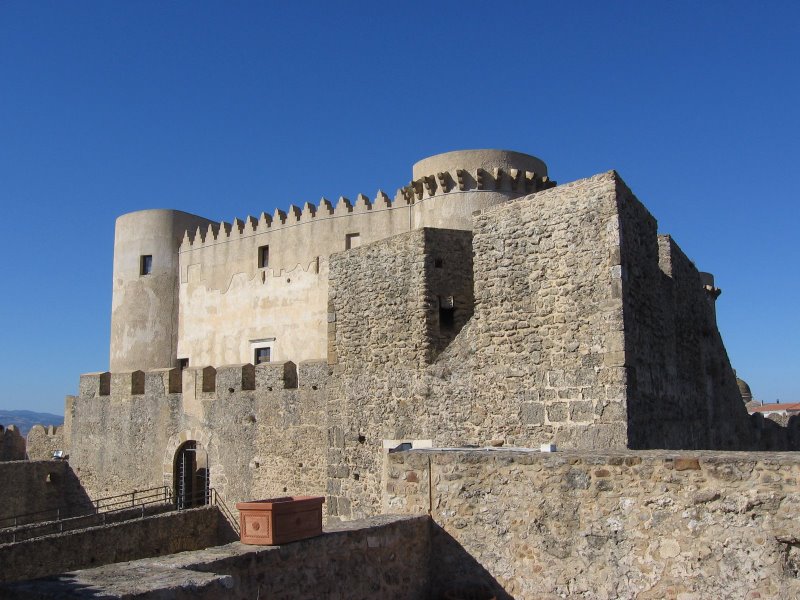
Caccuri Castle
Caccuri Castle stands in the town of Caccuri in Calabria, southern Italy, with origins tracing back to a Byzantine fortress dating from the 6th century AD. This early medieval stronghold was strategically positioned to oversee the surrounding landscape and protect the region. Over the centuries, the castle underwent numerous restorations and modifications that transformed it from a military fortification into a noble residence.
Historical background and architectural evolution
The castle was originally constructed during the Early Medieval period on the remains of a Byzantine defensive structure. Its primary role was to serve as a fortress during a time of frequent conflicts and territorial disputes in southern Italy. The castle's location on elevated terrain classifies it as a hill castle, offering commanding views and natural defensive advantages.
Through the Middle Ages and into the Renaissance, the castle saw various phases of rebuilding and enhancement. In the late 17th century, the Cavalcanti family sponsored significant renovations, including the restoration of the Palatine Chapel. This chapel retains much of the architectural form and decoration from this period, reflecting Baroque influences prevalent at the time.
Architectural features and the Torre Mastrigli
One of the most distinctive and symbolic features of Caccuri Castle is the Torre Mastrigli, a prominent cylindrical tower constructed in the early 19th century. The tower was designed by the architect Adolfo Mastrigli during a restoration that aimed to convert the castle into a comfortable noble residence. This tower dominates the castle's silhouette and has become an emblem of the town itself.
The castle complex includes remnants of defensive walls, various chambers, and the feudal chapel, which houses artworks from the Neapolitan school. The interiors were modernized in the 1800s with state-of-the-art facilities for the time, such as hot running water and central heating, reflecting the castle's transition from fortress to residence.
Artistic heritage within the castle
The Palatine Chapel inside Caccuri Castle is notable for its collection of important paintings. Among these are "La Maddalena Penitente" by the renowned Neapolitan painter Domenico Gargiulo, and "The Miracles of St. Thomas Aquinas", a canvas by the Bolognese artist Domenico Maria Muratori. The latter painting served as a model for an altarpiece in the Church of the Holy Spirit of the Neapolitans in Rome.
Current condition and cultural significance
Today, much of Caccuri Castle is in a state of decay, with parts of the structure deteriorating due to age and limited restoration efforts. Despite this, the castle remains a significant cultural landmark in Calabria, reflecting a layered history from Byzantine military architecture to noble residence and artistic patronage.
The castle's combination of early medieval origins, Baroque artistic heritage, and 19th-century architectural interventions makes it an important site for understanding the region's historical and cultural development.
Information
Loading map...
Visitor reviews
No reviews yet. Been here? Write the first review and help other travelers!
Write the first reviewVisited this castle? Share your experience
Your review helps other travelers and adds first-hand knowledge to our encyclopedia.