Bydlin
Bydlin Castle stands as a compelling relic of medieval Poland's turbulent history, perched on a high rocky hill in the village of Bydlin. Constructed in the late 14th century, this hill castle exemplifies the strategic military architecture of the period, later evolving through religious transformations and enduring significant historical events. Today, its ruins offer a tangible connection to the past, showcasing the complex interplay of defense, faith, and social change over several centuries.
The origins and medieval construction
The castle's foundation dates back to around 1388, attributed to the knight Niemierza of the Strzała coat of arms, or possibly his father Pełka. This situates the fortress firmly within the late medieval period under the Angevin dynasty's influence in Poland. The castle was built as a defensive stronghold on a naturally defensible rocky hill, a common strategic choice for fortifications of the era.
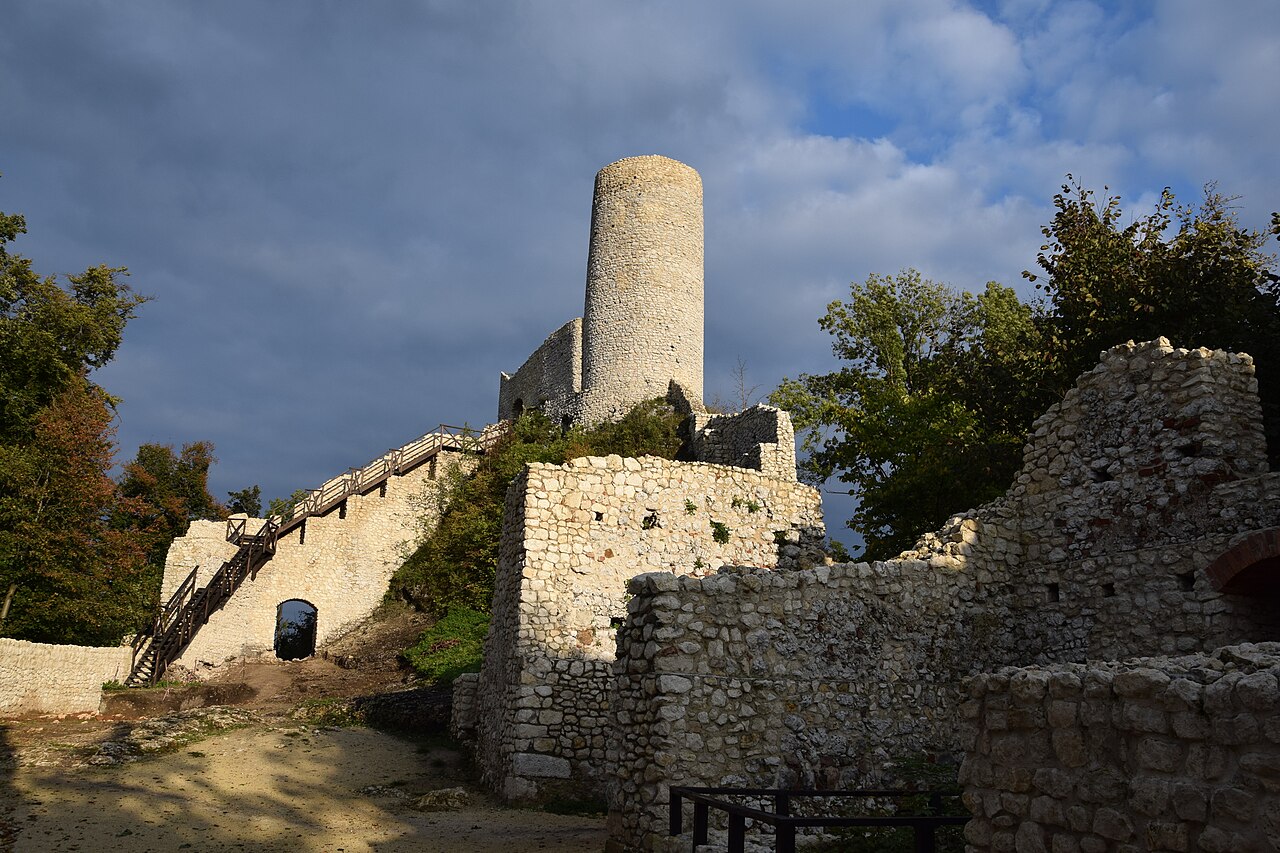
Bydlin Castle's original structure featured a three-storey stone residential building alongside a tall stone tower, which served as both a lookout and a last line of defense. Surrounding these core structures was a curtain wall enclosing a courtyard, connected to a gate tower that controlled access. Defensive features included a dry moat and a stone-earth rampart, enhancing the castle's protection against attackers.
Ownership transitions and religious transformations
Throughout the 15th and early 16th centuries, Bydlin Castle changed hands multiple times, passing through over twenty owners, including the Brzezicki and Szczepanoski families. By the early 1500s, the castle came under the ownership of the Boner family, who initiated significant changes to the fortress's function.
In a remarkable shift, the Boners converted the castle into a Catholic church. However, during the Reformation period around 1571, Jan Firlej, the then-owner, transformed the building into an Arian Protestant church serving a Calvinist congregation. This religious conversion reflects the broader European religious upheavals of the time.
By 1594, Jan's son, Mikołaj Firlej, undertook a thorough restoration, returning the building to the Catholic Church and dedicating it to the Holy Cross. This dedication was so influential that the hill itself became known as Holy Cross Hill, embedding the castle's religious identity into the local geography.
Destruction, decline, and abandonment
The castle-turned-church suffered greatly during the Swedish invasion of Poland in 1655, part of the wider conflict known as the Deluge. Swedish troops under General Müller plundered and destroyed the church as they advanced toward the nearby Jasna Góra monastery, a key Polish religious and national symbol.
Despite a rebuilding effort in the early 18th century sponsored by the Męciński family, the site faced ongoing threats from banditry and instability. These challenges ultimately led to the church's abandonment by the late 18th century, after which the structure fell into ruin.
In the 19th century, local inhabitants repurposed stones from the castle ruins to build a chapel near the village cemetery, a common practice that contributed to the castle's gradual dismantling. Additionally, the hill's slopes were used for galena mining, indicating continued economic activity in the area long after the castle's military and religious functions ceased.
Archaeological discoveries and modern restoration
Archaeological excavations led by Błażej Muzolf in 1989 uncovered significant features previously unknown, including the foundations of a gate tower. This discovery was pivotal in confirming Bydlin as a fortified castle rather than solely a religious site. The excavations also revealed a rich assemblage of ceramic vessels, decorated stove tiles, and pottery fragments, shedding light on the daily life and material culture of its medieval inhabitants.
By 2009, the ruins faced structural challenges, notably a partial collapse of the southern wall of the residential building. Restoration efforts completed in 2012 stabilized the ruins, making them accessible and preserving the site for future generations.
Architectural features and layout
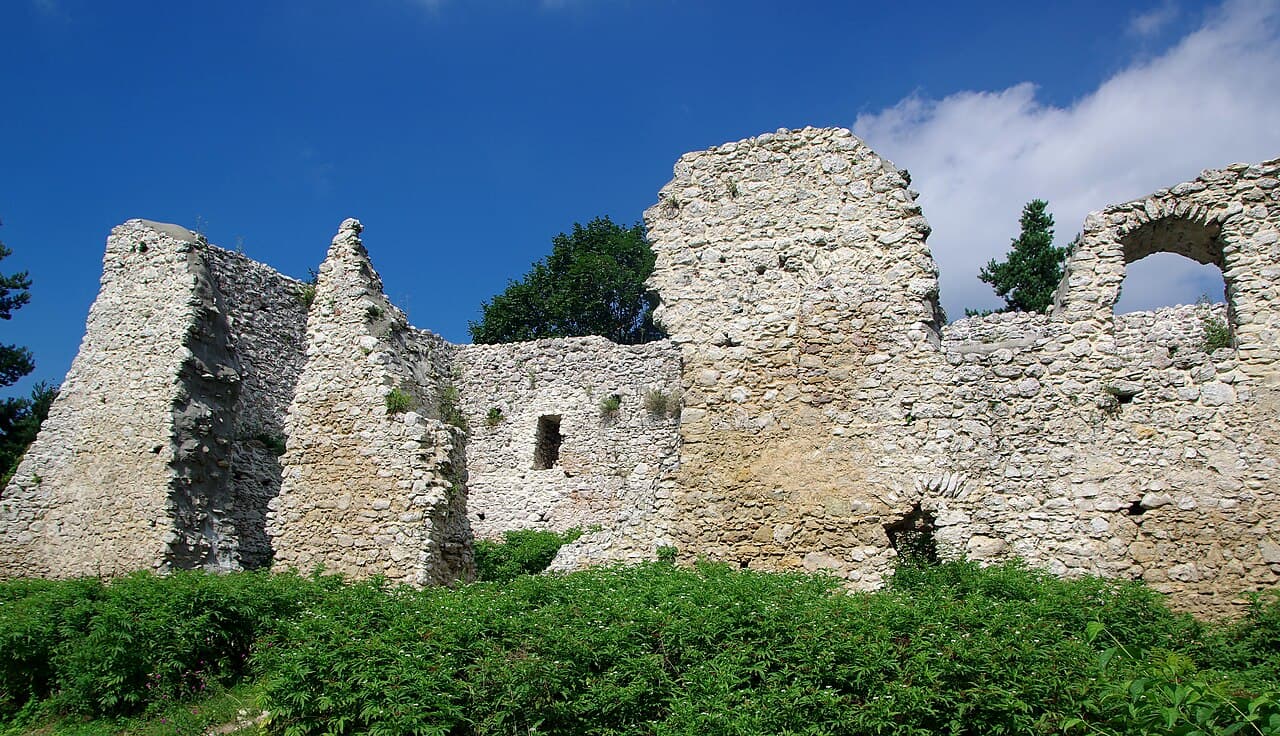
The remaining ruins of Bydlin Castle reveal a large rectangular plan measuring approximately 24 by 11 meters. The walls, constructed from local limestone, are impressively thick—about two meters—and stand up to seven meters high. The corners are reinforced with battered buttresses, a defensive architectural feature that strengthens the structure against attacks and environmental wear.
Traces of loopholes or narrow arrow slits are visible in the walls, indicating the castle's original military purpose. These openings allowed defenders to observe and fire upon attackers while remaining protected. The dry moat and stone-earth ramparts further emphasize the fortress's defensive design.
The discovery of the gate tower foundation highlights the castle's controlled access point, vital for defense and monitoring entry. The presence of decorated ceramic stove tiles suggests that despite its military function, the castle also provided domestic comfort to its residents.
Bydlin castle in historical context
Bydlin Castle's history mirrors the broader political, religious, and military upheavals in Poland from the medieval period through the early modern era. Its transformation from a fortress to a religious site and eventual ruin reflects shifting priorities and external pressures, including the Reformation and the Swedish Deluge.
The castle's strategic location near the important religious center of Jasna Góra and its involvement in conflicts such as the 1914 World War I frontline underscore its enduring significance. The Battle of Krzywopłoty near the castle hill during World War I illustrates the site's continued military relevance centuries after its initial construction.
Visiting Bydlin Castle today
Today, visitors to Bydlin Castle can explore the well-preserved ruins that evoke the site's layered history. The castle's elevated position offers scenic views of the surrounding landscape, enriching the experience. Interpretive signage and the remains of the defensive walls and towers provide insight into medieval fortification techniques and the castle's varied past.
Efforts to maintain and restore the ruins ensure that Bydlin Castle remains a valuable cultural heritage site. It stands as a testament to Poland's medieval architecture, religious transformations, and resilience through centuries of conflict.
Frequently asked questions (FAQ)
- How do I get to Bydlin Castle?
- Bydlin Castle is located in the village of Bydlin in Lesser Poland Voivodeship. It is accessible by local roads, and visitors can reach it by car or regional bus services. The castle is situated on a hill, so be prepared for a short uphill walk.
- What is the historical significance of Bydlin Castle?
- Bydlin Castle is significant for its medieval origins, its transformation during the Reformation, and its role in regional conflicts including the Swedish Deluge and World War I. It reflects Poland's complex religious and military history.
- When was Bydlin Castle built and by whom?
- Bydlin Castle was built around 1388, likely by the knight Niemierza of the Strzała coat of arms or his father Pełka. It served as a defensive fortress in medieval Poland.
- Is Bydlin Castle accessible to visitors year-round?
- The castle ruins are generally accessible year-round, though visiting conditions may vary with weather. There are no formal visitor facilities, so it is recommended to check local information before planning a visit.
- What remains of the castle can be seen today?
- Visitors can see the thick limestone walls, buttresses, traces of loopholes, and the foundations of the gate tower. The ruins outline the castle's rectangular defensive layout and provide insight into its medieval architecture.
Photo gallery

Information
Website
Visit websiteSources & official resources
Verify the information above using these authoritative references.
Loading map...
Visitor reviews
No reviews yet. Been here? Write the first review and help other travelers!
Write the first reviewVisited this castle? Share your experience
Your review helps other travelers and adds first-hand knowledge to our encyclopedia.