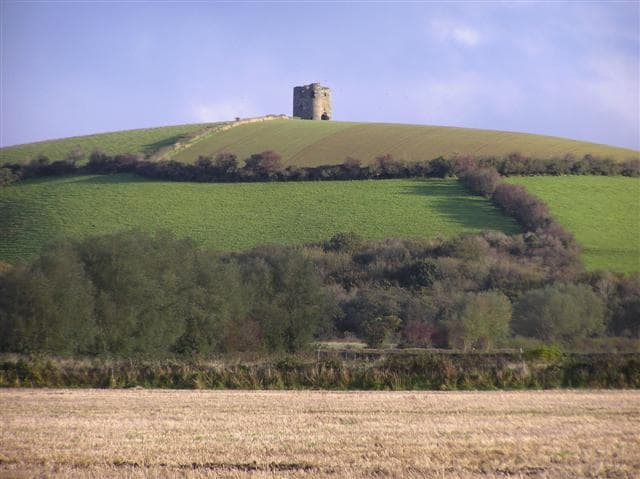
Burt Castle
Burt Castle is a notable sixteenth-century ruined castle located near the villages of Newtowncunningham and Burt in the eastern part of County Donegal, within the historic province of Ulster, Ireland. Also historically spelled as Birt Castle and sometimes referred to as O'Doherty's Castle, it is distinct from the similarly named O'Doherty's Keep near Buncrana. This castle played a significant role in the turbulent history of the region during the late medieval and early modern periods.
Historical background and strategic importance
Constructed during the reign of Henry VIII in the sixteenth century, Burt Castle served as a traditional stronghold of the O'Doherty clan, a powerful Gaelic family who controlled the Inishowen Peninsula. The castle's location was critical as it guarded the southern edge of the O'Doherty lordship, overseeing key routes and controlling access to the area. Its strategic position allowed the Crown's forces to maintain supply lines and launch offensives during conflicts such as the Nine Years' War.
Architectural features and influences
Burt Castle's design reflects the influence of Z-Plan Scottish fortifications, a style characterized by a rectangular main block with towers at diagonally opposite corners, combining residential and defensive functions. This architectural approach anticipated the style of buildings constructed during the Ulster Plantation in the seventeenth century. The castle would have included battlements, thick stone walls, and defensive towers suitable for artillery defense, which was becoming increasingly important during this period.
The role of Burt Castle in key historical events
The Nine Years' War and Sir Cahir O'Doherty
During the Nine Years' War (1594–1603), a conflict between Gaelic Irish chieftains and English rule, Burt Castle was a vital military post. In 1600, the Crown's Governor of Derry, Sir Henry Docwra, supported the young Sir Cahir O'Doherty in a disputed succession. O'Doherty sought to assert independence from the overlordship of Red Hugh O'Donnell and allied with the Crown. For his loyalty and bravery, he was knighted. Burt Castle was garrisoned by about a hundred men under Captain John Vaughan, serving as a base for Crown operations and supply routes in the region.
O'Doherty's Rebellion of 1608
Despite his previous loyalty, tensions escalated between O'Doherty and the new Governor of Derry, leading to the 1608 rebellion known as O'Doherty's Rebellion. Burt Castle became the headquarters for the uprising. The rebellion was sparked by the Burning of Derry in April 1608, a dramatic event where O'Doherty's forces attacked the town. The Dublin authorities responded swiftly, sending troops to reclaim the Inishowen heartlands. After a siege, Burt Castle was captured, and prisoners taken during the Burning of Derry were freed. The rebellion ended shortly after O'Doherty's death at the Battle of Kilmacrennan.
Later military significance
During the late seventeenth century, Burt Castle saw action again during the Williamite War in Ireland (1689–1691). It was the site of a skirmish between Jacobite forces loyal to James II and troops supporting William III, commanded by General Percy Kirke. Although no major battles took place at the castle, its position continued to hold military importance in the region.
Present condition and heritage status
Today, Burt Castle stands as ruins and is classified as an archaeological site. The remains provide valuable insight into sixteenth-century military architecture influenced by Scottish designs and the turbulent history of the Ulster region. It is accessible to visitors interested in the history of the O'Doherty clan, the Nine Years' War, and early modern Irish conflicts. The site offers a tangible connection to the complex interactions between Gaelic lords and English authority during a pivotal period in Irish history.
Visiting Burt Castle
Visitors to Burt Castle can explore the ruins and appreciate the castle's strategic location overlooking the surrounding landscape. While the structure is largely in ruins, traces of the original defensive features remain visible. The castle's proximity to the villages of Newtowncunningham and Burt makes it an accessible destination for those interested in Irish history and castle architecture.
Frequently asked questions (FAQ)
- When was Burt Castle built and by whom?
- Burt Castle was constructed in the 16th century during the reign of Henry VIII and was traditionally associated with the O'Doherty clan who controlled the Inishowen Peninsula.
- What architectural style influenced Burt Castle's design?
- The castle's design was influenced by contemporary Z-Plan Scottish fortifications, combining defensive and residential features typical of the period.
- What role did Burt Castle play in O'Doherty's Rebellion?
- Burt Castle served as the headquarters for Sir Cahir O'Doherty during his 1608 rebellion against English authority, including the Burning of Derry, before it was besieged and captured by government forces.
- Is Burt Castle accessible to visitors today?
- Yes, Burt Castle is accessible as a ruin and archaeological site near Newtowncunningham and Burt, offering visitors a glimpse into its historical and architectural significance.
- What historical events is Burt Castle associated with?
- Burt Castle is linked to the Nine Years' War, O'Doherty's Rebellion of 1608, and skirmishes during the Williamite War, reflecting its ongoing military importance in Ulster.
Photo gallery

Information
Loading map...
Visitor reviews
No reviews yet. Been here? Write the first review and help other travelers!
Write the first reviewVisited this castle? Share your experience
Your review helps other travelers and adds first-hand knowledge to our encyclopedia.



