Burgruine Kammerstein
Burgruine Kammerstein stands as a remarkable example of a High Medieval hill castle located near the municipality of Perchtoldsdorf in Austria. Its origins trace back to the mid-13th century, specifically around 1240–1250, when it was constructed under the direction of Otto II of Perchtoldsdorf, a prominent nobleman who held the esteemed position of Kämmerer (chamberlain) of Austria. This role not only influenced the castle's original name, "Chemerstain," but also underscored the castle's importance as a symbol of noble authority and administrative power during a turbulent period in Austrian history.
The establishment of Kammerstein followed the destruction of the original Perchtoldsdorf castle, which had been razed during noble uprisings led by Otto I. After regaining favor with the ruling Babenberg dynasty, specifically Duke Frederick II, Otto II fortified his family's status by commissioning the construction of Kammerstein. This castle was strategically positioned on a hilltop, taking advantage of natural topography to enhance its defenses. The location offered commanding views over the surrounding landscape, a critical factor during the Austrian Interregnum following the death of Emperor Frederick II around 1250. This period of political fragmentation saw various factions competing for control, greatly increasing the importance of fortified residences like Kammerstein.
Historical significance and noble conflicts
The castle's history is deeply intertwined with the power struggles of the 13th century. After 1273, when the Habsburg ruler Rudolf I and his son Albert I began redistributing feudal estates, resistance from local nobility intensified. Otto III, son of Otto II and heir to Kammerstein, became a key figure in these noble rebellions. Following the destruction of the main Perchtoldsdorf fortress, Otto III sought refuge within Kammerstein's walls. However, his enemies employed a cunning strategy, luring him away to Vienna and leaving Kammerstein vulnerable. The castle was subsequently seized and set ablaze, marking the end of its active military role. Otto III was captured and condemned to lifelong imprisonment, signaling a decisive shift in regional power dynamics.
Architectural layout and defensive features
Castle plan and fortifications
The remains of Burgruine Kammerstein reveal a compact hilltop fortress measuring approximately 40 meters long and 25 meters wide. The castle was enclosed by formidable defensive walls that reached heights of up to 15 meters, constructed to withstand sieges and assaults. Its strategic placement on a hill with steep slopes on three sides provided natural defense, limiting access to a single approach from the west.
Entry and access control
Access to the castle was tightly controlled via a narrow hanging bridge about one meter wide, which spanned a defensive ditch or natural ravine. This bridge served as the sole entrance, allowing defenders to monitor and restrict movement effectively. Such a design is typical of hill castles of the period, emphasizing security and defense over convenience.
Residential and defensive structures
Within the curtain walls, the southeastern section housed the main living quarters, featuring a four-story half-timbered palas. This residential building served as the primary domestic space for the castle's inhabitants, combining both comfort and defensive utility. The palas was a central feature in many medieval castles, representing the lord's residence and administrative center.
At the highest point of the castle stood a pentagonal bergfried, a type of keep or main tower that functioned as the last line of defense. This tower rose through four floors and was built with walls up to three meters thick to resist attacks. The bergfried's internal access via ladders rather than external doors enhanced its defensibility, allowing defenders to retreat and hold out during sieges.
Current condition and archaeological significance
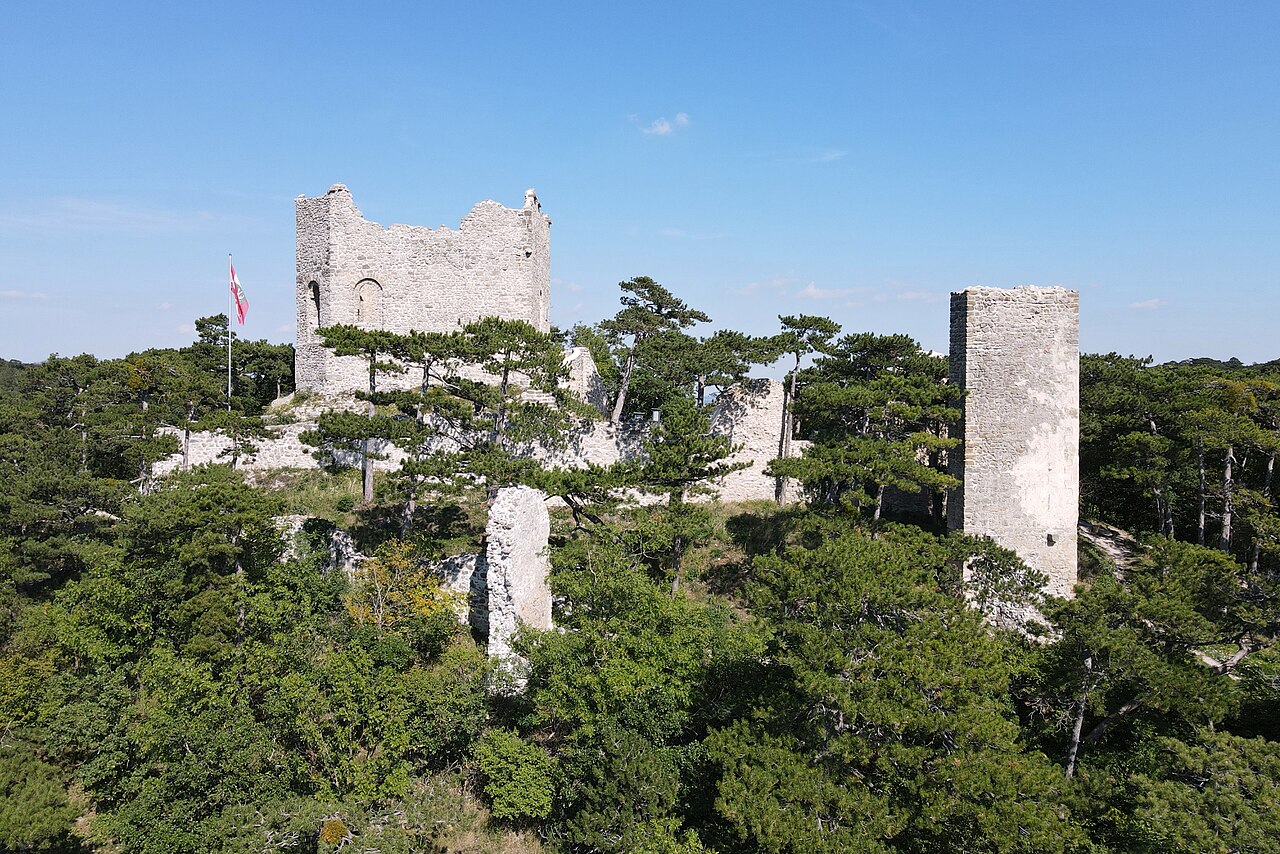
Today, Burgruine Kammerstein exists as a partial ruin with several key elements still visible. Sections of the ring wall and parts of the bergfried's masonry remain, providing valuable insights into the castle's original design and defensive strategy. The site offers a tangible connection to Austria's medieval past and serves as an important archaeological and cultural heritage site.
The castle's ruins are accessible to visitors interested in medieval architecture and history, although only fragments of the original structures survive. The combination of natural hilltop defenses and robust medieval fortifications exemplifies the strategic considerations of castle builders during the High Middle Ages.
Burgruine kammerstein in the context of austrian medieval castles
Burgruine Kammerstein is representative of many Austrian hill castles constructed during the 13th century. Its history reflects the broader political and military upheavals of the period, including noble rebellions and the rise of the Habsburg dynasty. The castle's architectural features, such as the bergfried, palas, and defensive walls, are characteristic of medieval fortifications designed to balance residential needs with military defense.
As a ruin, Kammerstein contributes to the understanding of medieval castle construction techniques and feudal power structures in Austria. Its preservation, although partial, allows historians and archaeologists to study the evolution of castle architecture and the socio-political landscape of medieval Austria.
Frequently asked questions (FAQ)
- How do I get to Burgruine Kammerstein?
- Burgruine Kammerstein is located near Perchtoldsdorf in Lower Austria. Visitors can reach the site by car or local transport to Perchtoldsdorf, followed by a hike to the hilltop ruins.
- What is the historical significance of Burgruine Kammerstein?
- Burgruine Kammerstein played a key role during the High Middle Ages, especially during the Austrian Interregnum and noble rebellions against the Habsburgs. It exemplifies medieval fortification and noble residence.
- Can I explore the ruins of Kammerstein castle?
- Yes, the ruins of Kammerstein are accessible to the public. While only partial remains survive, visitors can explore the layout and remnants of defensive walls, the bergfried base, and the palas area.
- When was Burgruine Kammerstein built?
- The castle was constructed around 1240–1250 by Otto II of Perchtoldsdorf, following the destruction of the original Perchtoldsdorf castle.
- What architectural features does Kammerstein castle have?
- Kammerstein features a pentagonal bergfried, a four-story half-timbered palas, high defensive walls, and a narrow hanging bridge controlling access, typical of High Medieval hill castles.
Information
Website
Visit websiteSources & official resources
Verify the information above using these authoritative references.
Loading map...
Visitor reviews
No reviews yet. Been here? Write the first review and help other travelers!
Write the first reviewVisited this castle? Share your experience
Your review helps other travelers and adds first-hand knowledge to our encyclopedia.