Burgruine Greifenfels
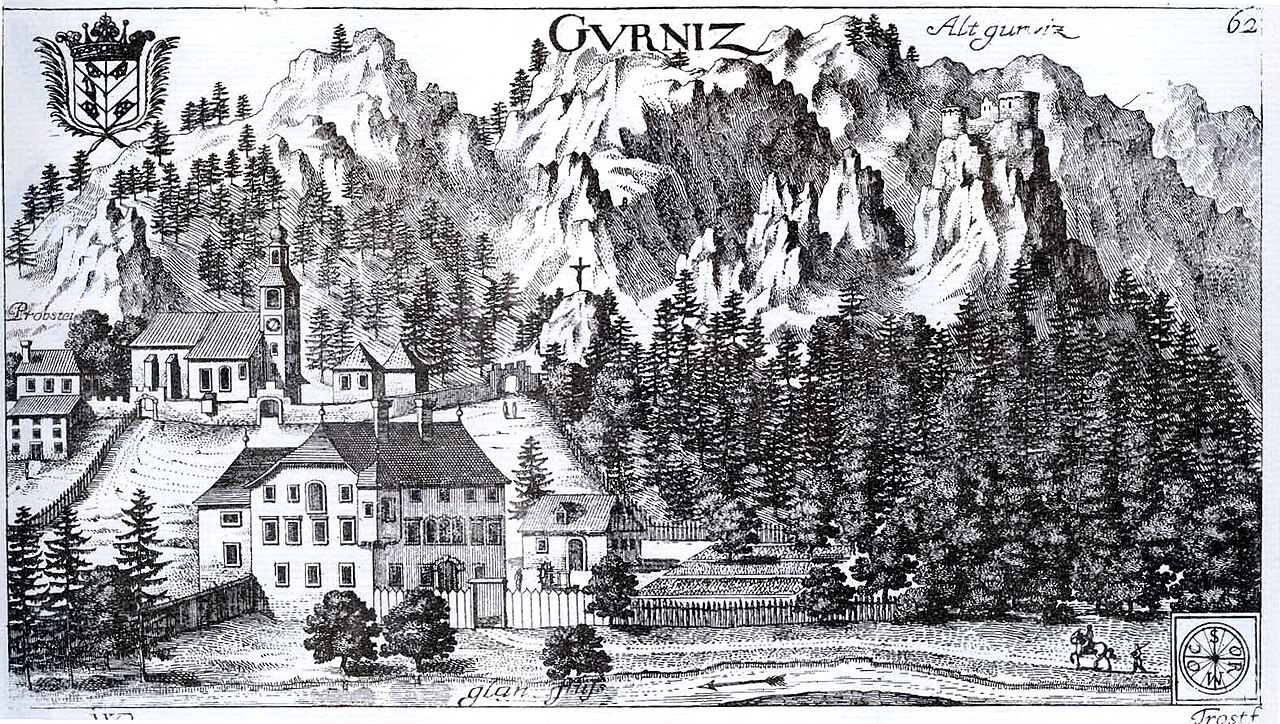
Burgruine Greifenfels is a medieval hill castle ruin located in the municipality of Ebenthal, in the region of Carinthia, Austria. Constructed in the early 13th century, this fortress was established by members of the German-speaking nobility under the authorization of Pope Gregory IX around 1230-1231. The castle was built on land owned by the nearby Viktring monastery, reflecting the common medieval practice of noble fortifications being tied to ecclesiastical estates.
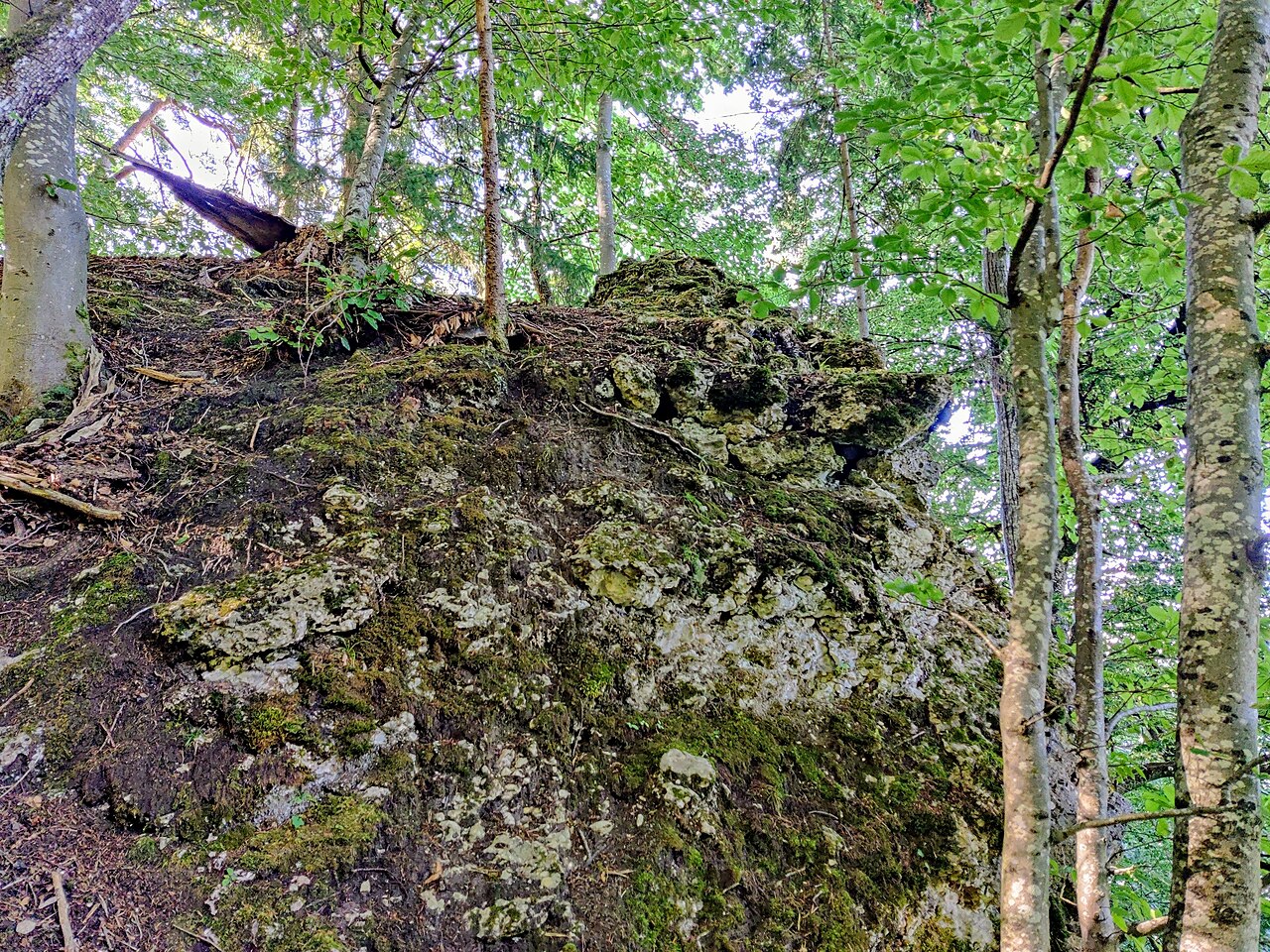
The fortress occupies a natural rocky hill, which significantly influenced its irregular architectural layout. The enclosing ring wall measures approximately 35 meters in length and 20 meters in width, adapting to the uneven shape of the hill. This wall was constructed using carefully cut blocks of tuff and limestone, materials chosen for their availability and durability. The corners of the wall are particularly well crafted, demonstrating the medieval masons' expertise in stonework. The northeastern corner is the most intact section, where archaeological findings include a carved drainage stone, likely part of the castle's kitchen area. This feature highlights the attention to functional design in managing waste and water within the fortress.
Historical ownership and decline
The castle's documented history begins with its founders, Wulfing and Heinrich von Gurnitz, who received papal permission to build the stronghold. By 1315, ownership transferred to the Auffensteiner family, marking the first significant change in control. Later, around 1404 or 1408, the castle came into the possession of the Lords of Neuhaus. This family played a pivotal role in the castle's later history, particularly during the 16th century.
In the mid-1500s, the Lords of Neuhaus constructed Schloss Ebenthal at a lower elevation, a more modern and comfortable residence completed in 1566. Following this development, Burgruine Greifenfels was gradually abandoned, with formal desertion recorded by 1588. The relocation to Schloss Ebenthal reflects a broader trend in the late medieval and early modern periods, where older hilltop fortresses were supplanted by more accessible and refined palatial homes.
Architectural features and layout
The castle's design was heavily influenced by the natural terrain. The irregular shape of the hill resulted in a ring wall with multiple angled sections rather than straight lines, an adaptation that maximized defensive capabilities while accommodating the rocky outcrop. The use of tuff and limestone blocks was typical for the region, providing both strength and relative ease of carving.
The northeastern corner remains the most discernible part of the ruins. Archaeological excavations have revealed a carved drainage stone here, an unusual feature that suggests a well-planned kitchen area within the castle's walls. This drainage system would have been essential for maintaining hygiene and managing waste, indicating a degree of sophistication in the castle's domestic arrangements.
Defensive structures
While the ruins are sparse, the ring wall's design suggests a focus on defense adapted to the site's topography. The multiple angled sections of the wall would have allowed defenders to cover blind spots effectively. The absence of large towers or keeps in the remaining ruins indicates that the castle may have relied more on its natural elevated position and the enclosing wall for protection.
Later history and current status
From 1704 onward, the ruins of Burgruine Greifenfels have been owned by the Counts of Goëss. The castle did not witness notable military conflicts, which likely contributed to its gradual decline rather than destruction through warfare. Instead, its abandonment was primarily due to changing residential preferences and the construction of Schloss Ebenthal.
Today, the ruins are partially preserved, offering a delicate outline of the original fortress. The site provides valuable insights into medieval castle construction techniques and the strategic use of natural landscapes for defense. Visitors can observe the ring wall's contours and the remnants of the castle’s layout, which remain legible despite the fragmentary condition.
Cultural and architectural significance
Burgruine Greifenfels exemplifies the typical hill castle of the early High Medieval period in Austria. Its construction on monastic land under papal authorization illustrates the intertwined nature of religious and noble power during this era. The castle's gradual abandonment in favor of a Renaissance-style palace reflects broader shifts in architectural preferences and social structures during the 16th century.
The use of tuff and limestone in the walls showcases regional building practices, while the irregular ring wall design demonstrates adaptability to challenging terrain. The castle remains a point of interest for historians and archaeologists studying medieval fortifications and noble residences in Carinthia.
Frequently asked questions (FAQ)
- When was Burgruine Greifenfels built and by whom?
- Burgruine Greifenfels was constructed in the early 13th century by Wulfing and Heinrich von Gurnitz, who received authorization from Pope Gregory IX to build the castle on monastic land.
- What materials were used in the construction of Burgruine Greifenfels?
- The castle was built using carefully cut blocks of tuff and limestone, which were common regional materials known for their durability and ease of carving.
- Why was Burgruine Greifenfels abandoned?
- The castle was gradually abandoned by 1588 after the Lords of Neuhaus built Schloss Ebenthal at a lower elevation, favoring the more modern and comfortable residence over the hilltop fortress.
- What remains can visitors see at Burgruine Greifenfels?
- Visitors can observe the irregular ring wall that follows the natural rocky hill, with the northeastern corner being the most intact section, including a carved drainage stone likely part of the castle's kitchen area.
- Who currently owns the ruins of Burgruine Greifenfels?
- Since 1704, the ruins have been owned by the Counts of Goëss, who have preserved the site as a historical ruin.
Information
Current owner
Counts of Goëss
Loading map...
Visitor reviews
No reviews yet. Been here? Write the first review and help other travelers!
Write the first reviewVisited this castle? Share your experience
Your review helps other travelers and adds first-hand knowledge to our encyclopedia.