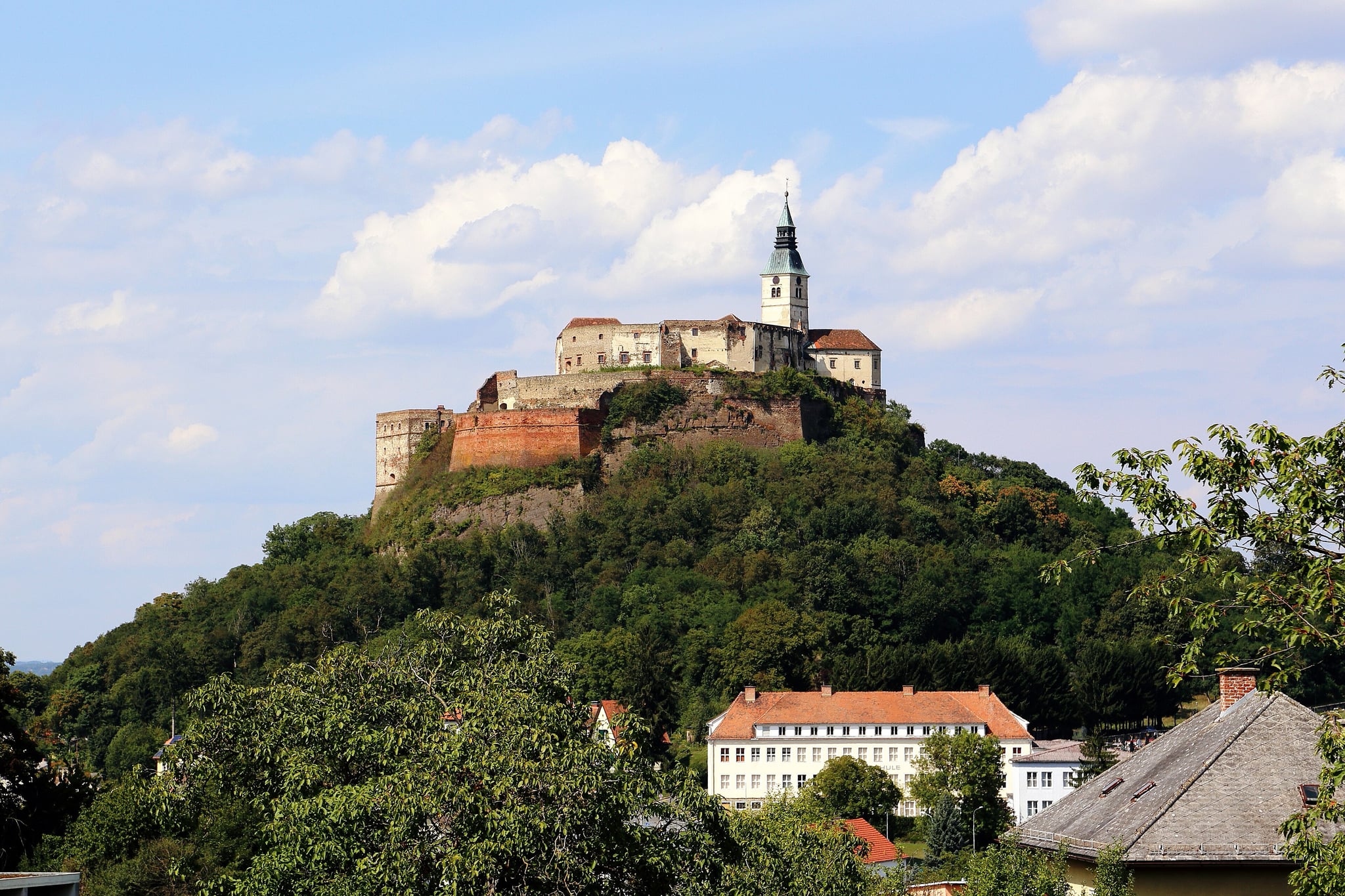
Burgau Castle is a notable example of a late medieval fortress located in the village of Burgau in Austria. Originally surrounded by a water trench or moat, this defensive feature inspired the village's name, Burg in der Au, meaning 'Castle in the Meadow'. The castle's strategic placement near the Lafnitz river was crucial for defense against repeated invasions from the East, particularly by Turkish and Hungarian forces during the turbulent periods of the 15th and 16th centuries.
Historical significance and early ownership
The earliest documented mention of Burgau Castle dates back to 1367, when it was owned by the lords of Puchheim. The castle and the surrounding municipality were later granted as a feoff to the house of Neitberg. Subsequently, ownership passed to Weikhard von Polheim, under whose family the castle underwent significant fortification enhancements. These improvements played a vital role in the castle's ability to withstand sieges during the Turkish invasions of 1529 and 1532. The fortifications commanded by Erhard von Polheim were instrumental in repelling these incursions, highlighting the castle's military importance in the region.
Fortifications and architectural features
The castle's original design included a substantial water moat, which served as a defensive barrier against attackers. Over time, the fortifications were reinforced with walls and bastions suitable for the warfare tactics of the late medieval period. The castle complex includes a festive hall and an arcaded courtyard, which were typical architectural elements for noble residences of the time, facilitating both defense and social functions. These spaces have been preserved and adapted for modern use.
Later history and social impact
After a period of financial difficulties, the property was transferred to Mathias von Trauttmannsdorff. His tenure was marked by the imposition of high socage fees, which placed a heavy burden on the local population. The castle and village endured further turmoil in 1704 when Eastern Styria was ravaged by the Kuruz, Hungarian rebels opposing Habsburg rule. The mayor of Burgau managed to save the village by negotiating with the invaders, offering weapons and money to avoid destruction.
Modern use and cultural significance
Today, Burgau Castle has been renovated and repurposed for civic and cultural use. It houses the mayor's office, residential apartments, and a café, integrating community functions within its historic walls. The festive hall and the arcaded courtyard serve as venues for indoor and outdoor cultural events, including annual exhibitions held during Christmas and Easter. These adaptations ensure that the castle remains a vibrant part of local life while preserving its architectural heritage.
Geographical context and strategic location
Situated in the region of Styria, near the eastern border of Austria, Burgau Castle's location near the Lafnitz river was pivotal for controlling movements across this frontier zone. The river acted as a natural boundary and a line of defense against incursions from the east. The castle's presence helped secure the area during periods of conflict involving the Ottoman Empire and Hungarian forces, reflecting the broader geopolitical tensions of Central Europe during the late medieval and early modern periods.
Architectural style and preservation status
Burgau Castle exemplifies the characteristics of late medieval fortifications in Austria, combining military and residential architecture. While the original water trench is no longer fully intact, the castle retains essential elements of its defensive structure. The current condition is best described as restored, with careful preservation efforts maintaining the castle's historical integrity while adapting it for contemporary use. The blend of functional fortifications and noble living spaces illustrates the dual purpose of such castles during their time.
Information
Loading map...
Visitor reviews
No reviews yet. Been here? Write the first review and help other travelers!
Write the first reviewVisited this castle? Share your experience
Your review helps other travelers and adds first-hand knowledge to our encyclopedia.