Burg Thierberg
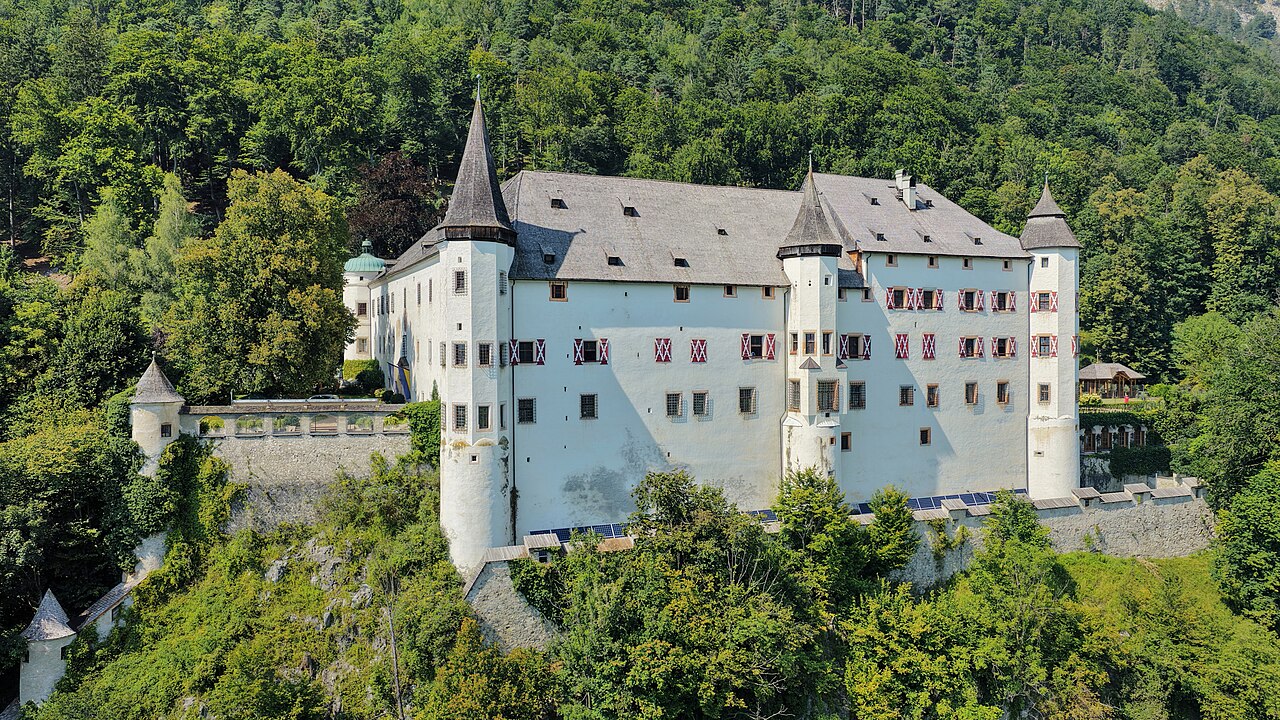
Burg Thierberg is a striking medieval castle located 721 meters above sea level on the Thierberg hill north of Kufstein in the Austrian region of Tirol. First documented in 1285, it was originally constructed by the noble Freundsberger family as a strategic eastern base to control their extensive possessions in the lower Inn Valley. This hill castle occupies a commanding position that offered both defense and oversight of the surrounding landscape, typical of medieval fortifications designed to assert territorial control.
Medieval origins and strategic significance
The castle's foundation in the late 13th century places it firmly in the high medieval period, a time when fortified residences were essential for noble families to protect their lands and assert power. The Freundsbergers built Burg Thierberg as a fortified complex, incorporating defensive walls and a keep to withstand sieges. By 1379, the castle changed hands when it was sold to the Dukes of Bavaria, reflecting the shifting political landscape of the region. Subsequently, after the Lower Inn Valley was transferred to the Duchy of Austria, the castle became part of the extensive Habsburg holdings.
Decline in military importance
With the rise of larger and more formidable fortresses such as those at Kufstein and Rattenberg, Burg Thierberg's military significance diminished by the second half of the 15th century. This led to a gradual decline and partial ruin as it was no longer maintained as a frontline defense. The castle's strategic role was supplanted by these more modern fortifications better suited to evolving military technologies and regional defense needs.
Architectural transformations and religious significance
In 1584, the castle came into the possession of Georg Voglmayer, who initiated significant renovations. He transformed parts of the palace and relocated the castle chapel, which had become a notable pilgrimage site, into the renovated palace structure. The chapel's importance grew, and by the late 16th century, it was staffed with its own chaplain to serve the influx of pilgrims.
The chapel and Baroque refurbishments
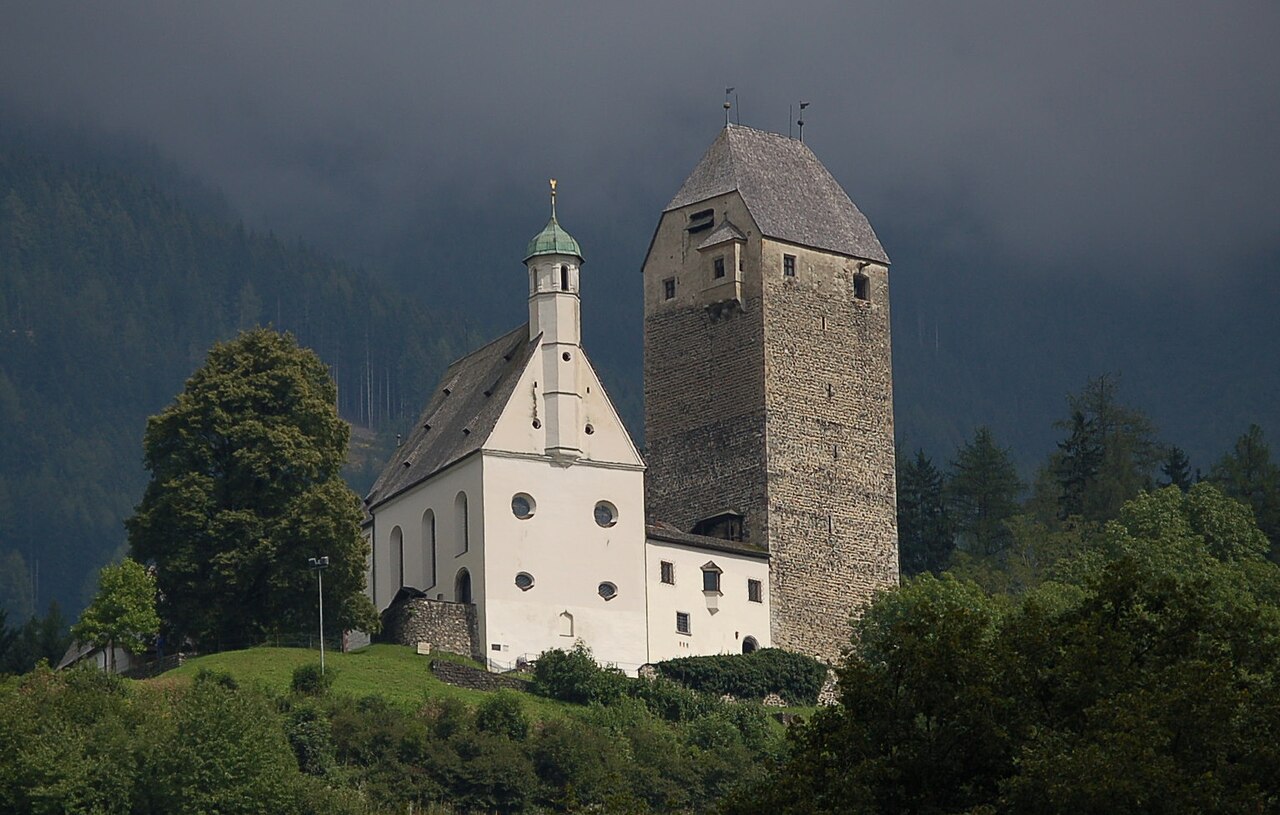
The castle chapel is a key feature of Burg Thierberg, reflecting the religious devotion and cultural practices of the era. After a devastating fire in 1700 destroyed much of the palace except the outer walls, the chapel and associated buildings were restored. The interior furnishings were renewed in a late Baroque style, with additional enhancements made in the 19th century. This blend of medieval structure and Baroque artistic elements illustrates the castle's evolving function from a military fortress to a religious and cultural site.
Hermitage and spiritual retreat
During the late 17th century, a hermitage was established on the Thierberg, reflecting the site's growing spiritual significance. An extension was added to the former palace to accommodate the hermits, further emphasizing the castle's role as a place of religious retreat and pilgrimage rather than military defense.
Later history and preservation efforts
In the 19th century, a Way of the Cross was created along the climb from the nearby Gasthof Neuhaus, enhancing the pilgrimage experience and attracting visitors seeking spiritual solace. The castle's keep, remaining buildings, and the remnants of the defensive Bering masonry underwent extensive restoration in 2001, ensuring the preservation of this important heritage site.
Current condition and accessibility
Today, Burg Thierberg stands as a partially preserved castle with semi-ruined elements that convey its rich history and architectural evolution. Visitors can explore the chapel, the remains of the fortifications, and the surrounding landscape that once held strategic importance. The castle remains a symbol of the region's medieval past and its transformation through religious and cultural developments over the centuries.
Architectural features and layout
Burg Thierberg's design reflects typical medieval hilltop castles with defensive walls enclosing a central courtyard, a keep or donjon, and residential buildings adapted over time. The castle's chapel, relocated into the palace after the 16th-century renovations, is notable for its Baroque interior decoration, contrasting with the medieval stone structures. The presence of a hermitage and pilgrimage facilities adds to the complexity of the site, combining military, residential, and religious architecture within one complex.
Defensive structures
The castle's fortifications include remnants of the Bering—the defensive curtain walls that once protected the inner buildings. The keep served as the last line of defense and a residence for the lords of the castle. The elevated position on the Thierberg hill provided natural defense advantages, supplemented by man-made fortifications.
Religious buildings and additions
The chapel's relocation and enhancement under Georg Voglmayer reflect the castle's shift in function toward a religious center. The late Baroque style furnishings inside the chapel demonstrate the artistic trends of the 18th century and the importance placed on the spiritual role of the site. The hermitage extension further illustrates the castle's adaptation to serve religious hermits and pilgrims.
Historical context within Tirol and Austria
Burg Thierberg's history is intertwined with the broader political and territorial changes in Tirol and Austria. Its initial construction by a local noble family, sale to Bavarian dukes, and eventual incorporation into Habsburg lands mirror the complex feudal and dynastic shifts of the region. The castle's decline coincided with the rise of more strategically significant fortresses, marking changes in military architecture and regional defense strategies.
Role in regional power dynamics
As a fortified seat of power, Burg Thierberg played a role in controlling the lower Inn Valley, a vital corridor for trade and military movements. Its ownership by the Freundsbergers, Bavarian dukes, and later the Habsburgs reflects its importance in regional governance and territorial disputes.
Cultural heritage and tourism
Today, Burg Thierberg is recognized as a cultural heritage site in Tirol, attracting visitors interested in medieval architecture, religious history, and scenic hilltop views. Its restoration and preservation efforts highlight the value placed on maintaining historical monuments that connect present-day Austria to its medieval past.
Frequently asked questions (FAQ)
- What is the historical significance of Burg Thierberg?
- Burg Thierberg is a medieval castle that dates back to the 13th century and played a crucial role in the region's defense during various conflicts. It reflects the architectural styles of its time and offers insights into the feudal system that dominated Austria during the Middle Ages.
- When was Burg Thierberg built?
- Burg Thierberg was constructed in the early 13th century, making it one of the oldest castles in Austria. Its strategic location allowed it to serve as a fortified outpost for centuries, protecting the surrounding lands from invaders.
- Can I visit Burg Thierberg?
- Yes, Burg Thierberg is open to visitors who wish to explore its rich history and stunning architecture. Guided tours are available, providing an in-depth look at the castle's features and historical significance.
- What are the opening hours for Burg Thierberg?
- Burg Thierberg typically opens to visitors from 10 AM to 5 PM, but hours may vary seasonally. It is advisable to check the official website or contact the castle directly for the most current information before planning your visit.
- Is it possible to access Burg Thierberg by public transport?
- Yes, Burg Thierberg can be reached by public transport, with local buses and trains servicing the area. However, be prepared for a short walk from the nearest bus or train station to the castle itself.
- When is the best time to visit Burg Thierberg?
- The best time to visit Burg Thierberg is during the spring and early autumn months when the weather is pleasant and the surrounding landscapes are particularly beautiful. This period also sees fewer crowds compared to the peak summer months.
- What are the ticket prices for entering Burg Thierberg?
- Ticket prices for Burg Thierberg are usually around €8 for adults, with discounts available for children and seniors. Family tickets and group rates may also be offered, so it's worth checking for any special deals.
- Are there any nearby attractions to visit while at Burg Thierberg?
- Absolutely! Visitors to Burg Thierberg can also explore nearby attractions such as the charming village of Thierberg and scenic hiking trails in the surrounding mountains. These spots provide a perfect complement to your castle visit, enhancing your overall experience.
Information
Loading map...
Visitor reviews
No reviews yet. Been here? Write the first review and help other travelers!
Write the first reviewVisited this castle? Share your experience
Your review helps other travelers and adds first-hand knowledge to our encyclopedia.