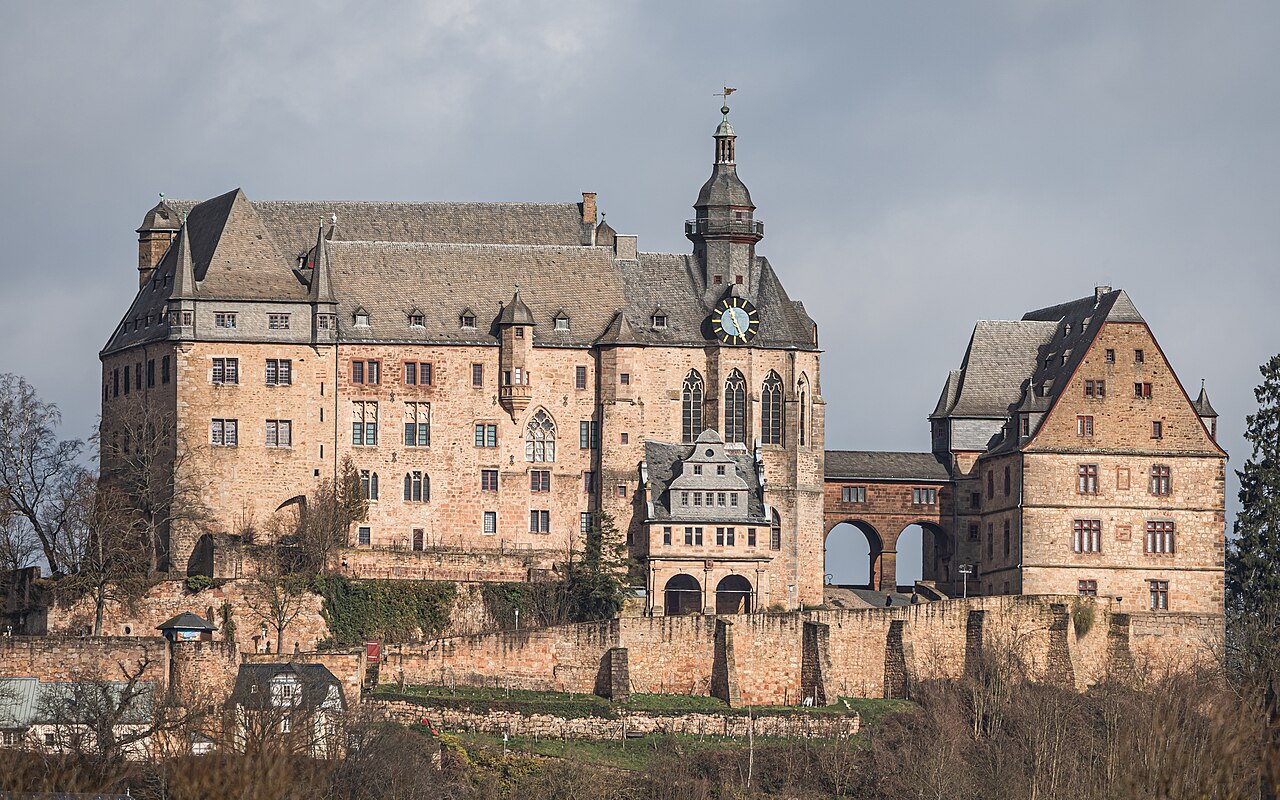
Burg Rauschenberg
Burg Rauschenberg stands as a compelling example of a medieval hilltop castle in the Hesse region of Germany. Its origins trace back to the 11th or 12th century, likely founded by the influential Abbey of Fulda, a major religious and political force in medieval Germany. This castle played a significant role in the governance and defense of the surrounding region, especially during the High and Late Middle Ages.
Historical significance and ownership
The castle first appears in documented history in 1219, linked to Conrad von Rauschenberg, a cathedral canon who acted as its guardian. Throughout the medieval period, Burg Rauschenberg functioned as the administrative center for the Ziegenhain district, highlighting its importance beyond mere military defense. It also served as a residence for the widows of the Counts of Ziegenhain, reflecting its role in noble family affairs.
Following the deaths of two counts in the mid-13th century, a succession dispute led to the division of the county in 1258. The abbot of Fulda, as feudal overlord, influenced this settlement, granting the portion containing Burg Rauschenberg to Gottfried V.. After his death, his widow Hedwig von Castell styled herself as the "Countess of Rauschenberg."
In 1304, Hedwig's marriage to Count Philipp of Falkenstein-Münzenberg transferred half ownership of the castle to the Falkenstein-Münzenberg family, who maintained control until the late 14th century. By 1434, the castle became a fief under Landgrave Ludwig I of Hesse. After the extinction of the Ziegenhain line around 1450, the Landgrave inherited the county and adapted the castle for use as a hunting lodge. The widow Elisabeth of the last count was entitled to reside there for life.
The castle is also known for tragic events, including hunting accidents that claimed the lives of two sons of Landgrave Heinrich III of Upper Hesse in 1478 and 1500. These incidents underscore the castle's role as a noble residence and hunting retreat during the Late Medieval period.
Architectural evolution and decline
Between 1594 and 1597, Burg Rauschenberg underwent significant expansion to transform it into a palace residence for the landgrave, reflecting Renaissance influences and changing noble lifestyles. Unfortunately, the castle's fortunes declined during the Thirty Years' War, when it was plundered by Swedish troops in 1639.
The castle's destruction was ordered in 1646 by a Hessian-Kassel commander, marking the end of its military and residential use. In the 19th century, around 1830, parts of the ruins were cleared away, leaving the site largely as a ruin today.
Architectural features and remains
Burg Rauschenberg was constructed on a nearly circular hilltop enclosed by a rectangular defensive wall. The core of the castle featured a bergfried, a tall defensive tower used for observation and refuge, typical of medieval German castles. Alongside the bergfried were at least two main residential buildings, or palas, which housed the noble inhabitants and their court.
The castle's walls were built with robust stone masonry, providing strong fortification. Vaulted ceilings, including a barrel-vaulted cellar, were architectural elements that strengthened the structure and allowed for storage and utility spaces beneath the living quarters.
Today, the bergfried remains only as a mound of rubble, but parts of a three-story residential building survive, including walls and vaulted ceiling remnants. These ruins offer valuable insights into the castle's original grandeur and medieval construction techniques.
Structures from the later palace conversion have not survived visibly, but the remaining ruins stand as a testament to the castle's layered history—from religious origins and noble administration to military conflict and eventual ruin.
Cultural and historical importance
Burg Rauschenberg is an important cultural landmark in Hesse, illustrating the region's medieval history and architectural heritage. Its connection to the Abbey of Fulda and the Counts of Ziegenhain highlights the intertwining of religious and secular power during the Middle Ages. The castle's evolution from fortress to hunting lodge and palace reflects broader social and political changes in German nobility from the 12th to the 17th centuries.
Today, the site attracts historians, archaeologists, and visitors interested in medieval architecture and German history. Its ruins provide a tangible link to the past, offering educational opportunities and a picturesque setting in the Hessian landscape.
Visiting burg rauschenberg
While the castle remains are primarily ruins, the site is accessible to visitors interested in exploring medieval architecture and history. The hilltop location offers scenic views of the surrounding countryside, enhancing the visitor experience. Interpretive signage and local guides may provide additional context about the castle's history and significance.
Visitors should be prepared for uneven terrain and limited facilities, as the site is largely preserved in its ruined state. Burg Rauschenberg is best visited during the warmer months when weather conditions allow for comfortable exploration of the outdoor ruins.
Frequently asked questions (FAQ)
- How do I get to Burg Rauschenberg?
- Burg Rauschenberg is located near the town of Rauschenberg in Hesse, Germany. It is accessible by car and local roads, with parking available nearby. Visitors can reach the site by a short walk uphill from the parking area.
- What is the historical significance of Burg Rauschenberg?
- Burg Rauschenberg was a key administrative center for the Ziegenhain district and served as a noble residence and hunting lodge. Its history reflects the influence of the Abbey of Fulda and the Counts of Ziegenhain from the 11th century onward.
- Can I explore the ruins of Burg Rauschenberg?
- Yes, visitors can explore the ruins of Burg Rauschenberg, including remnants of the bergfried tower and residential buildings. The site offers scenic views and a glimpse into medieval castle architecture, though facilities are limited.
- When was Burg Rauschenberg built?
- Burg Rauschenberg was likely established in the 11th or 12th century, with the first recorded mention in 1219. Its construction reflects typical medieval hilltop castle design of the High Middle Ages.
- Is Burg Rauschenberg wheelchair accessible?
- Due to its hilltop location and uneven terrain, Burg Rauschenberg is not fully wheelchair accessible. Visitors should be prepared for some uphill walking and rough paths.
Information
Sources & official resources
Verify the information above using these authoritative references.
Loading map...
Visitor reviews
No reviews yet. Been here? Write the first review and help other travelers!
Write the first reviewVisited this castle? Share your experience
Your review helps other travelers and adds first-hand knowledge to our encyclopedia.