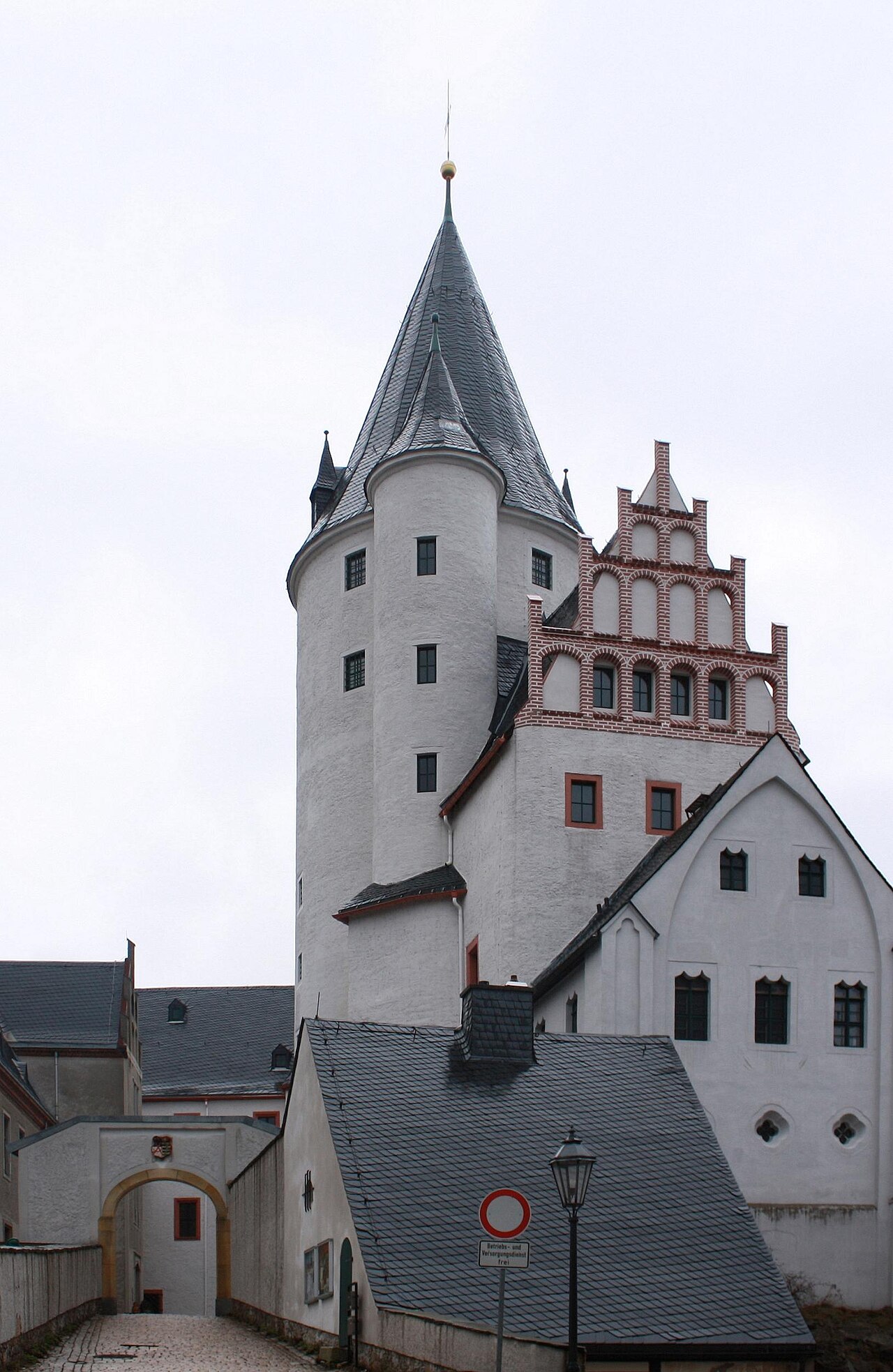
Burg Ellhofen
Burg Ellhofen stands as a significant medieval hill castle ruin located near the village of Ellhofen within the municipality of Weiler-Simmerberg, Germany. Constructed toward the end of the 13th century, it was established by the noble Lords of Ellhofen as a replacement for an earlier stronghold that no longer met their defensive or residential needs. The first documented mention of the castle dates to 1287, marking its importance in the region's feudal landscape.
The castle's strategic position atop a small hill at an elevation of approximately 760 meters offers commanding views over the Ellhofer Tobelbach valley. This location provided both defensive advantages and oversight of the surrounding territory, typical of hill castles constructed during the High to Late Medieval period. Burg Ellhofen’s layout is characterized by a roughly square plan, measuring about 18 meters on each side, enclosed by defensive ditches and walls that reflect medieval military architectural principles.
Historical significance and ownership
Throughout its active use, Burg Ellhofen served as a center of local governance and military defense. From 1418 onward, it held the lower jurisdiction rights, indicating its role in regional legal and administrative matters. The castle was initially under the control of the Ellhofen family, whose male lineage ended in 1446. Following this, ownership passed through several hands, including Rudolf von Weiler and later the Counts of Montfort-Rothenfels in 1462.
By 1475, the castle was sold to Wilhelm von Neidegg, a wealthy patrician from Ravensburg, for 1600 Gulden. This transfer reflects the castle's continued importance as a noble residence and symbol of power. However, the castle’s fortunes declined amid regional conflicts and social upheaval. In 1525, during the widespread Peasants’ War, Burg Ellhofen was plundered and damaged, marking the beginning of its gradual decline.
After the Neidegg family line ended in 1562, the castle was sold to the Teutonic Order, a prominent religious and military organization. The castle’s strategic and symbolic value persisted until the Thirty Years’ War, when in 1634 Swedish troops set fire to the castle, causing severe destruction. This event led to the castle’s abandonment and eventual ruin.
Architectural features and layout
Burg Ellhofen was constructed with typical medieval defensive features. The castle’s perimeter is defined by two artificial defensive ditches that enhanced its protection against attackers. An outer defensive enclosure, known as a Zwinger, surrounds the main walls, creating a narrow passageway designed to trap and expose assailants to defensive fire.
The castle’s main tower, or bergfried, remains the most prominent surviving structure. This square tower, positioned on the western side of the castle, served as a lookout post and a final refuge during sieges. The bergfried’s robust masonry fragments provide insight into the construction techniques of the period, emphasizing thick walls and limited openings for defense.
Within the castle’s walls, remnants of principal buildings are visible, including a notable wall segment measuring six meters in length and rising 2.5 meters high. This wall bears a commemorative plaque that honors the site’s historical significance. The castle courtyard, known as the Bauhof, remains intact and has been adapted for residential use, maintaining a tangible link to the site’s medieval past.
Decline, destruction, and preservation
The castle suffered considerable damage during the Peasants’ War and was further devastated by fire during the Thirty Years’ War. After its destruction in 1634, Burg Ellhofen was largely abandoned. In the 19th century, under Bavarian jurisdiction since 1806, the castle’s remaining stones were repurposed for local construction projects. These included the expansion of the Ellhofen church, the firewall of the nearby Burghof, the Simmerberg church, and the Amtshaus built in 1552, now functioning as the Gasthof Adler.
Despite the dismantling, the castle’s footprint and several architectural elements survive. The site’s preservation as a ruin offers valuable insights into medieval fortification strategies and regional history. The adaptive reuse of the courtyard area for residential purposes also reflects the integration of historical sites into contemporary village life.
Cultural and regional context
Burg Ellhofen is part of the rich tapestry of medieval castles in southern Germany, illustrating the feudal system’s local manifestations. Its history connects to broader European conflicts such as the Peasants’ War and the Thirty Years’ War, highlighting the turbulent nature of the region’s past. The castle’s association with noble families, military orders, and local governance underscores its multifaceted role over centuries.
Today, the site attracts visitors interested in medieval architecture, regional history, and cultural heritage. The remaining structures, especially the bergfried and defensive ditches, provide a tangible link to the medieval era. The castle’s elevated hilltop position continues to offer scenic views of the surrounding landscape, enhancing its appeal as a historical landmark.
Visitor information and accessibility
While Burg Ellhofen remains a ruin, the site is accessible to visitors who wish to explore its historical remains and enjoy the natural surroundings. Due to its condition, visitors should exercise caution when navigating the uneven terrain and remaining masonry. The castle’s proximity to the village of Ellhofen makes it an accessible destination for those interested in medieval history and architecture.
Local efforts to preserve and commemorate the castle’s history include informational plaques and conservation measures aimed at protecting the remaining structures. Visitors can combine a trip to Burg Ellhofen with other regional attractions, such as nearby churches and historic buildings that incorporate stones from the castle itself.
Frequently asked questions (FAQ)
- When was Burg Ellhofen first mentioned in historical records?
- Burg Ellhofen was first documented in 1287, marking its establishment in the late 13th century.
- What architectural features remain visible at Burg Ellhofen?
- Visitors can see remnants of the square bergfried, defensive ditches, outer Zwinger enclosure, and sections of the main castle walls.
- Can visitors access the Burg Ellhofen ruins safely?
- The castle ruins are accessible to visitors, but caution is advised due to uneven terrain and fragile masonry.
- What events led to the decline of Burg Ellhofen?
- The castle was plundered during the Peasants’ War in 1525 and severely damaged by fire set by Swedish troops in 1634 during the Thirty Years’ War.
- Is Burg Ellhofen connected to other historical sites nearby?
- Yes, stones from Burg Ellhofen were used in local buildings such as the Ellhofen church, Burghof firewall, Simmerberg church, and the Amtshaus now known as Gasthof Adler.
Information
Loading map...
Visitor reviews
No reviews yet. Been here? Write the first review and help other travelers!
Write the first reviewVisited this castle? Share your experience
Your review helps other travelers and adds first-hand knowledge to our encyclopedia.