Burg Burgliebenau
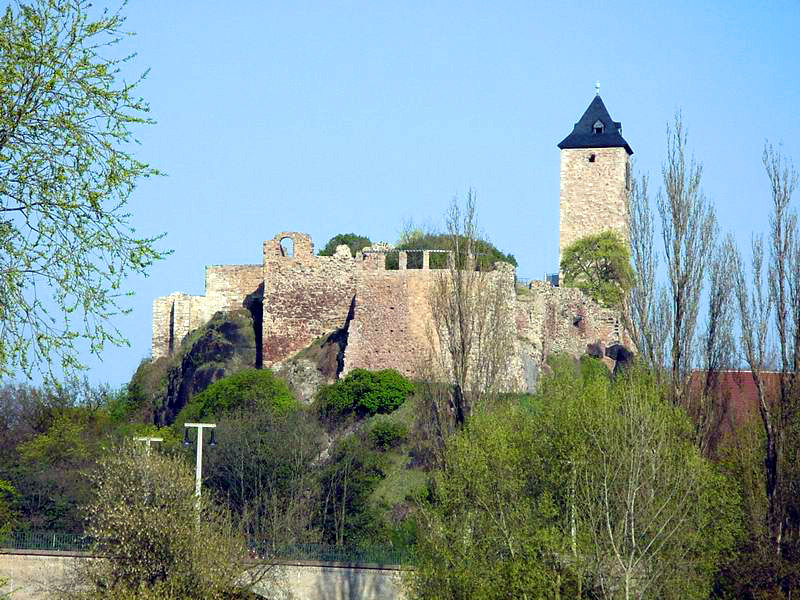
Burg Burgliebenau stands as a significant medieval fortress located in the municipality of Schkopau, Germany. Established in the late 12th century, this castle was originally constructed as a water castle to protect a vital crossing over the Weiße Elster river. Its strategic position highlights its importance in controlling river traffic and regional defense during the High Medieval period.
The origins and early history of Burg Burgliebenau
The castle was initially built and owned by the knights of Liebenau, a noble family who maintained control until their lineage ended in the late 13th century. This early phase of the castle's history is marked by its function as a fortified residence and military stronghold. The original design likely included typical medieval defensive features such as moats, curtain walls, and a bergfried—a tall defensive tower common in German castles.
Following the extinction of the Liebenau knights, ownership transferred to the bishops and dukes of Merseburg, with the first documented mention under this ecclesiastical and ducal authority appearing in 1356. This transition reflects the castle’s integration into the broader territorial and ecclesiastical power structures of the region.
Architectural evolution and transformations
From fortress to palace
During the early 16th century, Burg Burgliebenau underwent significant remodeling, shifting from a purely military fortress to a more residential palace. This transformation included the adaptation of the main building to serve administrative and domestic purposes, reflecting broader Renaissance influences on castle architecture that favored comfort and status alongside defense.
Reconstruction under Duke Christian of Saxony-Merseburg
In 1687, the castle experienced a substantial rebuilding led by Duke Christian of Saxony-Merseburg. This renovation was likely necessary to repair damages sustained during the Thirty Years’ War, which had devastated much of central Europe. A notable change during this period was the demolition of the original bergfried, which altered the castle's silhouette and defensive capabilities, signaling a shift away from medieval military architecture.
Structural features and layout
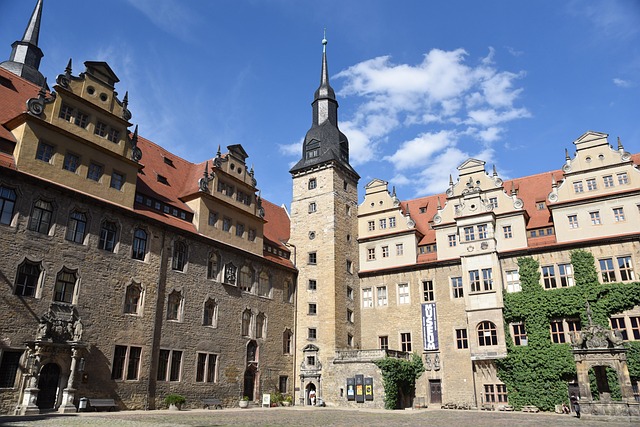
The castle complex is arranged in a four-sided configuration, characteristic of many water castles designed to maximize defensive capabilities. The southern boundary is dominated by the main building, a two-story structure distinguished by a spiral staircase that provides vertical circulation within the residence. Adjacent to this is a single-story wing on the west side, complementing the main residential area.
The northern and eastern sides are enclosed by a surrounding wall that once formed part of the castle’s defensive perimeter. The masonry reflects traditional medieval construction techniques, with thick stone walls designed to withstand sieges and assaults.
A key decorative and symbolic feature is the coat of arms of Vinzenz von Schleinitz, the Bishop of Merseburg, dated to 1530, prominently displayed on the facade of the southern building. This emblem underscores the castle’s ecclesiastical connections during the Middle Ages. Additionally, the castle’s pointed-arch doorway in the passageway exhibits Gothic architectural elements, including a relief bearing the bishop’s coat of arms, reflecting the stylistic trends of the period.
Later history and modern use
From 1838, Burg Burgliebenau was owned by the Schwarzburg family until the upheavals of 1945, when the castle was expropriated during the Soviet land reforms following World War II. Post-war, the castle complex was repurposed for various community uses including an agricultural cooperative, a school kitchen, and a kindergarten. Portions of the building were adapted into apartments, housing up to eleven families, demonstrating the castle’s versatility and continued relevance to the local community.
Eventually, ownership transferred to the municipality of Schkopau before returning to private hands in 2016. Today, Burg Burgliebenau is recognized as a protected monument under local heritage laws, ensuring the preservation of its historic structures and architectural legacy.
Ecclesiastical connections and chapel
The castle’s religious significance is highlighted by a small chapel associated with the site, first recorded in 1433. This chapel reflects the spiritual dimension of the castle complex, serving the religious needs of its inhabitants and reinforcing the link between the fortress and the ecclesiastical authorities who controlled it for much of its history.
Preservation and cultural significance
Today, Burg Burgliebenau stands as a testament to the layered history of medieval and early modern Germany. Its architectural evolution from a High Medieval water castle to a Renaissance palace and later adaptations illustrate the changing functions and styles of castle construction over centuries. The removal of the bergfried and the addition of residential wings reflect broader shifts in castle use from military fortification to noble residence and administrative center.
As a protected heritage site, the castle offers valuable insights into regional history, medieval architecture, and the socio-political transformations that shaped Saxony-Anhalt. Its combination of Gothic elements, ecclesiastical heraldry, and post-medieval modifications make it an important location for both historical study and cultural tourism.
Frequently asked questions (FAQ)
- How do I visit Burg Burgliebenau?
- Burg Burgliebenau is privately owned but can be viewed from public areas around Schkopau. Check local tourism websites for any special open days or events.
- What is the historical significance of Burg Burgliebenau?
- Burg Burgliebenau was a strategic water castle established in the late 12th century to protect a crossing over the Weiße Elster river and later served as a residence for ecclesiastical and noble authorities.
- When was the castle originally built?
- The castle dates back to the late 12th century, with its first owners being the knights of Liebenau.
- Can I see Gothic architectural features at Burg Burgliebenau?
- Yes, the castle features Gothic elements such as a pointed-arch doorway and a relief with the coat of arms of Bishop Vinzenz von Schleinitz from 1530.
- Is Burg Burgliebenau accessible for visitors with mobility issues?
- Due to its historic structure and partial preservation, accessibility may be limited. Visitors with mobility concerns should inquire locally before planning a visit.
Information
Sources & official resources
Verify the information above using these authoritative references.
Loading map...
Visitor reviews
No reviews yet. Been here? Write the first review and help other travelers!
Write the first reviewVisited this castle? Share your experience
Your review helps other travelers and adds first-hand knowledge to our encyclopedia.