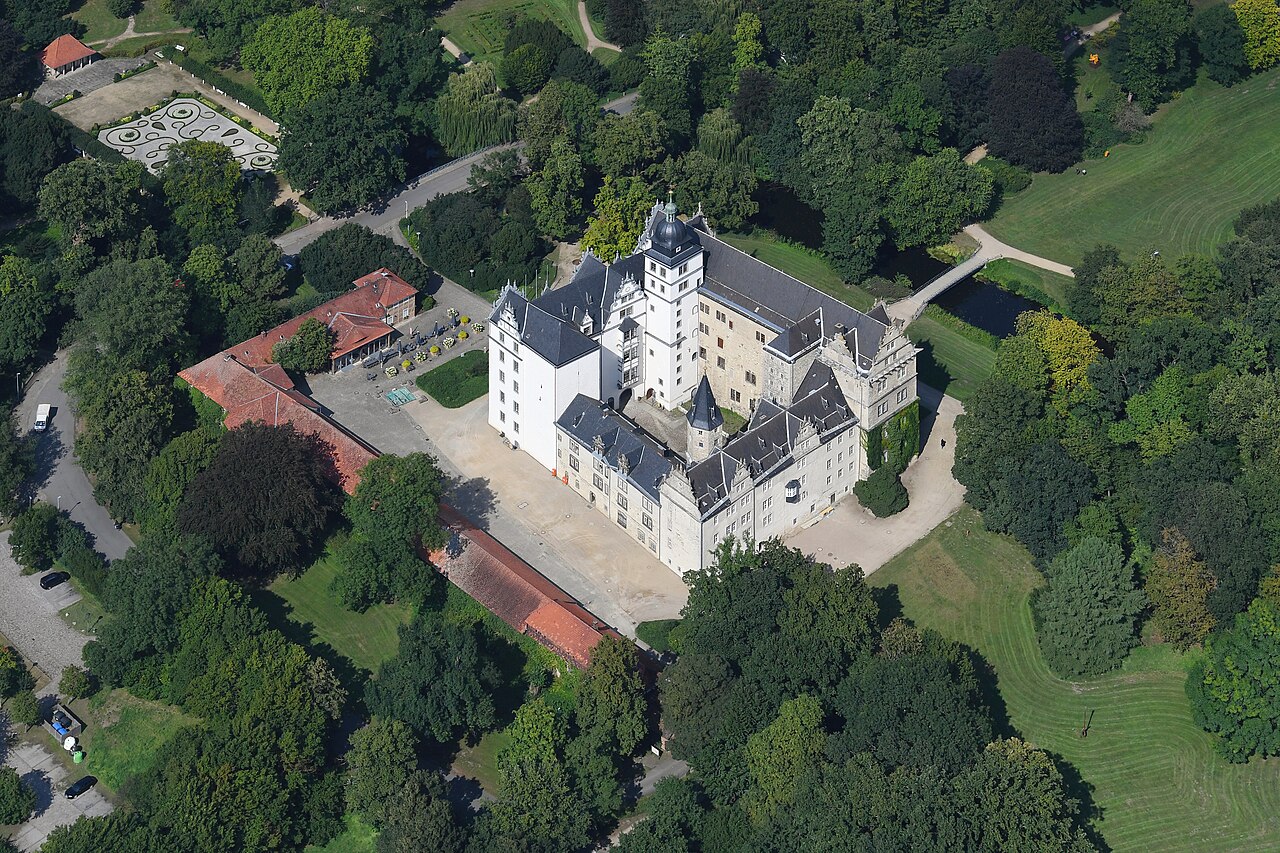
Burg Brome
Burg Brome stands as a remarkable example of a medieval moated lowland castle located in the municipality of Brome, Germany. Established in the early 13th century, it reflects the strategic and architectural evolution characteristic of the Duchy of Brunswick-Lüneburg during the Middle Ages. The castle's history is intertwined with prominent noble families and regional power struggles, making it a significant cultural landmark.
Early history and foundation
The earliest documentation of Burg Brome dates back to 1202, linked to an inheritance contract involving Henry the Lion, a pivotal figure in German medieval history. Originally constructed around 1200, the castle began as a wooden tower fortified by a defensive moat, palisades (wooden fences), and an earth embankment. This initial design was typical of early medieval fortifications, serving both defensive and administrative functions.
During its formative years, the castle was a residence and seat of power for noble families such as the von Bartensleben, von der Schulenburg, and von dem Knesebeck. Its location within a distinctive bend of the Ohre River provided natural water defenses on two sides, supplemented by a surrounding moat, which together created a formidable barrier against attackers.
Medieval conflicts and architectural transformations
The castle's history in the 13th and early 14th centuries was marked by conflict and reconstruction. In 1219, it suffered damage during hostilities between the Welf dynasty and the Archbishopric of Magdeburg. Around 1300, further destruction occurred amid disputes involving the Duchy of Brunswick-Lüneburg, the Margraviate of Brandenburg, and the Archbishopric of Magdeburg. These events reflect the turbulent political landscape of medieval northern Germany.
Significant architectural evolution took place in the 16th century when the castle was rebuilt in brick on the foundations of the earlier wooden structures. The masonry style used closely resembled that of contemporary monasteries, indicating a high level of craftsmanship and the adoption of Renaissance influences. The main surviving buildings include a long north wing approximately 37 meters long and 9 meters wide, and a smaller east wing. Between these wings rises a prominent stair tower about 23 meters tall, which historically featured a battlement walk for defensive patrols.
Structural features and defensive elements
The castle's defensive layout capitalizes on its lowland setting with natural water defenses and an encompassing moat, typical of water castles designed to exploit terrain advantages. The 17th-century complex included a gate tower and various outbuildings that completed the fortified enclosure.
Inside, the vaulted cellar rooms with ribbed vaults demonstrate sophisticated medieval architectural techniques for distributing weight and enhancing structural stability. The roof originally featured two gable dormer windows, providing light and ventilation to the upper floors. Historical records indicate the north wing once had two additional stories, suggesting the castle was once more imposing vertically than it appears today.
Later history and modern use
The estate changed ownership multiple times through inheritance, notably returning to the von der Schulenburg family in 1742 after the extinction of the male line of the von Bartensleben family. In the 20th century, Burg Brome served new roles beyond its noble origins. In 1937, it hosted the Landjahrlager Ulrich von Hutten youth camp, during which a small toilet building was added, reflecting adaptations to modern use while preserving historical integrity.
Today, the castle is owned by the municipality of Brome and has been restored to function as a museum dedicated to rural traditions and crafts. The site also preserves remnants of a medieval herb garden and a basket beekeeping installation, connecting visitors with the agricultural heritage of the region.
Cultural significance and preservation
Burg Brome represents an important cultural and architectural heritage site within Lower Saxony. Its evolution from a wooden fortification to a brick Renaissance castle illustrates broader trends in castle construction and defensive strategy in northern Germany. The castle's preservation as a museum and cultural venue allows for public engagement with the region's medieval and early modern history.
The combination of natural water defenses, brick masonry, vaulted cellars, and surviving medieval garden elements offers a comprehensive glimpse into the life and architecture of a noble estate spanning several centuries. Its ongoing conservation ensures that Burg Brome remains a valuable educational and historical resource.
Frequently asked questions (FAQ)
- How do I visit Burg Brome and what are the opening hours?
- Burg Brome is open to visitors as a museum showcasing rural traditions and crafts. Opening hours vary seasonally, so it is recommended to check the municipality of Brome's official website for current visiting times.
- What architectural styles are visible at Burg Brome?
- The castle features a transition from early medieval wooden fortifications to a 16th-century brick structure exhibiting Renaissance architectural influences, including vaulted cellars and a prominent stair tower.
- Can I see original medieval defensive features at Burg Brome?
- Yes, visitors can observe the moat, remnants of the gate tower, and the vaulted cellar rooms with ribbed vaults, which reflect the castle's medieval defensive design.
- Why is Burg Brome historically significant?
- Burg Brome played a key role in regional power struggles during the Middle Ages and was associated with notable noble families such as the von Bartensleben and von der Schulenburg, reflecting the political history of northern Germany.
- Is Burg Brome accessible for visitors with mobility issues?
- While the castle has been restored and adapted for public access, some areas with historic vaulted cellars and stair towers may have limited accessibility. Visitors with mobility concerns should inquire in advance.
Information
Sources & official resources
Verify the information above using these authoritative references.
Loading map...
Visitor reviews
No reviews yet. Been here? Write the first review and help other travelers!
Write the first reviewVisited this castle? Share your experience
Your review helps other travelers and adds first-hand knowledge to our encyclopedia.