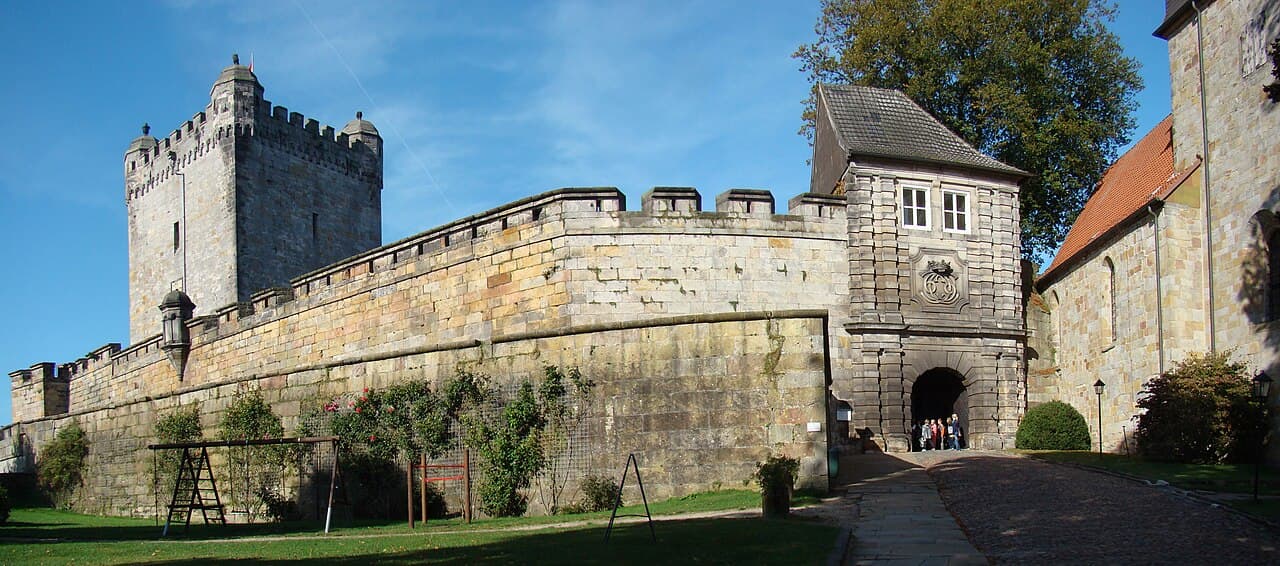
Burg Bentheim
Bentheim Castle (German: Burg Bentheim) is a prominent early medieval hill castle located in Bad Bentheim, a town in the Lower Saxony region of Germany. The castle's origins trace back to the 11th century, with the first documented mention under the name Binithem. Positioned strategically on a sandstone hill, the castle has served as a significant fortification and residence throughout the High Medieval period and beyond.
Historical development and significance
The castle's foundation in the 11th century places it firmly within the High Medieval era, a time characterized by the proliferation of hill castles across Europe for defensive and administrative purposes. Bentheim Castle was originally constructed to oversee and control the surrounding territory, including trade routes and local settlements. Its ownership historically belonged to the noble House of Bentheim, which played an influential role in regional politics and military affairs.
Throughout the centuries, Bentheim Castle underwent various expansions and renovations to adapt to evolving military technologies and residential needs. Its strategic location near the border with the Netherlands enhanced its importance as a defensive stronghold and a symbol of territorial power.
Architectural features and layout
The castle is classified as a hill castle, built atop a prominent sandstone outcrop that provides natural defensive advantages. The complex includes a series of fortified walls, towers, and gatehouses that were constructed and modified over several centuries. The main keep, or donjon, stands as a central feature, offering commanding views of the surrounding landscape.
Bentheim Castle's architectural style reflects its High Medieval origins with later additions showing influences from subsequent periods. The use of local sandstone as the primary building material contributes to the castle's distinctive appearance and durability. Defensive elements such as battlements, arrow slits, and a moat were incorporated to enhance protection against siege warfare.
The castle's interior includes a variety of chambers, halls, and residential quarters that illustrate the dual military and domestic functions of such medieval fortifications. Courtyards within the castle walls provided space for daily activities and gatherings.
Preservation and current status
Bentheim Castle is currently well preserved and remains one of the most significant medieval castles in Lower Saxony. It is accessible to the public and serves as a cultural and historical landmark in the region. The castle hosts exhibitions and events that highlight its architectural heritage and historical importance.
Ongoing conservation efforts ensure the maintenance of the castle's structural integrity and the protection of its historical features. Visitors can explore the castle's towers, walls, and courtyards, gaining insight into medieval castle life and architecture.
Visiting Bentheim Castle
Visitors to Bentheim Castle can enjoy guided tours that provide detailed information on the castle's history, architecture, and role in regional affairs. The castle's elevated position offers panoramic views of Bad Bentheim and the surrounding countryside.
The site includes a museum with exhibits on the castle's construction, the noble family of Bentheim, and the broader historical context of the area. The castle is also a venue for cultural events, including medieval fairs and concerts.
Architectural highlights
- Main keep (donjon): The central tower offering defensive strength and observation points.
- Fortified walls and battlements: Providing defense against attackers with crenellations and arrow slits.
- Gatehouses: Controlled access points fortified for protection.
- Moat: A defensive ditch surrounding parts of the castle.
- Courtyards: Open spaces within the walls for daily activities and gatherings.
Historical figures and ownership
The castle historically belonged to the House of Bentheim, a noble family influential in the region's medieval politics and military history. Their stewardship contributed to the castle's expansions and maintenance over the centuries.
Geographical and strategic importance
Situated near the border with the Netherlands, Bentheim Castle's location was crucial for controlling cross-border trade and military movements. The sandstone hill on which it stands provided natural defenses and a vantage point over the surrounding landscape.
Frequently asked questions (FAQ)
- What is the historical significance of Burg Bentheim?
- Burg Bentheim is a medieval castle that dates back to the 11th century and played a crucial role in the region's history as a stronghold for the Counts of Bentheim. It has witnessed numerous historical events and conflicts, making it an important site for understanding the local heritage of Bad Bentheim and its surroundings.
- When was Burg Bentheim built?
- Construction of Burg Bentheim began in the early 11th century, with significant expansions and renovations occurring over the centuries. The castle's architecture reflects different historical styles, showcasing its evolution and importance throughout various periods.
- What are the opening hours of Burg Bentheim?
- Burg Bentheim is generally open to visitors from 10 AM to 6 PM during the summer months, with slightly reduced hours in the winter. It is recommended to check the castle's official website for any seasonal changes or special event schedules before planning your visit.
- Can I access the castle with a wheelchair?
- Burg Bentheim has made efforts to improve accessibility for visitors with limited mobility. While some areas may present challenges due to the castle's ancient architecture, there are pathways that allow for wheelchair access to key sections of the site.
- Is it possible to take guided tours of Burg Bentheim?
- Yes, guided tours are available at Burg Bentheim, providing visitors with in-depth insights into the castle's history and architecture. These tours are often conducted in multiple languages, ensuring a comprehensive experience for all guests.
- What is the best time to visit Burg Bentheim?
- The ideal time to visit Burg Bentheim is during the late spring and early autumn months when the weather is pleasant, and the surrounding gardens are in full bloom. Additionally, during these seasons, the castle hosts various cultural events and activities that enhance the visitor experience.
- How much do tickets cost for Burg Bentheim?
- Ticket prices for Burg Bentheim vary depending on age and group size, with discounts available for children, students, and seniors. Visitors can typically expect to pay a modest entrance fee, which often includes access to the castle's exhibitions and grounds.
- Are there any nearby attractions to visit alongside Burg Bentheim?
- Yes, the area surrounding Burg Bentheim offers several attractions, including beautiful parks, local museums, and charming historical towns. Exploring the picturesque landscape of the Teutoburg Forest is also a popular activity for visitors looking to enjoy nature and history in tandem.
Photo gallery

Photo by Arch•Public domain
Information
Loading map...
Visitor reviews
No reviews yet. Been here? Write the first review and help other travelers!
Write the first reviewVisited this castle? Share your experience
Your review helps other travelers and adds first-hand knowledge to our encyclopedia.


