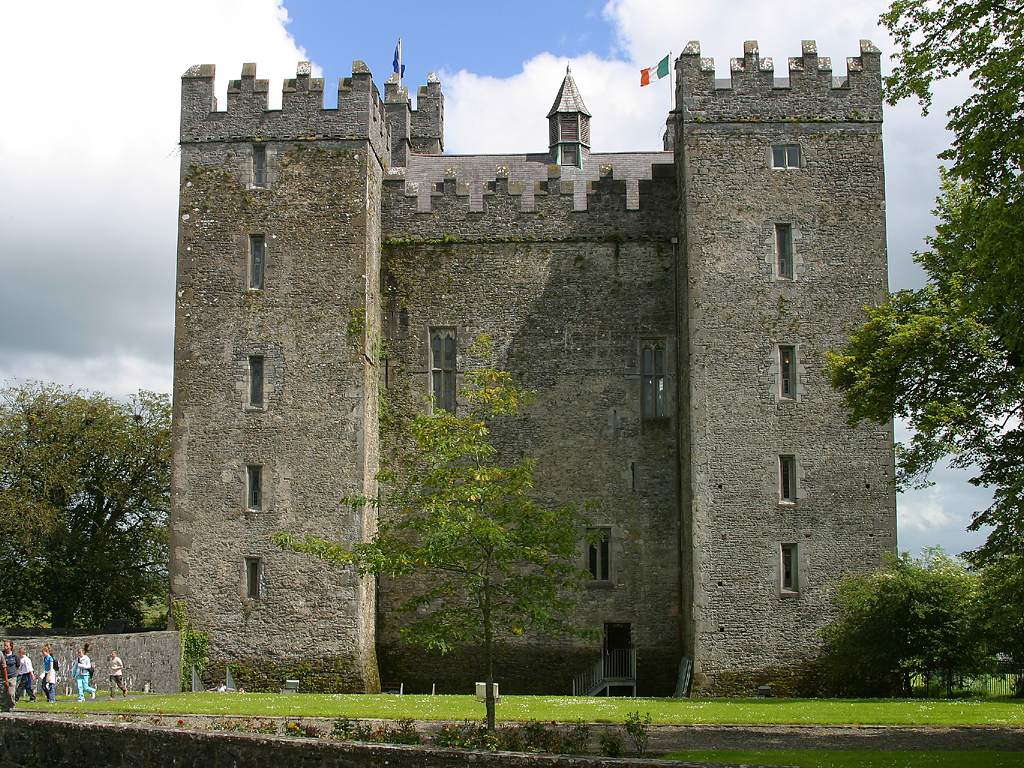
Bunratty Castle
Bunratty Castle stands as one of Ireland's most iconic and well-preserved medieval fortresses, located in the village of Bunratty in County Clare. This large 15th-century stone tower house is a National Monument of Ireland and a major tourist attraction, celebrated for its authentic medieval architecture, rich history, and cultural significance. The castle's imposing structure, original defensive features, and extensive collection of period furnishings and artworks offer visitors a vivid glimpse into Ireland's late medieval period.
The current castle, the fourth to be built on the site, was constructed around 1425 by the MacNamara family. It was later acquired and expanded by the powerful O'Brien clan, Earls of Thomond, who made Bunratty their principal seat by the early 16th century. The castle's history reflects the turbulent political and military landscape of medieval Ireland, including sieges, clan rivalries, and English colonial efforts.
Medieval origins and early castles
The site of Bunratty Castle has a history dating back to the 9th and 10th centuries when it was a Viking settlement and trading camp. Although no archaeological evidence pinpoints the exact location, historical records suggest that the area was destroyed by the High King Brian Boru in 977.
In the mid-13th century, King Henry III granted the district to Robert de Muscegros, who likely constructed the first fortification, a wooden motte-and-bailey castle using local timber. This early castle served as a strategic center for Anglo-Norman control and was accompanied by market rights granted in 1253, marking the beginnings of organized settlement in Bunratty.
The second castle was a stone fortress built by Thomas de Clare around 1276. This large lime-washed white tower was occupied until its destruction in 1318 during the Irish Bruce Wars. The castle was surrounded by a substantial ditch about 130 meters long. Unfortunately, no physical remains survive today as the stones were repurposed locally.
A third castle was constructed in the 1350s as part of English efforts to secure the Shannon estuary. Led by Sir Thomas de Rokeby, this castle's exact location is uncertain but is traditionally thought to be near the site of the modern Bunratty Castle Hotel. It was soon destroyed by Irish clans, marking the end of its brief existence.
The current castle: architecture and expansions
The present Bunratty Castle was begun around 1425 by the MacNamara clan and completed by Sean Finn MacNamara. This large stone tower house exemplifies the defensive and residential architecture of the late medieval period in Ireland. It features thick stone walls, narrow windows for defense, and originally was surrounded by a ditch or fosse for protection.
By around 1500, the castle came under the control of the O'Brien family, who expanded the structure and made it their chief residence, moving their seat from Ennis. The O'Briens added significant enhancements, including improved living quarters and defensive modifications, reflecting their status as the most powerful clan in Munster.
The castle's interior today contains a remarkable collection of furnishings, tapestries, and works of art dating primarily from the 17th and 18th centuries, reflecting the castle's use and restoration over time. The Great Hall, chambers, and other rooms showcase medieval and post-medieval domestic life with authentic period decor.
Architectural features
- Thick defensive walls designed to withstand sieges and attacks.
- Arrow slits and narrow windows for archers and defense.
- Large gatehouse controlling access to the courtyard.
- Ditch or fosse surrounding the castle as a defensive moat-like feature.
- Spacious great hall used for gatherings and feasts.
- Multiple towers providing vantage points and defense.
Historical events and ownership changes
Throughout its history, Bunratty Castle witnessed significant events reflecting Ireland's complex medieval and early modern periods. In 1558, Lord Lieutenant Thomas Radclyffe seized the castle from Donal O'Brien and granted it to his nephew Connor O'Brien. Connor's son, Donogh O'Brien, made improvements including installing a new lead roof, enhancing the castle's durability.
During the Irish Confederate Wars of the 1640s, the castle played a strategic role. In 1646, English Parliamentary forces under Lord Forbes occupied the castle with the support of Barnabas O'Brien. The castle was defended by Rear-Admiral Penn but eventually surrendered after a siege to Confederate forces.
Ownership remained with the O'Briens into the late 17th century. In 1712, Henry O'Brien, 8th Earl of Thomond, sold the castle and lands to Thomas Amory, who sold it to Thomas Studdert around 1720. The Studdert family abandoned the castle in favor of a more modern residence built in 1804, leading to the castle's decline.
In the 19th century, the castle served as a Royal Irish Constabulary barracks, but by the late 1800s, the Great Hall roof had collapsed, and the castle was in serious disrepair.
Restoration and modern use
In 1956, the castle was purchased by the 7th Viscount Gort, who, with government support, undertook an extensive restoration project. The restoration stabilized the structure, reroofed the Great Hall, and preserved the castle from further decay.
Since opening to the public in 1960, Bunratty Castle has operated as a museum showcasing its extensive collection of medieval furniture, tapestries, and artifacts. It is internationally renowned for its medieval banquets, which have been held regularly since 1963. These banquets feature traditional Irish food, music, and performances by the Bunratty Castle Entertainers, offering visitors an immersive historical experience.
Adjacent to the castle is the Bunratty Folk Park, a 26-acre open-air museum recreating 19th-century rural Irish life. The park includes around 30 buildings such as farmhouses, a church, shops, and a walled garden, providing cultural context to the castle's history and the region's heritage.
In 2023, ownership of Bunratty Castle transferred from Shannon Heritage to Clare County Council, ensuring continued preservation and public access as part of Ireland's rich cultural legacy.
Visitor experience and significance
Today, Bunratty Castle offers visitors a comprehensive historical experience combining architectural grandeur, authentic medieval atmosphere, and cultural entertainment. The castle's well-preserved interiors and extensive collections provide insight into the lifestyle of Irish nobility during the late medieval and early modern periods.
The medieval banquets are a highlight for many visitors, featuring period costumes, music, and traditional cuisine served in the castle's atmospheric Great Hall. The adjoining Bunratty Folk Park complements the castle visit by showcasing rural Irish life, crafts, and traditions from the 19th century, making the site a unique cultural destination.
As one of Ireland's most complete and authentic medieval castles, Bunratty Castle holds a significant place in Irish heritage and attracts visitors from around the world interested in history, architecture, and traditional Irish culture.
Frequently asked questions (FAQ)
- What is Bunratty Castle known for?
- Bunratty Castle is renowned for its well-preserved medieval architecture and rich history, dating back to the 15th century. It is a popular tourist destination in Ireland, known for its stunning interiors and historical reenactments, showcasing medieval banquets and traditional Irish culture.
- When was Bunratty Castle built?
- Bunratty Castle was originally built in 1425 and has undergone several renovations over the centuries. The castle's current structure was completed in the mid-20th century, and it now serves as a significant historical and cultural site.
- Can I visit Bunratty Castle year-round?
- Yes, Bunratty Castle is open to visitors throughout the year, although hours may vary seasonally. It's advisable to check the official website for the most current opening hours and any special events that may be taking place during your visit.
- What are the ticket prices for Bunratty Castle?
- Ticket prices for Bunratty Castle vary depending on the type of access you want, such as general admission or special events like medieval banquets. Discounts may be available for children, students, and seniors, so be sure to check the pricing details on the official website.
- Is Bunratty Castle accessible for visitors with disabilities?
- Bunratty Castle strives to be accessible for all visitors, offering facilities such as wheelchair ramps and accessible restrooms. However, due to the castle's historic nature, some areas may be challenging to navigate, so it’s recommended to contact the staff in advance for specific accessibility inquiries.
- When is the best time to visit Bunratty Castle?
- The best time to visit Bunratty Castle is during the spring and early autumn months, when the weather is generally mild and the gardens are in full bloom. Visiting during weekdays can also help avoid larger weekend crowds.
- Are there any nearby attractions to Bunratty Castle?
- Yes, Bunratty Castle is located near several attractions, including the Bunratty Folk Park, which showcases traditional Irish life, and the scenic River Shannon. Other nearby points of interest include the charming village of Bunratty and the beautiful coastal town of Lahinch.
Information
Website
Visit websiteSources & official resources
Verify the information above using these authoritative references.
Loading map...
Visitor reviews
No reviews yet. Been here? Write the first review and help other travelers!
Write the first reviewVisited this castle? Share your experience
Your review helps other travelers and adds first-hand knowledge to our encyclopedia.