Brześć Kujawski
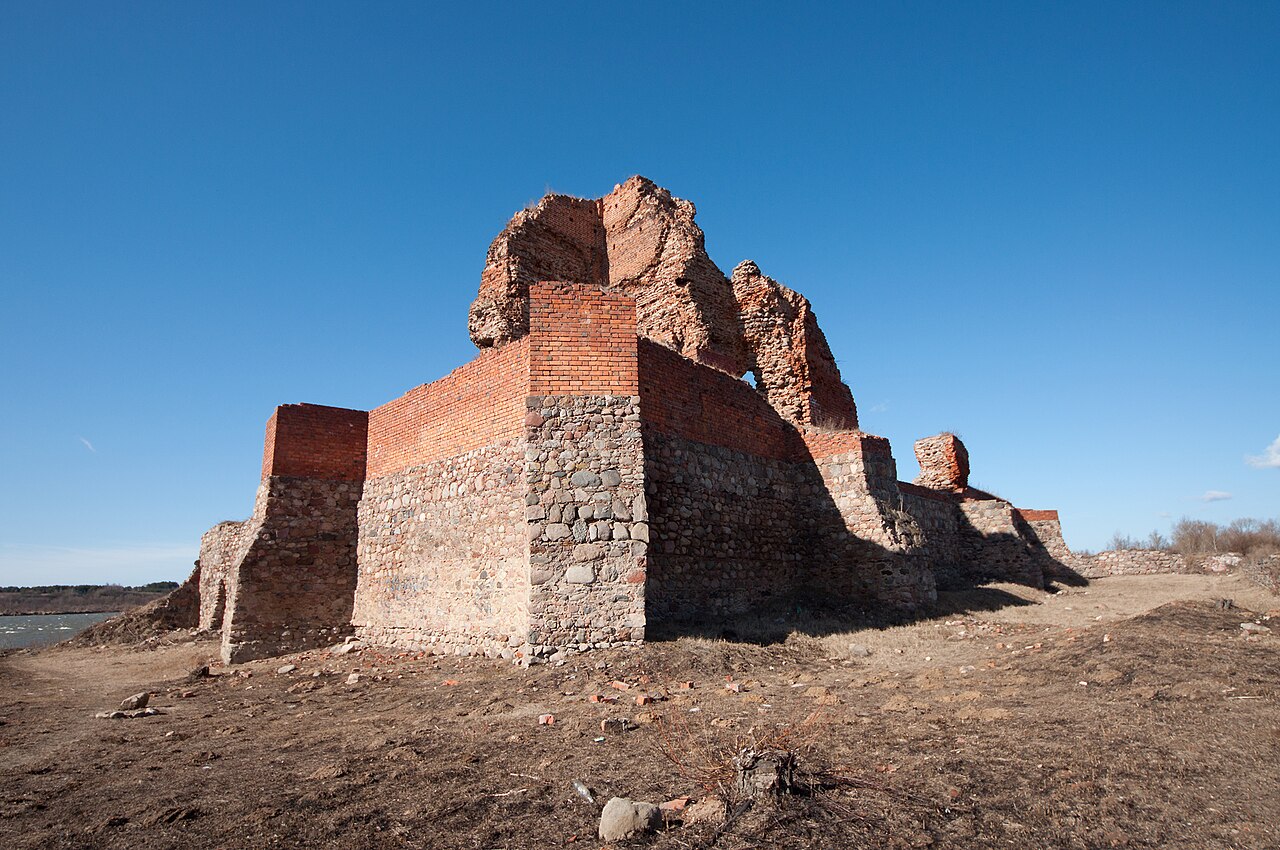
Brześć Kujawski castle stands as a significant historical monument in Poland, embodying the architectural and strategic military developments of the late medieval period. Located in the town of Brześć Kujawski, this bastioned fortress was originally constructed in 1343 under the reign of King Casimir the Great as a vital defensive stronghold along the border with the Teutonic Order. The castle's ruins today are embedded within a building currently housing the local post office and cultural institutions, preserving the legacy of a once formidable royal residence.
Historical context and strategic importance
The area around Brześć Kujawski has a rich history dating back to the 13th century, when a castellany gord was mentioned in the nearby village of Stary Brześć. In the 14th century, Brześć Kujawski rose in prominence as the capital of the Brześć-Kujawy duchy. Its location on the frontier with the Teutonic Order made it a frequent target of military incursions, resulting in repeated destruction and fires. The castle and town were strategically important for the Polish crown, especially after the territory returned to Poland in 1343.
Recognizing the castle's significance, King Casimir the Great initiated the fortification of the town with defensive walls, incorporating the royal castle within the southern corner of the fortifications. This positioning took advantage of the natural landscape, with the castle perched on the edge of a steep escarpment approximately 10 meters high, surrounded on three sides by steep slopes, providing natural defense.
Architectural design and features
The castle's design reflects typical medieval military architecture adapted to local topography. The fortress had a roughly quadrilateral plan with slightly angled southern and western sides. The main residential building, measuring approximately 12.6 by 23.3 meters, was situated along the northern curtain wall, adjacent to the castle gate, which controlled access from the town side.
A notable feature was the cylindrical tower located at the southeastern corner, serving both as a lookout and a defensive strongpoint. The castle courtyard housed several wooden outbuildings used for economic and administrative functions. Surrounding the entire complex was a robust brick curtain wall built upon a stone foundation, characteristic of late medieval Polish fortifications.
Defensive elements
From the northern side, the castle was further protected by a moat or ditch excavated to separate it from the town, enhancing its defensibility. The combination of natural escarpments and man-made fortifications made Brześć Kujawski castle a formidable bastioned fortress, reflecting the military architectural trends of the period.
Later history and transformations
The Second Peace of Toruń in 1466 marked a turning point for the castle, as the border with the Teutonic Order shifted, reducing its frontier importance. Subsequently, the castle transitioned into the residence of royal starosts, local administrators who managed the region on behalf of the crown.
In the second half of the 16th century, the castle underwent significant expansion and renovation under the stewardship of the Mielecki family, then serving as starosts. This included the construction of new buildings and the remodeling of the original Gothic wing, reflecting Renaissance influences while maintaining defensive capabilities.
Despite these updates, the castle suffered extensive damage during the Swedish Deluge in the mid-17th century, a conflict that devastated many Polish fortifications. The destruction initiated a period of decline, with the castle gradually falling into ruin.
Post-medieval usage
In the early 19th century, the Prussian authorities repurposed the castle ruins by erecting a prison on the site, adapting the remaining structures to new functions. During the interwar period, the building was converted into a school, demonstrating its continued civic utility despite its diminished military role.
The most recent significant renovation occurred in the 1980s when the building was refurbished to serve as the local post office, preserving the historical fabric while adapting to modern needs. Today, the castle ruins remain a testament to the region's medieval heritage and Poland's complex border history.
Architectural significance and preservation
Brześć Kujawski castle exemplifies the evolution of medieval bastioned fortresses in Poland, combining natural defensive features with man-made fortifications. Its brick curtain walls on stone foundations, cylindrical towers, and strategic placement on a steep escarpment highlight the adaptation of military architecture to landscape and geopolitical needs.
Although currently in a state of ruins, the castle's remains offer valuable insights into 14th-century construction techniques and the defensive strategies employed by Polish kings to secure their borders. The site's layered history, from a royal fortress to a starost residence, prison, school, and post office, reflects the dynamic use of medieval castles in Poland's historical narrative.
Visiting Brześć Kujawski castle
Visitors to Brześć Kujawski can explore the castle ruins integrated within the town's cultural and civic buildings. While the original medieval structures are partially preserved, the site offers a tangible connection to Poland's late medieval military architecture and the historical tensions along the Polish-Teutonic border.
The castle's location within the town makes it accessible for those interested in medieval history, architecture, and the complex heritage of the Kuyavian region. Interpretive materials and local museums complement the visit, providing context to the castle's historical role and architectural features.
Frequently asked questions (FAQ)
- What is the historical significance of Brześć Kujawski castle?
- Brześć Kujawski castle was a strategic royal fortress built in 1343 to defend Poland's border with the Teutonic Order. It later served as a residence for royal starosts and witnessed significant historical events including the Second Peace of Toruń in 1466.
- Can I visit the castle ruins today?
- Yes, the castle ruins are accessible to visitors within a building housing the local post office and cultural institutions in Brześć Kujawski. While only partial remains survive, the site offers insight into medieval Polish fortifications.
- What architectural features are notable at Brześć Kujawski castle?
- The castle features a quadrilateral plan with a cylindrical tower at the southeastern corner, brick curtain walls on stone foundations, and a main residential building adjacent to the gate. Its location on a steep escarpment provided natural defense.
- How did the castle change after the Second Peace of Toruń?
- After the 1466 treaty, the castle lost its frontier importance and became the residence of starosts. It was expanded and renovated in the 16th century but suffered decline after damage during the Swedish Deluge in the 17th century.
- What uses did the castle have in modern times?
- In the 19th century, the Prussians converted the ruins into a prison. Later, during the interwar period, it was adapted as a school. Since the 1980s, the building has housed the local post office, preserving the historical structure.
Information
Loading map...
Visitor reviews
No reviews yet. Been here? Write the first review and help other travelers!
Write the first reviewVisited this castle? Share your experience
Your review helps other travelers and adds first-hand knowledge to our encyclopedia.