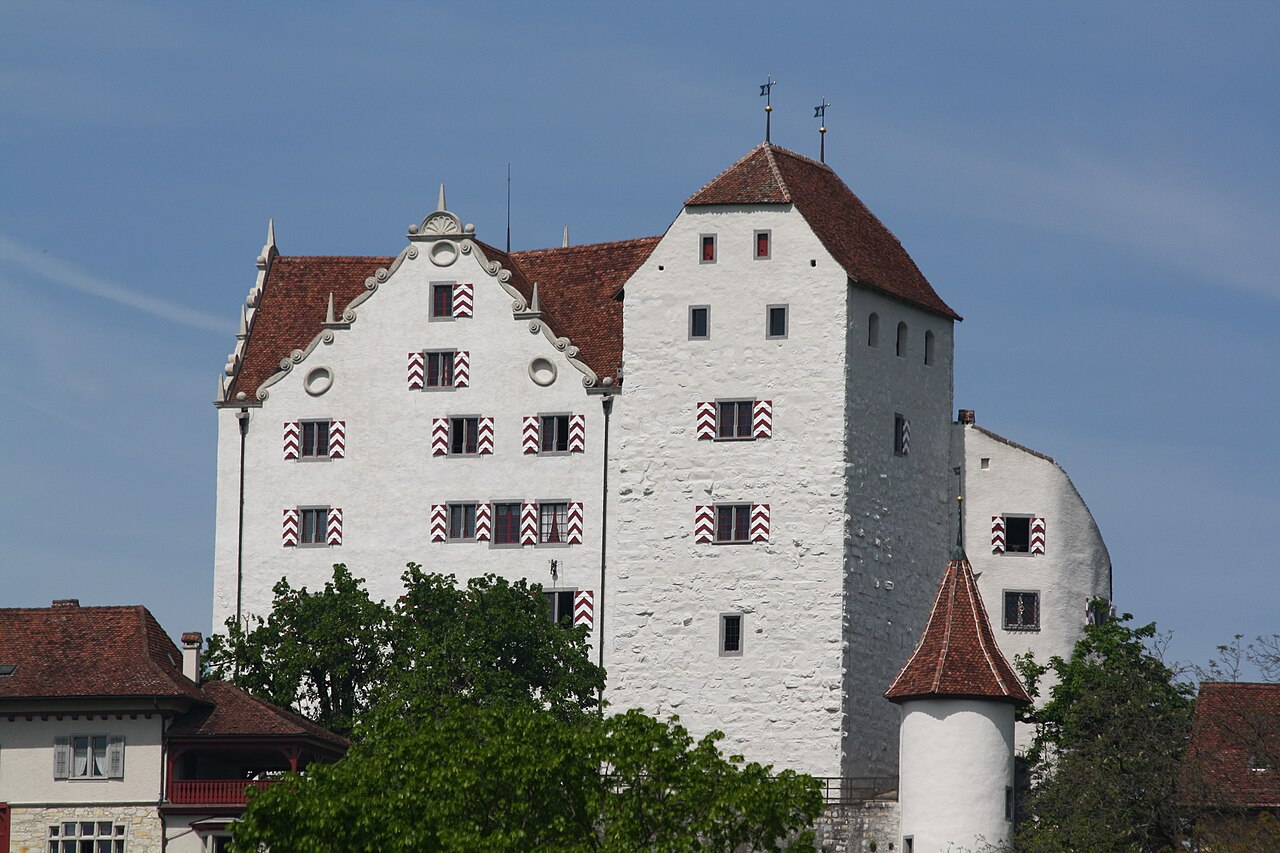
Brunegg Castle
Brunegg Castle is a high medieval hill castle constructed in the 13th century on a strategic hill at the edge of the Jura Mountains in Switzerland. Its location was chosen to command the surrounding landscape and to serve as a defensive stronghold on the western frontiers of the Habsburg territories. The castle is closely linked historically and functionally with nearby Wildegg Castle, both likely built as part of a coordinated network of Habsburg border defenses.
Historical background and ownership
The original occupants of Brunegg Castle were knights loyal to the House of Habsburg, including notable families such as the Schenken von Brunegg and the Gessler von Meienberg. These knights played a role in maintaining Habsburg influence in the region during the high medieval period. The castle's military significance was demonstrated during the siege of 1415, when Bernese forces attempted to capture it. Although the siege was initially lifted following a counterattack by the defenders, the broader political landscape shifted when Bern conquered the Aargau region shortly thereafter.
Following Bern's conquest, Brunegg Castle was granted as a fief to the Segenser (Segesser) family. From 1538 to 1798, the castle was administratively subordinate to the Governor of Lenzburg, reflecting its integration into the Bernese territorial governance. In the early 19th century, specifically in 1815, ownership passed to the Hünerwadel family of Lenzburg. The current owners, the von Salis family, inherited the castle through marriage from the Hünerwadels, maintaining the castle's continuity of private ownership into modern times.
Architectural features and condition
Brunegg Castle's architectural character is typical of high medieval hill castles, featuring a prominent keep and associated outbuildings arranged to maximize defensive capabilities on its elevated site. The castle was constructed primarily from local stone, with thick curtain walls and fortified battlements designed to withstand siege warfare common to the period.
Over the centuries, the castle suffered significant damage, notably in the 17th century when it was struck twice by severe storms that compromised its structural integrity. By the early 19th century, the castle was in poor repair, prompting restoration efforts in 1805-06 that focused on repairing the keep, rebuilding the roof, and stabilizing the outbuildings. Despite these repairs, the castle retains much of its original medieval fabric, although it has not been extensively modernized or restored beyond these measures.
The castle's role in local development
The village of Brunegg owes its name and very existence to the castle, which served as the focal point for settlement and administration in the area. Initially, the castle and its lands were part of the personal holdings of the Habsburgs. In the 14th century, the rights to administer low justice were delegated to the castle's owners, highlighting its judicial and administrative importance in the region.
Following the Bernese conquest, Brunegg was incorporated into the court of Othmarsingen within the Lenzburg district. Administrative boundaries shifted over time, with the village briefly part of the Brugg district in the 19th century before returning to the Lenzburg district from 1840 onward. These changes reflect the evolving territorial governance structures impacting the castle and surrounding community.
Cultural significance and heritage status
Today, Brunegg Castle stands as a testament to the medieval military architecture and the Habsburg influence in the region. While it remains privately owned by the von Salis family, the castle's historical legacy continues to attract interest from historians and visitors intrigued by its role in the border defenses of medieval Switzerland. The castle's preservation, despite centuries of weathering and limited restoration, offers valuable insight into the construction techniques and defensive strategies of the high medieval period.
Frequently asked questions (FAQ)
- How do I get to Brunegg Castle?
- Brunegg Castle is easily accessible by public transport and car. If you are traveling by train, the nearest station is Brunegg, which is just a short walk from the castle. For those driving, ample parking is available nearby.
- What is the historical significance of Brunegg Castle?
- Brunegg Castle dates back to the 13th century and is an important example of medieval architecture in Switzerland. It served as a strategic fortification and residence for local nobility, which adds to its historical value. The castle offers a glimpse into the region's feudal past and its role in Swiss history.
- When was Brunegg Castle built?
- Brunegg Castle was constructed in the early 1200s, making it one of the oldest castles in the Aargau region. Over the centuries, it has undergone various renovations, but many original features still remain intact. Its longevity showcases the engineering skills of the medieval period.
- Can I visit Brunegg Castle year-round?
- Yes, Brunegg Castle is open to visitors throughout the year, though specific opening hours may vary by season. During the summer months, the castle often hosts special events and guided tours that enhance the visitor experience. Be sure to check the official website for the most current visiting hours.
- Why is Brunegg Castle a popular destination for tourists?
- Brunegg Castle attracts visitors due to its stunning architecture and picturesque setting. The castle offers not only a glimpse into history but also beautiful views of the surrounding landscape. Its location near other attractions in Aargau makes it a convenient stop for tourists exploring the region.
- Is it possible to take a guided tour of Brunegg Castle?
- Yes, guided tours are available at Brunegg Castle, providing an in-depth look at its history and architecture. These tours are led by knowledgeable guides who can share fascinating stories and insights about the castle and its significance. Reservations are recommended, especially during peak tourist seasons.
- What are the ticket prices for visiting Brunegg Castle?
- Ticket prices for Brunegg Castle are generally affordable, with discounts available for children, students, and seniors. Group rates may also apply, making it a great option for educational visits. Check the official website for the latest pricing information and any special promotions.
- What are the opening hours for Brunegg Castle?
- Brunegg Castle typically opens at 10 AM and closes at 5 PM, but these hours can vary seasonally. It is advisable to check the castle's official website before your visit to confirm the current opening hours. This ensures that you can plan your visit appropriately.
- Are there any nearby attractions to visit alongside Brunegg Castle?
- Yes, there are several nearby attractions to explore, including the charming town of Brunegg and the beautiful surrounding countryside. Visitors can also enjoy nearby hiking trails and other historical sites in the Aargau region. Combining a visit to the castle with these attractions makes for a delightful day trip.
Loading map...
Visitor reviews
No reviews yet. Been here? Write the first review and help other travelers!
Write the first reviewVisited this castle? Share your experience
Your review helps other travelers and adds first-hand knowledge to our encyclopedia.