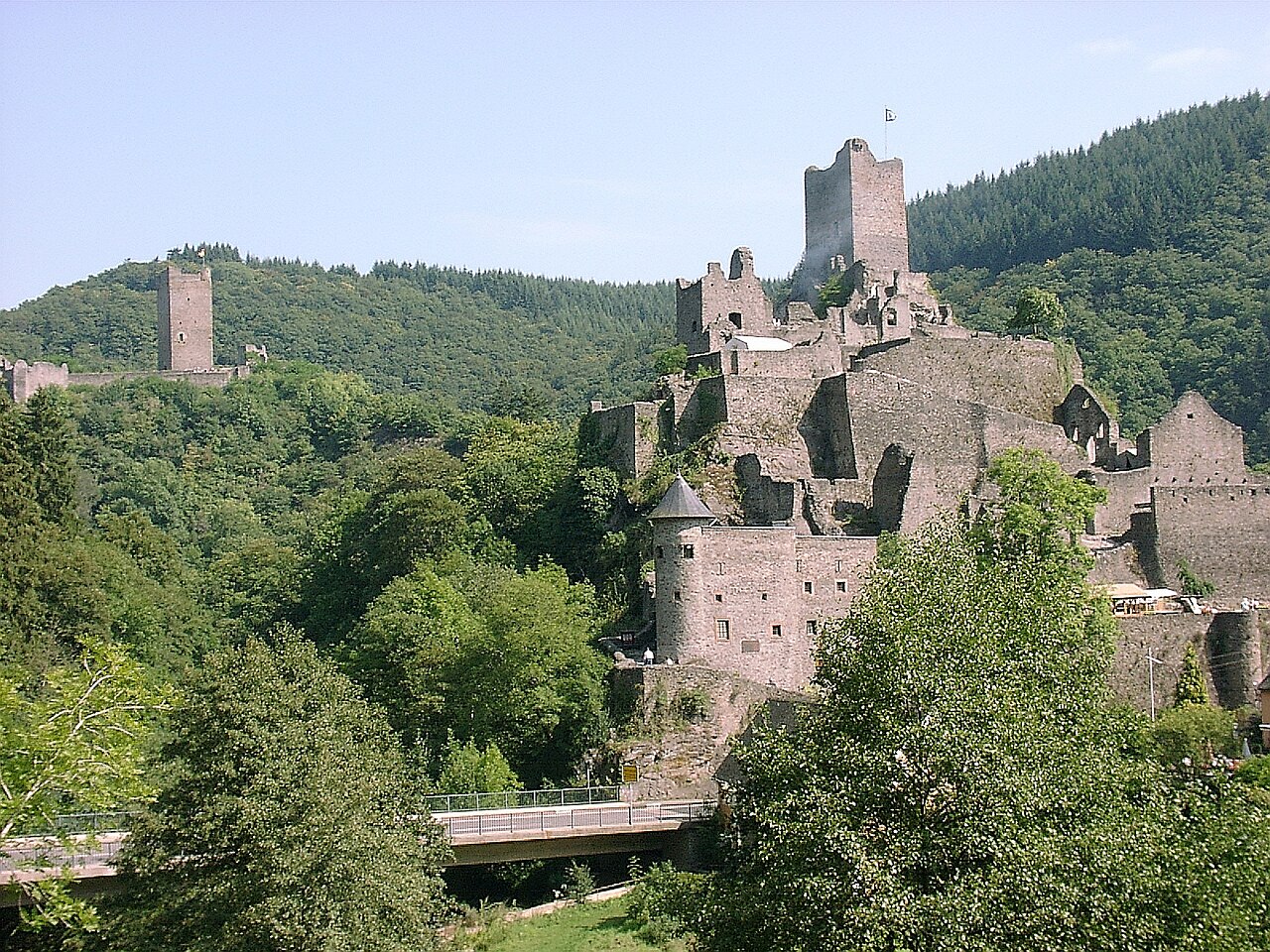
Bruch Castle
Bruch Castle, locally known as Burg Bruch, is a remarkable example of a 13th-century water castle situated near the village of Bruch in the Rhineland-Palatinate region of Germany. This historic castle has witnessed centuries of regional power shifts and architectural evolution, reflecting the medieval and early modern periods of German history.
Early history and origins
The castle was first mentioned in 1138 in connection with a noble named Fridelo, Lord of Bruch. The construction of the castle itself began in the first half of the 13th century and was likely completed by 1243. Initially, Bruch Castle was designed as a rectangular fortification surrounded by a defensive wall and moat, typical of medieval water castles in the region.
The castle's layout included an inner courtyard separated from a lower-lying outer courtyard by a ditch. The inner courtyard housed the palace, a keep, and was accessed through a gate tower. The outer courtyard contained primarily farm buildings, supporting the castle's self-sufficiency and estate management.
Architectural features and fortifications
Two slender towers visible today were originally part of the outer courtyard's defensive wall. In 1340, these towers were heightened to enhance the castle's defensive capabilities, reflecting the military needs of the period. The castle's design demonstrates the strategic use of water defenses and layered fortifications common in high medieval castles.
Between the two towers stands a large hall, which is a tithe barn dating from 1650. This barn illustrates the castle's role not only as a military stronghold but also as an economic center collecting agricultural dues and tithes from the surrounding lands.
Historical ownership and political significance
Throughout its history, Bruch Castle experienced changes in ownership that mirror the complex feudal and political landscape of the region. Initially owned by the Lords of Bruch, the castle later fell partly under the control of the Electorate of Trier and the Sovereignty of Luxembourg. After the extinction of the Von Bruch family line, ownership passed to various clerical families, reflecting the castle's integration into ecclesiastical domains.
In the 14th century, the castle was granted as a fiefdom to the Lords of Daun. By 1539, it returned to the possession of the Electorate of Trier, underscoring its continued strategic and administrative importance in the region.
Later developments and current status
Architecturally, the castle retains significant elements from the 14th century, including the gatehouse, a prominent five-story corner tower, and a round tower on the opposite end. These features highlight the castle's evolution and adaptation to changing defensive needs over the centuries.
Today, Bruch Castle is privately owned and operates as a bed and breakfast, offering guests a unique opportunity to experience medieval architecture firsthand. In 2023, a beer garden was opened in the castle's courtyard, enhancing its appeal as a cultural and social venue while preserving its historical ambiance.
Architectural significance and preservation
The castle exemplifies a high medieval water castle with its moat and defensive walls, characteristic of fortifications designed to utilize natural water features for protection. The preservation of the gatehouse and towers provides valuable insights into medieval military architecture and residential design.
The tithe barn from the mid-17th century adds a layer of economic history, illustrating the castle's role beyond military defense as a center for agricultural administration and feudal revenue collection.
Visiting bruch castle
While Bruch Castle is not generally open to the public as a museum, visitors can experience its historic atmosphere by staying at the bed and breakfast or enjoying the beer garden established in the courtyard. The castle's location in the scenic Rhineland-Palatinate region makes it an attractive destination for those interested in medieval history, architecture, and cultural heritage.
Exploring the exterior, including the impressive towers and moat, offers a glimpse into the castle's defensive past and architectural grandeur. The combination of historical significance and modern hospitality ensures that Bruch Castle remains a living monument bridging past and present.
Frequently asked questions (FAQ)
- How do I visit Bruch Castle?
- Bruch Castle is privately owned and operates as a bed and breakfast. Visitors can stay overnight or enjoy the beer garden opened in 2023 in the castle courtyard.
- What is the historical significance of Bruch Castle?
- Bruch Castle dates back to the 13th century and has been associated with the Lords of Bruch, the Electorate of Trier, and the Sovereignty of Luxembourg, reflecting its importance in regional medieval politics.
- What architectural features does Bruch Castle have?
- The castle features a moat, gatehouse, two slender towers raised in the 14th century, a five-story corner tower, a round tower, and a 17th-century tithe barn between the towers.
- Is Bruch Castle accessible to the public?
- While the castle itself is private, the beer garden in the courtyard is open to visitors, and guests of the bed and breakfast can explore parts of the castle.
- When was Bruch Castle built?
- Bruch Castle was constructed in the first half of the 13th century and completed by 1243, with significant additions in the 14th and 17th centuries.
Information
Current owner
Private owner
Loading map...
Visitor reviews
No reviews yet. Been here? Write the first review and help other travelers!
Write the first reviewVisited this castle? Share your experience
Your review helps other travelers and adds first-hand knowledge to our encyclopedia.